

“The EMEA market continues to be in freefall,” says Dan Ford, Vice President, Sales, EMEA at Farnell.
“There are no data points that give optimism,” said Jon Baxter, Sales and Marketing Director, Solsta.
“It’s a distribution market that is still very sluggish,” notes Nigel Watts, Managing Director, Trailing Edge Technologies.
“Never experienced anything like it, toughest market I’ve seen in my long career,” comments Steve Rawlins, Chief Executive Officer, Anglia Components.
Well, you get the picture – despite optimism that the semiconductor market will grow this year, the distribution market in EMEA is stuck in the doldrums.
So, for openers, let us shift to some encouraging news. At Farnell, global sales grew 6% sequentially, and even in a depressed EMEA market, Farnell’s 2% sales decline outperformed the overall market, and gained some share.
“It was a mixed bag,” said Ford. “Some of the bigger countries, Germany, France, Italy, that represent a bigger chunk of the business struggled and that takes a toll.”
While Ford isn’t expecting a miraculous recovery for the market in Q2, he says there is still optimism for some growth this year.
“There are indications that the Asia and the Americas markets could rise by mid to high single digits. For Europe, expectations are softer, anything from flat to 4%.”
Remarked Solsta’s Baxter: “We are not seeing a lot of confidence out there. There is a cautious approach to investment, and the increase in Nation Insurance contributions in the UK has had a negative impact.”
Baxter’s good news is that design-in projects which started 18 months to two years ago are now bearing fruit in the shape of orders, and he added: “We are seeing design-in projects continuing.”
Suppliers increasing prices
Rawlins at Anglia notes Microchip Technology’s recent assertion that the recession in semiconductors has ended, and thinks the distribution market is six months behind that.
“Forward orders and backlog are the lowest they have ever been,” said Rawlins. “Customers are ordering just what they need at present. On the other hand, suppliers have been increasing prices so they must be seeing something happening in the market.”
The glut in inventory held by customers has been the biggest obstacle to any recovery in the distribution market. “I’ll give you an example,” Rawlins commented. “A customer recently placed its first volume order for two years. That gives you an idea of the overstocking.”
Rawlins concurs with recent data released by inventory management software provider Unleashed that average SME electronics manufacturers made 23% less sales revenue in Q1 2025 vs Q4 2024, and 43% less year-on-year.
“That has hit us, especially the impact from contract manufacturers. They have been hit hard, and just been buying components hand to mouth,” says Rawlins.
“We haven’t lost any customers; some are still burning off inventory. When we see an increase in demand, we will support the customers who supported us.”
Rawlins is seeing a little bit of design-in activity, “but it’s not brilliant, there aren’t any mega technical jumps, companies are just carrying on building what they have.
“At least we haven’t seen a customer go broke which usually happens when the market is tough.”
Vertical markets present a mixed picture
“The industrial market in Europe is still sluggish, automotive has taken a hit with the tariffs uncertainty,” observes Watts. “Aerospace and defence on the other hand, for obvious and unfortunate reasons, is flourishing.”
He believes that the sector could account for 5-10% of the global component total available market from 2-3%.
“That’s across the board – semiconductors, passives, connectors and cabling, and e-mech,” says Watts.
Farnell’s Ford also notes the slowdown in EV car purchasing impacting automotive. He says: “18 months ago the EV market hit a peak as charging infrastructure was installed across Europe, and we saw a huge uptick on sales of power-related products and connectivity technology. That market has stalled and demand for power products has slowed.”
Baxter at Solsta has better news for power suppliers. “Despite the EV slowdown, power components are selling into aerospace and defence on the back of the increased activity in that sector.”
AI impact minimal
Rawlins cannot pick out any vertical market highlights. “The defence market is still very strong, but we aren’t a particularly big player in that market,” he comments. “I can’t pick out any other sector where there is heightened activity.”
Ford is still optimistic about the transportation market and describes broad industrial areas as up and down. “Automation is one area where we expect to see significant growth in the coming period.”
Artificial intelligence (AI), the electronics industry’s hot topic, has yet to impact the distribution sector.
“There’s a lot of questions around AI in the UK market,” observes Baxter. “Customers are asking what it can do for me, how can I use it, how can we implement it.”
To that end, Solsta recently participated in a seminar on AI with partner DeepX, and speakers from MediaTek, Infineon, Grinn, and Thistle Technologies. Solsta is also undertaking its own use of AI for stock predictions, stock profiling, and market predictions.
Farnell will be hoping to continue its progress in the current market.
“Encouraged is the word we are using for our past quarter,” says Ford. “We have listened to our customers. They have raised what we can do better, and we have invested in tools to help us make our process for customers faster, for example quicker bill of materials compilation using AI.”
Farnell has worked hard to rationalise its suppler portfolio with the aim of increasing the breadth rather than depth of products available.
“It will enable us to be more precise in developing programmes with suppliers important to the business. There has been an increase in the number of SKUs (stock keeping units) that we hold,” continues Ford. “Rationalising to invest in the inventory that matters enables us to create more alignment and strategy with our suppliers and is making a big difference for us.
“Customers want products to be available when they need them in the high service space. They want deliveries quickly and accurately with a high degree of quality. That’s the cornerstone of our business. Our focus is to get back to doing what we do best, and we are seeing that materialise now both from measurements we take internally and an improved net promoter score from our EMEA customers.”
Looking ahead in the distribution markets reveals consistent views
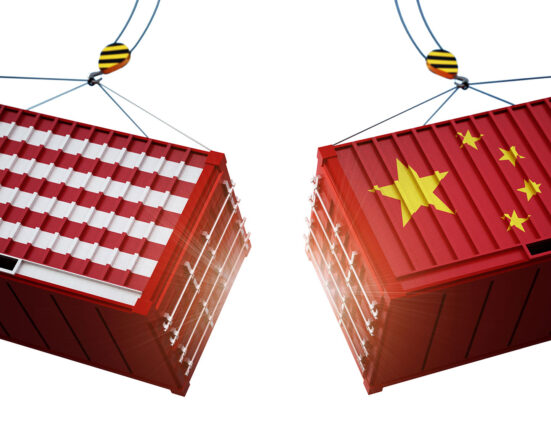
“The 2025 market can go one of two ways,” reckons Watts. “It will either shuffle along in its present state or, if Trump’s tariff policy becomes clearer, then there could be a marked uptick to the end of the year, and beyond into 2026 leading to some pent-up demand.”
Ford is excited about the opportunities for Farnell, while remaining cautious. “In EMEA the signs are not bullish, with tariffs, and geopolitical instability playing a part. We will stay focused on the things we can improve and bring forward more propositions for our customers and suppliers.”
Cautious optimism is also the watchword at Solsta. “There are no data points to make us optimistic,” says Baxter. “There is some stability that gives a little bit of confidence. The main aim is to work hard, and back your people to go out and get orders.”
“We are starting to look at our revenue forecast for next year, and right now I haven’t a clue,” reveals Rawlins. He thinks, like Watts, that the market could stay flat until year-end. “If there is no new substantial volume going into customers by late this year, there will be no growth in the market until April next year.”
Hermann Reiter, Chairman of DMASS Europe said: “Forecasting has rarely been this challenging. Geopolitical tensions, tariffs, and global supply chain uncertainties have made predictions nearly impossible. Regardless of whether tensions rise or fall, a return to the ‘old normal’ is out of reach. Instead, adaptability becomes key – optimising processes and boosting resilience are essential.
“As external pressures grow, the EU shows signs of strengthening its core. A Deloitte survey highlights unexpected results, with rising investments in the EU, still regarded as the most predictable market.”
By Mick Elliott, Contributing Editor, Electronic Specifier
This article originally appeared in the July/August issue of Procurement Pro.