

Mouser Electronics recently announced the appointment of Martina Drimala as Vice President of EMEA Customer Service. Drimala will oversee customer service operations across the EMEA region, driving service excellence and supporting Mouser’s continued growth in Europe.
Drimala was one of Mouser’s first European employees, joining the company in 2008 as it began expanding into the European market. During her previous nine years at Mouser, she held various roles, including business development and supplier marketing, before joining TTI, Inc. in 2017.
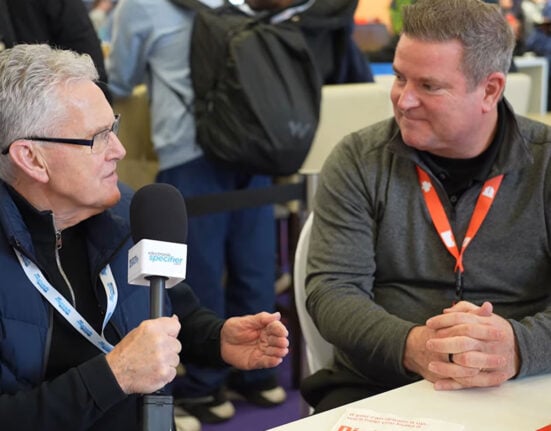
I spoke with Drimala to dive deeper into her new appointment at Mouser, her priorities for the coming year, and what unique opportunities she sees in the EMEA region.
Having been one of Mouser’s first European employees, how does it feel to rejoin the company at such a pivotal stage in its growth?
Returning to Mouser feels both familiar and exciting. I was part of the first team to establish Mouser’s European operations, and it is rewarding to come back after so many years. Since then, the company has grown from a small regional presence into a leading electronics distributor in Europe. What strikes me most now is how much the organisation has developed in terms of systems and support for customers. There are more tools, more components, and a stronger European team with localised digital resources and support staff, all committed to helping engineers and buyers work efficiently.
What has changed most within Mouser and the wider EMEA market since you first joined the company in 2008?
Looking back to 2008, a significant amount of effort in EMEA was still focused on laying the foundations – building awareness, organising suppliers for the region, and helping customers understand what Mouser could offer. Since then, Mouser has grown into a leading source for the latest electronics components in Europe, with a depth of inventory and long-standing relationships supported by local teams who understand the subtleties of each market. The infrastructure behind Mouser has also evolved; systems are more established, stock visibility has improved, and the approach to supporting engineers and buyers is more cohesive and integrated.
Since 2008, the wider market has undergone significant changes, too. Back then, B2B electronics buying still relied heavily on catalogues and phone calls. Today, much of the early decision-making happens online, with customers expecting detailed technical resources, real-time stock information, and the ability to compare options quickly. Procurement teams also expect more accuracy, stock/delivery insights, and suppliers who can support fast design iterations.
As a whole, the buying journey has become more self-directed, more digital, and far more time sensitive. What stands out to me is how these developments have come together. Mouser’s expansion across EMEA has happened alongside rising customer expectations and a shift to digital tools. This convergence is why the company has invested in systems, resources, and local expertise that engineers and buyers now rely on every day. Seeing that evolution first-hand, it’s clear how much the market has changed, and how critical it is for distributors to provide not just components, but practical support and guidance throughout the design and purchasing processes.
As Vice President of EMEA Customer Service, what are your key priorities for the coming year?
My priorities over the coming year are centred on ensuring that our teams provide consistent, practical, and responsive support to every customer across the region. This involves managing day-to-day operations effectively, while also thinking ahead about how to anticipate our customers’ needs before they arise. I want to ensure that our processes and tools enable teams to resolve inquiries efficiently, supporting engineers and buyers as they move from design to production.
A key focus will be investing in our people, ensuring that our customer service teams have the knowledge, confidence, and autonomy to deliver real value. But at the same time, I am keen to explore ways to make the customer experience more proactive. By understanding the challenges customers face in sourcing components, navigating lead times, and integrating new products, we can provide guidance and solutions earlier, helping engineers and procurement teams avoid delays and maintain momentum on their projects. Ultimately, my aim is for Mouser to be recognised not just as a distributor, but as a trusted partner – one that helps customers work efficiently, reliably, and with confidence at every stage of their journey.
What role do you see technology and digital tools playing in enhancing the customer service experience?
At Mouser, we have long operated with a digital-first approach, providing engineers and buyers with real-time stock information, technical resources, and tools to support decision-making. Yet customer service in B2B electronics goes far beyond simply making products available. It’s about understanding what customers need in addition to components – whether that’s greater insight into their orders, guidance on design choices, or other supporting services.
Emerging technologies offer new ways to enhance that support. Artificial intelligence (AI), for example, could help us identify trends, improve search functionality, and guide customers to solutions more quickly. At the same time, B2B electronics remains a human-driven business. The knowledge and judgement of both our teams and our customers’ teams is critical for interpreting context, solving complex design challenges, and managing supply chains. AI and digital tools are most effective when they complement this expertise rather than replace it.
Hardware advances, particularly in industrial automation, will also continue to shape the way we operate. Within our distribution facilities, we will leverage the latest technologies to speed up delivery, minimise errors, and keep complex orders moving efficiently, ensuring that our service remains reliable and responsive in a fast-paced market.
Based on your experience leading sales across Eastern Europe, what unique opportunities or challenges do you see in that part of the EMEA region?
Across Eastern Europe, there is a healthy and sustained demand for electronic components. Historically known for its strong Electronics Manufacturing Services (EMS) business, this region is now seeing an increase in design and engineering. The region has a well-established automotive and industrial manufacturing base, including pockets of semiconductor fabrication, and these sectors continue to rely on a broad portfolio of connectors, sensors, power electronics, and microcontrollers. Adjacent segments such as consumer electronics, renewable energy, and lately, aerospace and defence, are also gaining momentum and further expanding the demand profile.
However, serving this landscape introduces complexity because each national market has distinct operational and commercial nuances. Providing reliable and responsive support, therefore, requires a detailed understanding of these regional differences. To help meet this need, Mouser has built a network of customer service centres across Europe, including locations in Poland and the Czech Republic, to cover all Eastern European countries, ensuring that services are tailored to each market’s specific requirements.
Between mid-2017 and 2025, the number of Mouser EMEA staff, as a whole, grew by more than double to meet market demands, and Mouser regularly assesses the capabilities and capacity of all of its teams and locations to ensure consistent and locally informed support. This approach is particularly important for markets like Eastern Europe, a busy and diverse area for the electronics market, and our priority is to help engineers and buyers navigate design and sourcing requirements efficiently across a fast-moving environment.
How do you expect the current supply chain landscape to influence customer service priorities in 2026?
Although supply chains have stabilised compared with recent years, customers still value predictability above all else. For 2026, customer service priorities are unlikely to shift dramatically, but they will continue to centre on providing a stable and transparent experience. Engineers and procurement teams expect clear and timely communication, immediate visibility of any changes, and, where possible, proactive guidance to help identify the best solutions when challenges arise. For example, in response to changes such as tariffs and trade duties, Mouser provides a number of transparent actions, including itemised information on invoices, real-time updates on Mouser.com, and regular business updates, ensuring engineers and procurement teams can plan effectively.
In essence, the supply chain environment underscores the importance of reliability and openness. By focusing on consistency, transparency, and practical support, Mouser can help customers navigate fluctuations with confidence, allowing them to progress their projects with minimal disruption and maximum assurance.
Finally, what excites you most about this next chapter at Mouser Electronics?
What excites me most about returning to Mouser is the opportunity to contribute to the next phase of growth in EMEA. I’m particularly looking forward to working with the EMEA customer service teams to ensure we continue to deliver practical and responsive support that makes a real difference for engineers and buyers across the region.
Combining my experience with the company’s global reach and local teams gives me the chance to help shape a customer experience that is both dependable and forward-looking, enabling engineers to turn new ideas into reality with confidence.