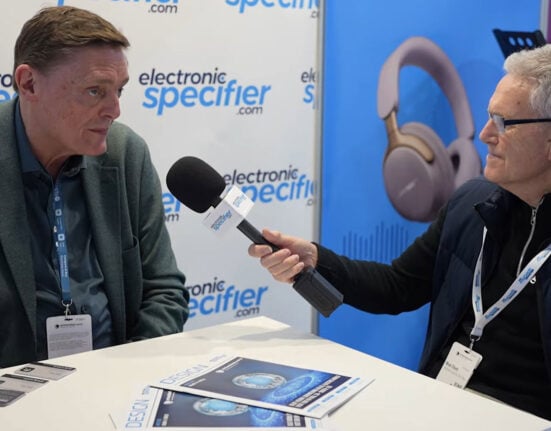

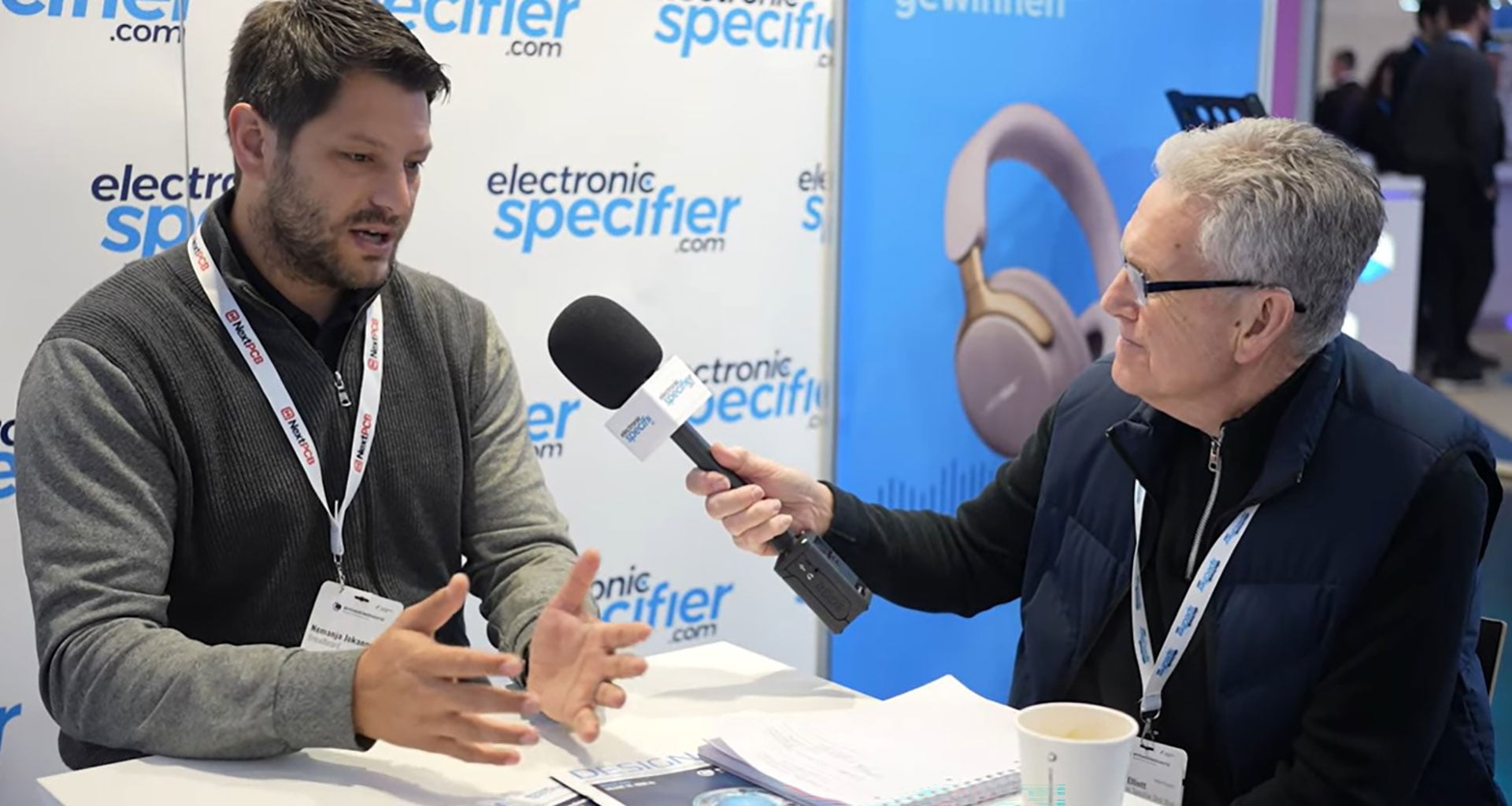
At embedded world 2026, conversations around digital transformation in electronics manufacturing were everywhere – but few addressed a more persistent bottleneck than the quoting process. In a discussion with Nemanja Jokanovic, Executive Leader at Breadboard and EETech Group, it became clear that while much of the industry has modernised, Bill of Materials (BOM) management has lagged behind.
For decades, EMS (electronics manufacturing services) providers have relied on spreadsheets to manage quoting workflows. While functional, these manual processes are time-consuming, error-prone, and increasingly incompatible with the pace of modern electronics development. As Jokanovic explained, it was not uncommon for OEM customers to wait days – or even weeks – for a quote, creating friction in the supply chain and slowing time-to-market.
Breadboard was developed specifically to address this gap. By leveraging modern APIs, automation, and AI-driven workflows, the platform transforms BOM quoting into a streamlined, largely automated process. The impact is significant: quoting times can be reduced by up to 90%, turning what was once a multi-day task into something that can be completed in minutes.
At the core of the platform is its ability to process the majority of a BOM automatically. For standard applications – such as printed circuit board assemblies or cable assemblies – Breadboard can quote approximately 80-90% of components without manual intervention. This alone represents a major efficiency gain, particularly for EMS companies handling high volumes of quotes.
However, it is the handling of the remaining 10-20% of components that highlights the platform’s sophistication. These are often the more complex or specialised parts, which traditionally require back-and-forth communication with distributors. Breadboard addresses this through integrated workflows that allow users to request quotes (RFQs) directly from suppliers with a single click. Using AI, responses can then be automatically imported and incorporated into the overall project within minutes, significantly reducing administrative overhead.
The platform is designed with usability in mind – a deliberate move to encourage adoption among teams accustomed to legacy systems. “Ease of use” is not just a feature but a core philosophy. According to Jokanovic, users who have spent years working in spreadsheets can quickly adapt to Breadboard’s interface, often becoming fully operational within one to two weeks. This rapid onboarding is supported by a structured process that begins with a detailed evaluation of the customer’s existing workflows.
Breadboard works closely with each EMS partner to understand how they currently manage quoting and procurement, including their supplier networks and internal processes. From there, the company conducts a comprehensive return-on-investment (ROI) analysis, comparing the current state with the potential improvements enabled by the platform. This data-driven approach helps customers clearly see the value proposition before fully committing.
The results, according to Breadboard, are compelling. Within the first two months of adoption, customers typically see around a 15% increase in booking rates. Faster quoting enables EMS providers to respond to opportunities more quickly, improving their chances of securing new business. In some cases, customers have reported record-breaking months in terms of new bookings shortly after implementation.
Beyond speed and efficiency, Breadboard also places a strong emphasis on customer support and engagement. The company has built a reputation for responsiveness, with average response times to customer queries reportedly around 45 seconds. Each customer is supported by a dedicated success manager, ensuring that any issues are addressed quickly and that users are continually getting the most out of the platform.
Training and onboarding are equally hands-on. Breadboard provides regular check-ins, weekly calls, and even on-site support where necessary. This ongoing engagement ensures that teams not only adopt the platform quickly but also continue to refine their processes over time. The goal is not just to implement a tool, but to fundamentally improve how EMS companies operate.
While Breadboard’s initial traction has been in North America, the company is now actively expanding its global footprint. Its presence at embedded world 2026 marked a clear step in this direction, with growing interest from companies across Europe, including the UK and Italy, as well as plans to expand into the broader EMEA and APAC regions.
This expansion is being driven not only by demand for faster quoting solutions but also by the platform’s flexibility. Breadboard can be deployed in a variety of configurations, making it suitable for both commercial and highly regulated environments. Notably, the platform has gained significant traction in the mil-aero and defence sectors, where compliance with government regulations is critical. Breadboard has developed specialised processes to meet these requirements, enabling secure and compliant operations.
For EMS companies with global operations, the platform can be tailored to support different organisational structures. Some customers choose to deploy Breadboard as a unified system across all facilities, while others opt for separate instances – for example, maintaining distinct environments for government and commercial projects. This flexibility ensures that the platform can adapt to a wide range of business models and regulatory landscapes.
Looking ahead, Breadboard’s vision is closely aligned with broader industry trends. As electronics become more complex and supply chains more dynamic, the need for fast, accurate, and scalable quoting solutions will only increase. By replacing manual processes with intelligent automation, Breadboard is positioning itself as a key enabler of this transformation.
Ultimately, the company’s value lies not just in speeding up an existing process, but in redefining it entirely. In an industry where time-to-market can be a critical differentiator, the ability to generate accurate quotes in minutes rather than days could prove to be a significant competitive advantage. As Jokanovic’s insights suggest, the future of EMS quoting is not just faster – it’s smarter, more connected, and far more efficient.