
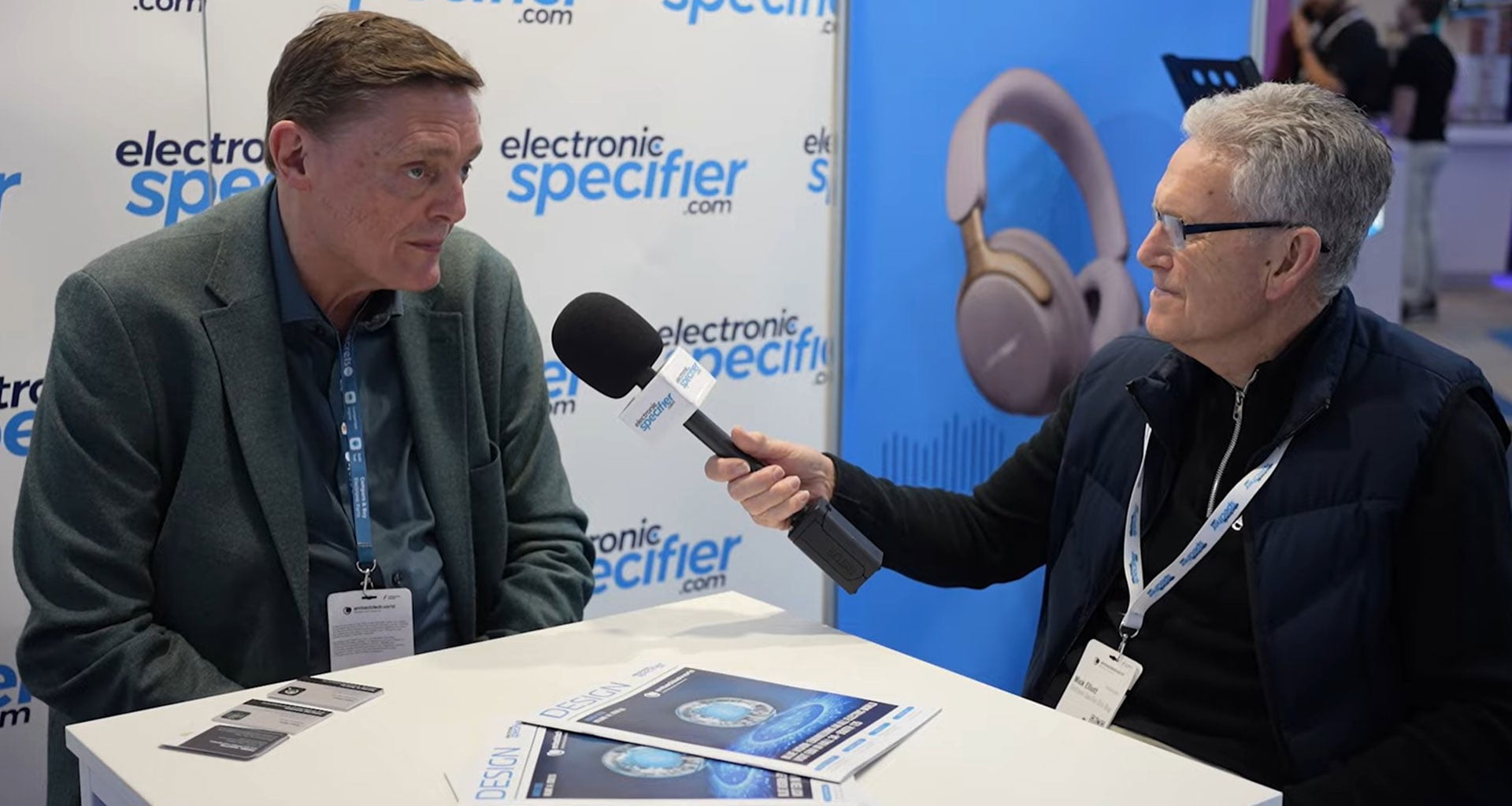
At embedded world 2026, Nigel Watts provided a compelling look at how two different, yet complementary, business models are tackling some of the semiconductor industry’s most pressing challenges – from component obsolescence to the growing difficulty of identifying and engaging new customers.
Watts is the driving force behind both Trailing Edge Technologies and Searching for Silicon. While the two companies operate in distinct areas of the market, they are increasingly connected through a shared goal: helping manufacturers and engineers navigate a rapidly changing supply chain and design environment.
Addressing the growing challenge of obsolescence
Trailing Edge Technologies was founded around 15 months ago, with a clear focus on supporting customers dealing with obsolete and end-of-life semiconductor components. As Watts explained, the company acts as a specialist representative, working closely with partners such as Flip Electronics to source and supply hard-to-find parts.
This niche has become significantly more important in recent years. Ongoing geopolitical tensions, supply chain disruptions, and shifting manufacturing priorities have made component availability less predictable. As a result, many engineers and procurement professionals are finding themselves needing to secure legacy parts to maintain or extend the life of existing systems.
Watts noted that while these global factors are not positive in themselves, they have driven strong demand for services like those offered by Trailing Edge Technologies. The ability to reliably source obsolete components has become a critical requirement for many organisations, particularly in sectors with long product lifecycles such as industrial, aerospace, and automotive.
A shift towards AI-driven demand generation
While Trailing Edge Technologies is focused on sustaining existing systems, Searching for Silicon represents a move towards enabling future growth. Rather than acting as a traditional sales representative, the company has been developed as a “digital demand creation engine,” designed to help semiconductor manufacturers uncover new opportunities and markets.
At the centre of this is Identify AI, a proprietary platform that uses artificial intelligence to identify, engage, and nurture potential customers. Watts described it as a tool that can take opportunities – whether design-led or fulfilment-driven – from initial discovery through to market engagement.
One of the core challenges Identify AI addresses is the increasing difficulty semiconductor companies face in reaching new contacts. Traditional methods of lead generation, such as static mailing lists or broad marketing campaigns, are becoming less effective in a world where engineers are inundated with information and harder to reach.
Identify AI approaches this problem differently. By analysing market data and applying intelligent profiling, it identifies companies and individuals that are most likely to be interested in a particular product or solution. It then initiates contact through platforms such as LinkedIn and other digital channels, gradually building engagement through targeted content and messaging.
From data to relationships
Watts emphasised that the real value of Identify AI lies not just in finding contacts, but in nurturing them. The platform is designed to introduce prospects to relevant products and concepts over time, helping to build familiarity and trust. This is particularly important in the semiconductor industry, where design cycles are long and relationships play a crucial role in decision-making.
The system can be tailored to a wide range of use cases, from promoting the services of Flip Electronics to helping semiconductor manufacturers enter new markets or expand within existing ones. Importantly, the specific product is less critical than the ability to target the right audience within the right market segment.
This targeted approach is underpinned by a continuously evolving contact database. Each campaign run through Identify AI generates a unique set of contacts, which are then aggregated into a larger, unified database. According to Watts, this database is currently growing at a rate of 4,000 to 5,000 new contacts per month.
Over time, this creates a highly valuable resource. Unlike traditional databases, which can quickly become outdated, this one remains dynamic. Because it is linked to active digital profiles, it automatically reflects changes such as job moves or company transitions, ensuring that outreach efforts remain relevant and timely.
Scaling reach through AI
Watts shared early results from pilot programmes that highlight the potential of this approach. In one case involving a manufacturer in the thermal management space, a relatively small dataset of just over 100 target companies was used as the starting point.
Through Identify AI, this initial dataset was expanded into 982 relevant contacts – far exceeding what might typically be expected from conventional methods. The key to this expansion lies in the platform’s ability to go beyond the original data, identifying similar companies and profiles within the broader market and extending outreach accordingly.
This capability is particularly valuable in today’s environment, where identifying new customers is becoming increasingly complex. Engineers and decision-makers are spread across a wide range of organisations and geographies, and traditional targeting methods often fail to capture the full picture.
By leveraging AI to analyse patterns and similarities, Identify AI can uncover opportunities that might otherwise remain hidden, significantly increasing the potential reach of a campaign.
Closing the loop
Despite the sophistication of the technology, Watts was clear that AI alone is not enough. The success of any demand generation strategy ultimately depends on the ability to follow through – turning initial contact into meaningful engagement and, eventually, into business.
This is where the integration between Trailing Edge Technologies and Searching for Silicon becomes particularly powerful. While Identify AI can generate and nurture leads, the broader ecosystem – including distribution channels, partner networks, and direct engagement – ensures that those leads are effectively supported.
Watts also pointed out that while media companies may have similar capabilities in terms of outreach, the key differentiator lies in being able to complete the entire process. This means not only reaching the right audience but also delivering the product, service, or support in a way that meets the customer’s expectations.
A combined approach for a changing market
Together, the two businesses reflect a broader shift in the semiconductor industry. On one hand, there is an ongoing need to manage legacy systems and ensure continuity in the face of supply chain uncertainty. On the other, there is a growing emphasis on using advanced technologies such as AI to drive innovation and growth.
By addressing both ends of this spectrum, Watts and his ventures are positioning themselves at a critical intersection of the market. Trailing Edge Technologies provides stability and continuity, while Searching for Silicon offers a pathway to new opportunities and future expansion.