




Disruption is permanent. Here’s how manufacturing leaders are building operations that hold.
The old playbook is finished. For years, supply chain managers optimised for efficiency above all else, lean inventories, single-source suppliers, just-in-time delivery. It worked, until it didn’t. Tariff shocks, pandemic-era material shortages, and geopolitical realignments didn’t just stress those systems. They broke them.
What’s emerged on the other side is a sharper understanding of what supply chain leadership actually requires: the ability to absorb disruption without losing ground and the intelligence to see risk before it becomes a crisis. The manufacturers gaining a competitive advantage today aren’t simply recovering from volatility. They’re redesigning their operations to thrive within it.
Here’s my take on how to build and optimise a manufacturing supply chain with what I consider the new rules.
Visibility first – everything else follows
Ask any supply chain executive what keeps them up at night and fragmented data ranks near the top. Procurement runs one dataset. Operations runs another. Finance works from a third. The result is a system full of blind spots that only reveal themselves when something goes wrong.
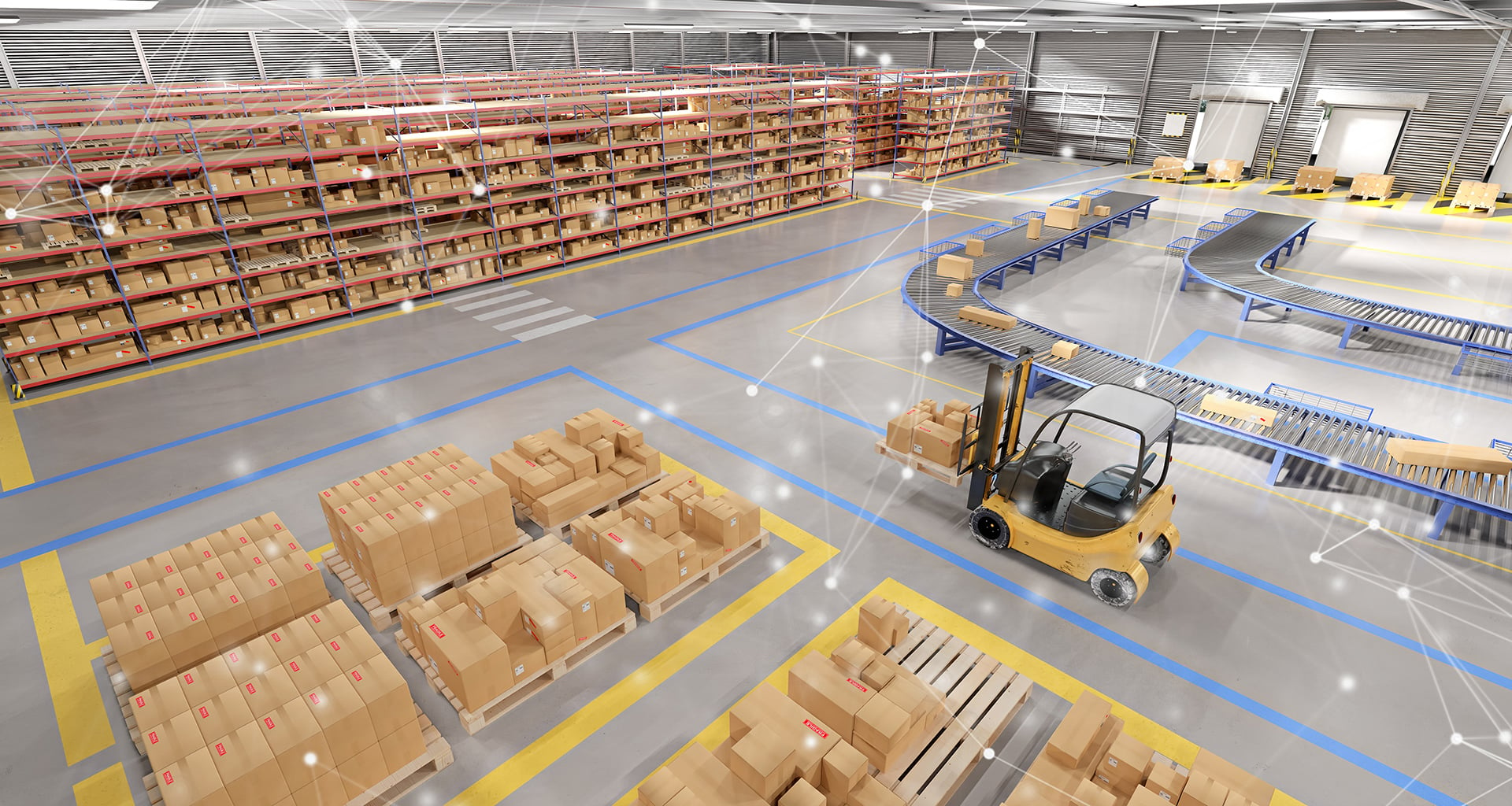
Closing those gaps starts with connected infrastructure. Internet of Things (IoT) sensors embedded across factory floors and logistics networks deliver continuous, real-time intelligence on inventory positions, machine health and material movement. Cloud-based ERP platforms consolidate that data into a single, trusted picture accessible to every stakeholder, from the plant manager to the C-suite.
Virtual twin technology extends that picture across the entire value network. Rather than modelling a single facility, it maps supplier relationships, production flows, and last-mile delivery into one synchronised environment. Collaboration across supply chain, manufacturing, and engineering is the number one factor top-performing organisations credit for positive business outcomes. Visibility, it turns out, doesn’t just reduce risk. It drives better quality and higher customer satisfaction.
AI has moved from the lab to the operations floor
It’s no longer a question of whether artificial intelligence belongs in supply chain planning. It’s a question of how quickly you can put it to work.
AI and machine learning algorithms process historical sales data, market signals, and external variables, weather patterns, economic indicators, port congestion – to generate demand forecasts with a precision that traditional models simply can’t match. That accuracy has direct financial consequences. A world leader in energy and telecom achieved a 30% increase in forecast accuracy and cut inventory by roughly €0.5 million/$0.578 million during a single pilot phase. A leading metals manufacturer reduced its order backlog by more than 50% and cut lead times by up to 50%.
The applications extend well beyond forecasting. AI assists planning, optimisation, scenario evaluation, and decision automation. For example, it can refine master production scheduling by continuously weighing resource availability against shifting demand. It studies sales patterns and supplier performance to hold optimal stock levels, enough to fulfil orders without tying up working capital in excess inventory. And it flags maintenance issues before equipment fails, keeping production schedules intact.
The net effect is a shift from reactive firefighting to proactive control. That shift changes what supply chain management looks like at every level of the organisation.
Supply chain regionalisation is reshaping sourcing
The tariffs and trade disruptions of 2025 accelerated a shift that was already underway. Single-source, single-region supply strategies carry concentration risk that companies can no longer rationalise. When a key supplier region faces geopolitical instability, natural disaster, or labour action, operations stall and the financial damage accumulates quickly.
The China-plus-one strategy keeps existing production relationships intact while establishing a parallel supplier base in a second geography. It reduces exposure without abandoning proven partners or rebuilding procurement from scratch.
Reshoring and nearshoring go further, bringing production physically closer to end markets. The logistics are simpler, lead times shorten and supply chain control improves. Secondary suppliers often cost more. That premium is negligible compared to the cost of a widespread supply disruption.
Diversification doesn’t eliminate risk. It distributes it, and gives operations the flexibility to reroute when conditions change.
Virtual twins: where planning meets execution
Visibility is only valuable if it drives action. Virtual twin technology is where the two connect.
A virtual twin provides a dynamic, model-based representation of the factory and value network, incorporating real-world constraints, processes, relationships, and operational data. This includes precision rendering of individual workstations and resources, as well as suppliers and distribution networks. Supply chain leaders can model new workflows, simulate scheduling changes, test facility expansions, and stress-test supplier scenarios, all before committing capital or disrupting live operations. ‘What-if’ analysis becomes a standard planning tool rather than an emergency response.
The feedback loop is continuous. Virtual twins monitor performance across capacity, quality, work-in-progress, inventory, and orders, then update plans in real time to close gaps between target and actual. Decisions made in the virtual environment translate directly into executable actions on the floor.
The economic case is compelling. Virtual twin technology is projected to generate an estimated $1.3 trillion in additional value and significant CO2 reductions by 2030. For supply chain leaders managing simultaneous pressure on cost, risk, and sustainability, that combination is difficult to ignore.
Sustainability and profitability are now the same conversation
Roughly 80% of a company’s environmental impact sits inside the value chain, hidden in supplier operations, logistics networks, and production processes far beyond the factory fence. That’s where the pressure to reduce emissions is hardest to address and where visibility matters most.
Virtual twins bring that impact into view. Real-time carbon footprint tracking gives procurement and operations teams the data they need to make sustainable sourcing decisions and support material recirculation. Virtual testing removes the need for physical prototypes, cutting waste at the design stage. Optimised logistics routes reduce both fuel consumption and CO2 output.
What companies are discovering is that sustainability initiatives and cost reduction efforts increasingly point to the same actions. Efficient logistics are greener logistics. Reduced waste is reduced cost. The organisations that treat sustainability as an operational discipline rather than a communications exercise are finding competitive advantages – with regulators, customers, and investors, that their competitors aren’t.
Optimisation has no finish line
Supply chain resilience isn’t a project. It’s a practice.
Markets shift. Technology advances. New constraints emerge in places you didn’t anticipate. The organisations that maintain peak performance are the ones that treat continuous improvement as a core operating discipline, not a periodic initiative.
That means regular KPI reviews, routine audits of operations and vendor networks, and an organisational culture that acts on what the data reveals. It means identifying emerging bottlenecks before they reach the P&L. It means keeping the feedback loop between virtual planning and real-world execution running at all times.
The bottom line
The manufacturers who will lead their industries over the next decade won’t necessarily be the ones with the lowest cost base today. They’ll be the ones with the visibility to see disruption coming, the agility to respond faster than their competitors, and the discipline to improve continuously, in good conditions and difficult ones alike.
End-to-end visibility, AI-driven planning, intelligent automation, diversified sourcing, and virtual twin technology aren’t independent investments. They’re components of a connected operating system. Build that system with intention, and your supply chain stops being a source of exposure. It becomes a source of advantage.