


Since early 2026, some parts of the semiconductor market are recovering, while other device categories continue to experience constraint. Avnet Silica’s Q1 2026 Trendliner report reflects this uneven picture, highlighting sustained demand in selected automotive and AI-linked segments, alongside extended lead times in parts of the memory market.
This divergence means supply conditions vary depending on the components a design relies on. For organisations developing new platforms in 2026, that variation can shape early architectural decisions. Lead-time exposure, qualification timelines, and lifecycle planning are influenced by component availability. Recognising these conditions early helps align platform assumptions with realistic market expectations and reduces the likelihood of late-stage adjustments.
Category-level divergence
The Q1 data shows that growth is not evenly distributed across end markets. Automotive applications – particularly ADAS and high-performance computing platforms in EMEA – continue to expand. Industrial activity remains steady, but it varies by sub-segments in this vertical market.
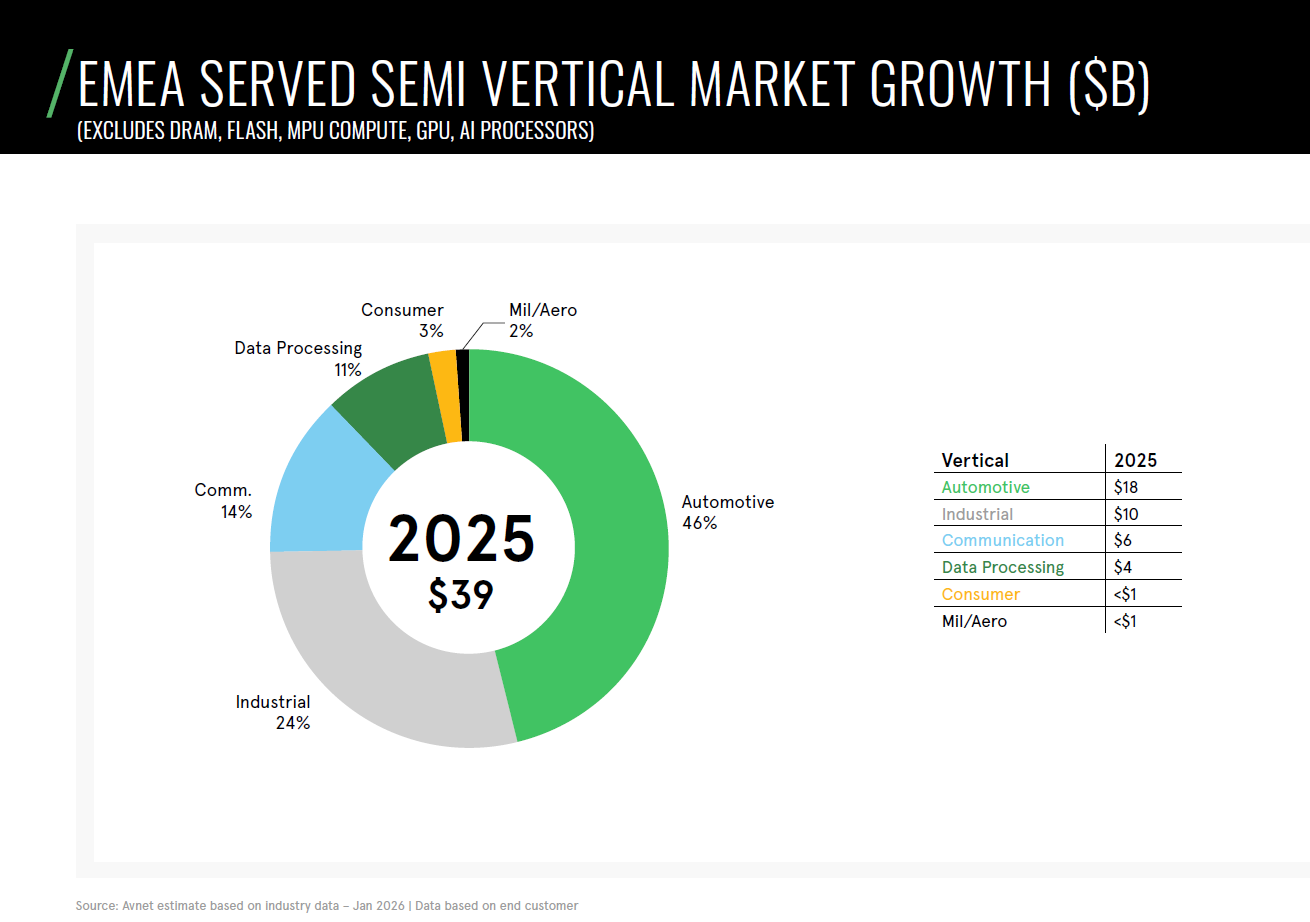
This variation at sector-level feeds directly into product demand. Components commonly used in automotive and AI-linked platforms – including advanced processors, memory devices, and supporting power electronics – continue to see sustained demand. In parts of the memory market, that demand is reflected in extended lead times and allocations.
Other product categories serving more stable markets are beginning to see more predictable availability. The result is uneven exposure across a typical bill of materials, depending on which applications a design supports.
Memory conditions and programme timing
The Q1 Trendliner report highlights continued pressure in parts of the memory market. Selected DRAM and NAND products remain subject to extended lead times, adjusted prices and allocations.
Memory selection is typically fixed early in a platform’s development cycle, as density, interface choice, and qualification strategy shape board layout, power architecture, and software configuration. Once those decisions are embedded in a programme, they are not easily revisited.
If lead times remain extended in specific memory segments, supply conditions can affect a programme well beyond initial design release. In long-lifecycle applications – particularly in automotive and industrial markets – validation schedules may overlap with periods of continued demand strength, making mid-cycle adjustments to memory configuration more difficult.
Automotive and industrial programmes
Strength in ADAS and automotive high-performance computing applications in EMEA is reflected in the Q1 data. In these sectors, product development cycles tend to be lengthy, and production runs extend over many years.
Automotive and industrial platforms undergo defined validation processes and are built around components qualified for reliability, temperature range, and safety performance. Once a programme enters validation, changing a processor, memory device, or power component can require additional testing, documentation, and certification.
In an environment where certain component classes continue to experience strong demand, supply constraints can extend into these later stages of development. Unlike short-cycle markets, where substitution may be relatively straightforward, automotive and industrial programmes have limited flexibility once validation is underway.
The practical consequence is that divergence at sector and product level becomes embedded within the programme lifecycle. Early component choices carry greater weight when availability conditions remain uneven over time.
Regional and structural asymmetry
Demand is not moving at the same pace across all regions or end markets. The regional outlook shows stronger near-term growth in the Americas and Asia, a more measured recovery in EMEA, and slower expansion in Japan.
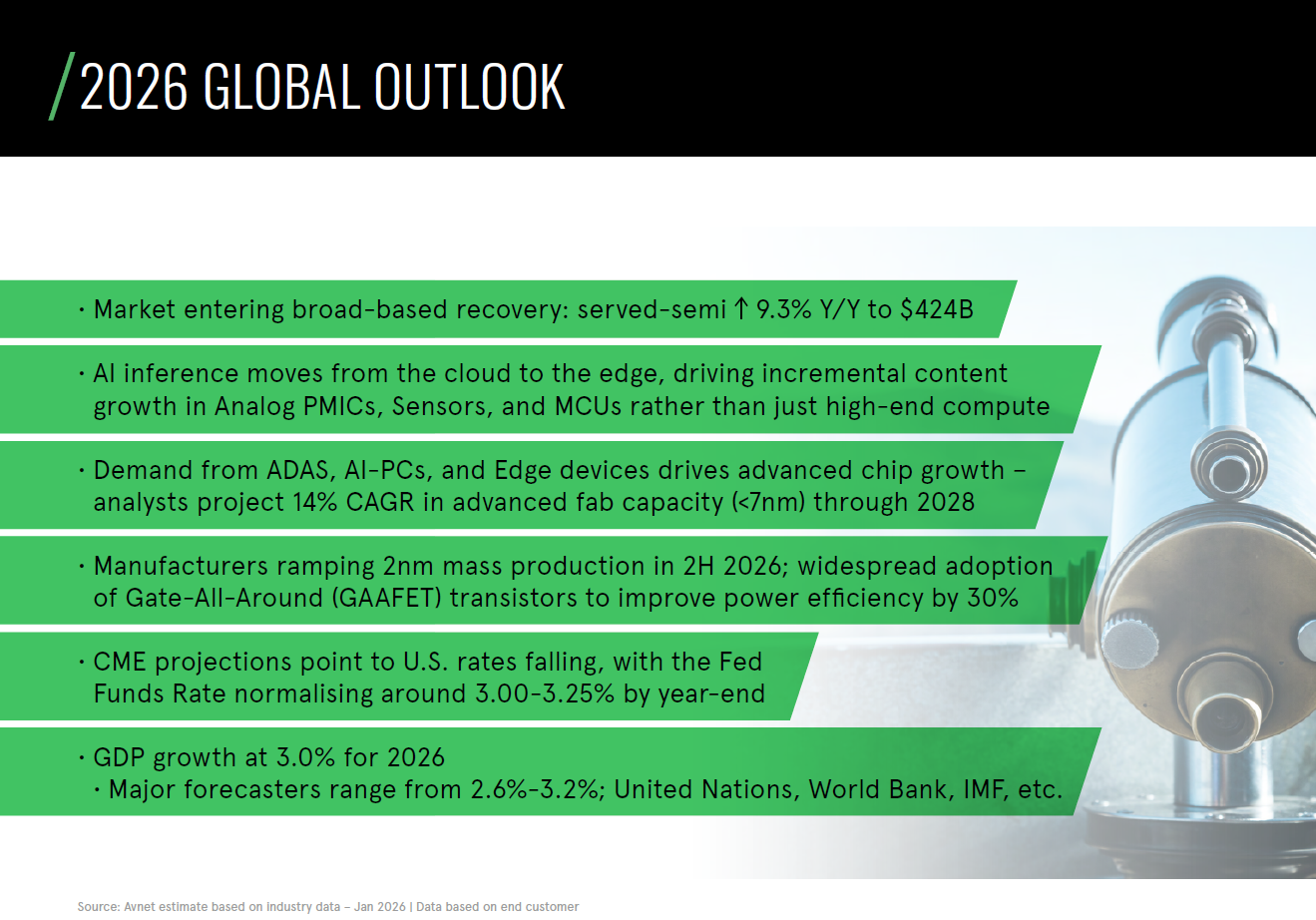
For organisations operating across multiple regions, this uneven demand can influence supply conditions. Components aligned with strong automotive programmes in one region may experience different availability pressures from the same devices used in more stable or slower-moving markets elsewhere.
Over time, additional manufacturing capacity and regional investment may reduce these differences. In the nearer term, however, variation between regions and applications adds another layer to the divergence already visible at device level.
Recognising where demand remains strongest and where it is stabilising helps place programme timing and deployment decisions in a broader context.
Designing within an uneven market
The Q1 2026 Trendliner report presents a semiconductor market moving at different speeds across sectors, product categories, and regions. Especially AI-linked applications continue to show strength, and parts of the memory market are still subject to extended lead times, as other areas move toward greater stability, even indications showing lead time increase across many product groups.
These differences arise from the concentration of demand in specific applications and the resulting pressure on associated component categories. The impact varies according to sector, product mix, and programme duration.
The report’s value lies in making those distinctions visible. By presenting demand and lead-time data at application and component level, it provides context for aligning development roadmaps with prevailing market conditions.
In 2026, design decisions are being made within an uneven landscape shaped by sector-level growth and product-level supply conditions. Recognising that unevenness early helps ensure those decisions reflect the realities of the market in which they will be delivered.
About the author:

Thomas Foj, Vice President Supplier Management, Solutions, and Digitalisation EMEA, Avnet Silica