

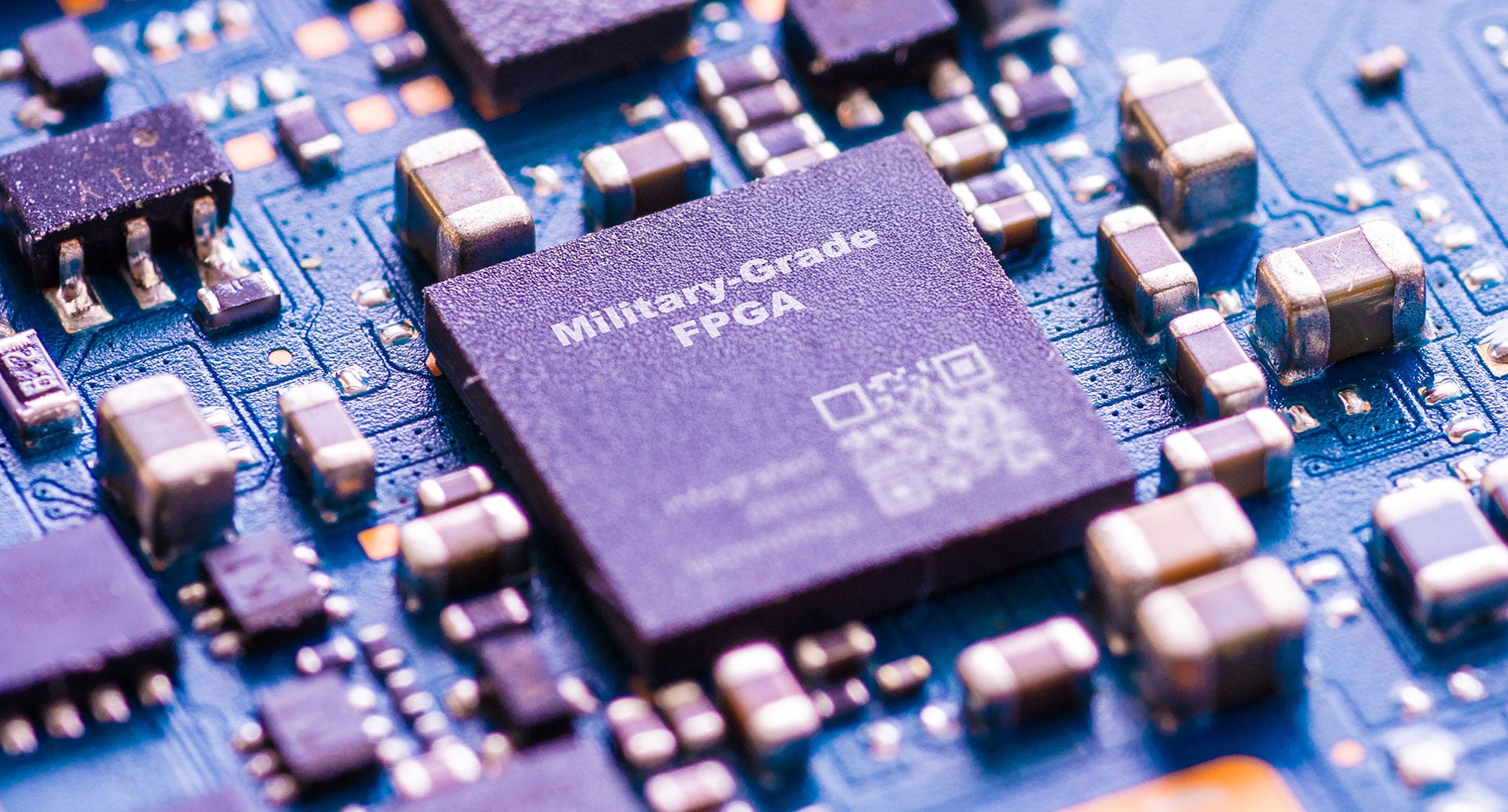
Military-grade components mean that a component has been made to a specific standard that allows it to carry out a certain task. They are designed to ensure they consistently perform under extreme conditions.
For a component to be military-grade, it means that the parts, materials, and equipment used must adhere to stringent defence standards and NATO requirements. By having a standard, it ensures that the number of part types is minimised, tools are compatible, and production maintains quality.
Components meeting military standards undergo a rigorous, multi-stage process that involves designing, testing, and documenting that they can operate in extreme environments.
When sourcing military-grade components, it isn’t simply about looking for “rugged”. These components are engineered, tested, and certified to meet specific standards or performance specification requirements.
The UK Defence system
Defence standards (DEF STAN) in the UK MOD are organised by subject series, each of which covers a broad technical or functional domain.
DStan is the UK Defence Standardization Directorate, which is responsible for developing and maintaining the UK DEF STAN portfolio. It is also responsible for NATO standardisation policy and alignment with NATO Standardization Agreements (STANAGs). As defence budgets rise and joint procurement increases, the UK increasingly relies on NATO STANAGs for interoperability. These standards sit alongside, and sometimes supersede, national Def Stans for certain component categories.
These defence standards guarantee operational reliability, interoperability with allied forces, and compliance with stringent legal and security requirements. For procurement professionals working in this area, understanding the military standards for the components you are sourcing is vital. Components which adhere to mission-critical standards minimise risk in high-stakes environments.
Defence standards relevant to military-grade components
00-series: systems engineering and programme management
This is the broadest series, and it encompasses standards such as DEF STAN 00-035, the ‘Environmental Handbook for Defence Materiel‘. This looks at climatic, mechanical, and other environmental stresses that components must survive. It also covers DEF STAN 00-40/42/43, which includes ‘Reliability and Maintainability‘ requirements to ensure a part works despite its surroundings. This means parts must be durable and capable of operating reliably in demanding operational conditions.
05-series: quality and configuration
The 05-series includes standards such as DEF STAN 05-91, which covers quality system requirements for design, development, production, and servicing. It also includes DEF STAN 05-057 for the configuration management of defence materiel. These are the UK equivalents of what the US would classify as manufacturing processes and standard practices.
59-series: electromagnetic compatibility
The DEF STAN 59-series covers all aspects of electromagnetic compatibility (EMC), including specific hardware such as military-grade connectors, from selection of requirements through project management to testing and test reporting. It also includes project planning and installation guidelines. Within this series, DEF STAN 59-411 part 1 mandates strict requirements for electromagnetic emissions and susceptibility across land, sea, and air in military equipment.
61-series: electrical power
The 61-series covers power supply requirements for platforms and equipment. It covers standards governing the design, construction, testing, and performance of electrical power systems, cables, and wires used in military vehicles, ships, aircraft, and electronic equipment. This series ensures that components can withstand combat-ready conditions, electromagnetic interference, and power surges.
81-series: packaging and storage
The DEF STAN 81-041 series concentrates on environmental conditions to ensure the preservation of items during storage, general handling, distribution, and transit via rail, road, sea, and air. This series governs how military-grade components must be packaged and stored in a way that is compliant with MOD supplier requirements.
Military-grade components in the US
In the US, there are five types of defence standards: interface, design criteria, manufacturing process, standard practices, and test methods.
The US MIL-SPEC system explicitly labels each document by type – so an interface standard, a test method, or a design criterion, for example, can be quickly identified. Whilst the UK Def Stan system doesn’t use that same explicit type labelling, both the US and UK use a cataloguing system that evolved from the need to ensure proper performance, maintainability, and reparability of military equipment, but they took different structural paths to get there. For procurement professionals working across joint programmes, understanding both systems is important.
What procurement professionals should look for in each of the five US standards:
Interface
The interface standard ensures compatibility and communication between different devices or systems at the logical, mechanical, and electrical level.
Design criteria
The design criteria ensure equipment durability and interoperability in extreme field environments.
Manufacturing process
The manufacturing process ensures that products meet US Department of Defense (DoD) performance standards through rigid, traceable processes.
Standard practices
The standard practices define materials, design, manufacturing, and testing requirements to ensure that components are reliable, interoperable, and fit for purpose across a wide range of conditions.
Test method
The test method validates the ruggedness and compliance of parts to ensure they meet military standards, including physical and electronic testing by replicating real-world operational scenarios.
Five leading military-grade component suppliers
The following companies are among the most recognised suppliers operating in the military-grade components space, spanning prime contractors, specialist manufacturers, and component distributors.
Lockheed Martin
A global aerospace, defence, and security company, Lockheed Martin specialises in advanced technology systems, products, and services – including military aircraft, missile defence systems, and space technologies.
Northrop Grumman
A leading global defence and aerospace company, Northrop Grumman specialises in autonomous systems, cyber security, C4ISR (command, control, communications, computers, intelligence, surveillance, and reconnaissance), and strike systems.
BAE Systems
A British multinational defence, security, and aerospace company, BAE Systems specialises in combat vehicles, naval vessels, military aircraft, and electronic systems, and is one of the primary suppliers to the UK MOD.
Amphenol
One of the world’s largest manufacturers of electronic connectors and interconnect systems, Amphenol specialises in military-grade connectors, cable assemblies, and sensor solutions designed to meet rigorous MIL-SPEC requirements.
TE Connectivity
A global industrial technology company, TE Connectivity specialises in highly engineered connectors, sensors, and electronic components built to perform reliably in harsh and mission-critical environments, including defence and aerospace applications.