
The electronics supply chain has traditionally been organised around product lines, authorised territories, and legacy channel structures. Distributors have largely been defined by the manufacturers they represent and the products they carry. For a long time, this model functioned well enough. Production was regional, demand was mostly predictable, and channel responsibilities were clearly defined.
Today the environment is different. OEMs and EMS providers build in one region, service in another, engineer in a third, and expect continuity across all of them. Customers evaluate suppliers not by territorial boundaries but by whether supply arrives on time. Manufacturers are judged by their ability to support global demand, including service and field requirements. Procurement teams are measured on continuity, compliance, and total cost, not on whether they stayed inside traditional channel definitions.
This shift has exposed the fundamental limitation of a product and territory centred view of distribution. In modern supply chains, the real differentiator is not what a distributor is authorised to sell but whether they can solve sourcing problems when the expected path breaks down. A distributor who can only say yes when the exact product, in the exact package, in the exact region, happens to be sitting in the authorised stockroom is no longer sufficient. The market now rewards distributors who can see the entire supply landscape, interpret conditions in real time, and adapt sourcing strategies without compromising documentation or traceability.
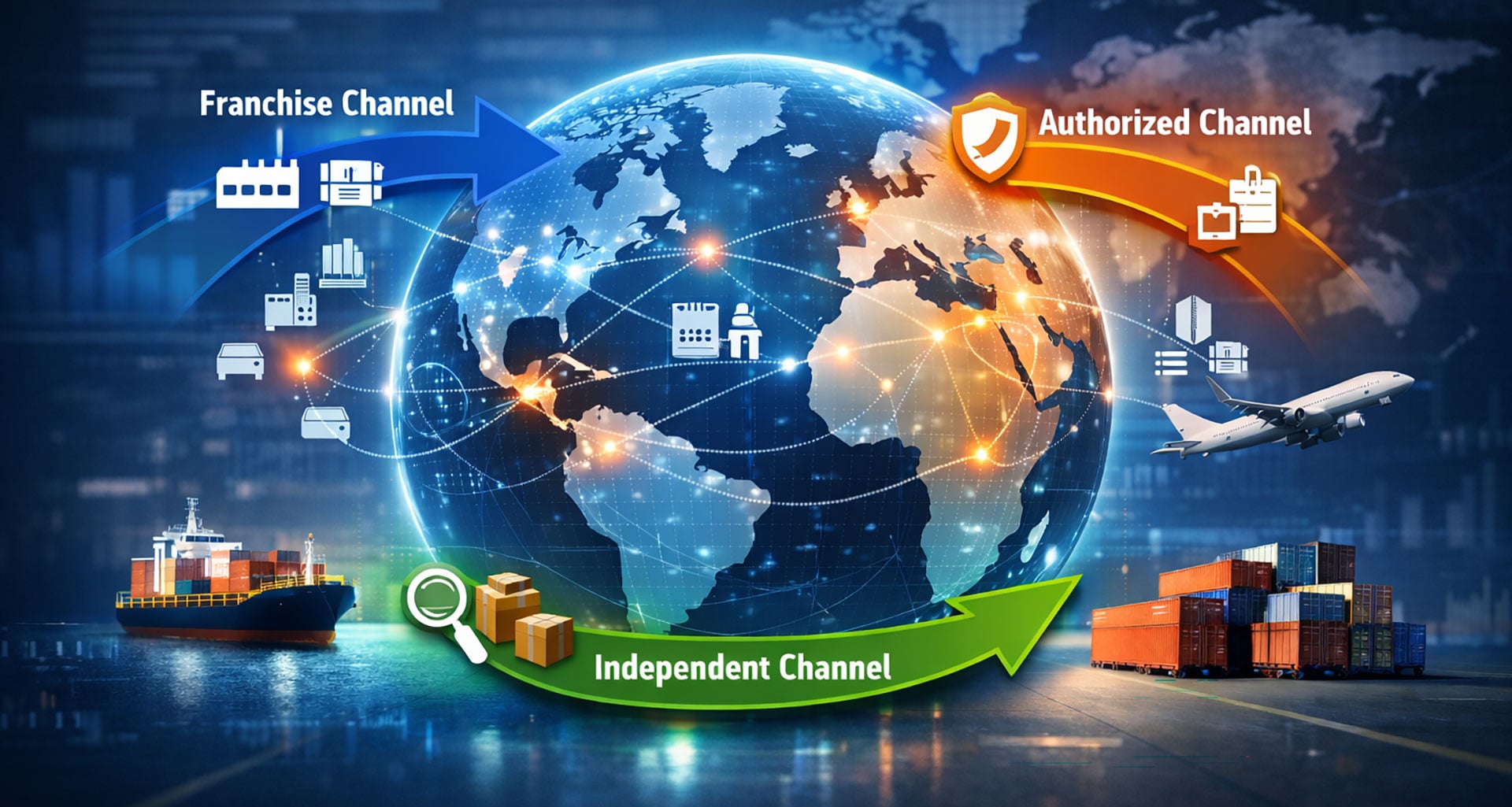
This is where companies that operate across multiple sourcing channels have an advantage. IBS Electronics is a clear example of this model. IBS supports manufacturers and customers through a franchise channel for full alignment and design in engagement, an authorised supply platform for procurement consolidation and compliance, and a vetted independent sourcing channel for situations where availability, geography, or allocation disrupt authorised pathways. This multi-channel architecture allows IBS to participate in design, support production, and maintain service continuity across global programmes rather than being confined to a single role.
This type of data driven sourcing philosophy recognises that availability is not a static condition. It fluctuates based on allocation, regional demand spikes, long term service requirements, and shifts in lifecycle planning. A distributor that prioritises sourcing and supply chain management ahead of static product line ownership is better equipped to support both manufacturers and their customers. The emphasis moves from asking what am I authorised to sell to what must be done to maintain continuity for the customer and support the manufacturer’s programme.
A modern sourcing model must therefore operate across multiple controlled channels. In a stable environment, the franchised channel should support design in, stocking strategies, lifecycle visibility, and roadmap alignment. This is the ideal state for both manufacturers and customers, because it offers clarity and mutual alignment.
Real supply chains, however, do not always remain in stable environments. Lead times can extend without warning. Allocations can emerge rapidly. Regional supply imbalances can leave one geography short while another holds excess. Service organisations often need small quantities immediately, long after authorised channels have deprioritised older components. When these situations arise, a single channel distribution model creates unnecessary risk.
Authorised sourcing pathways, including indirect authorised supply through contracted partners, offer a secondary stabilising layer. They support consolidation, reduce supplier fragmentation for OEMs and EMS providers, and allow documentation and compliance to remain intact. But even authorised aggregation cannot always keep pace with real time field demand or geographic restrictions.
This is where responsible independent sourcing plays an essential role in a functioning supply chain. Independent channels are not inherently risky or unstructured. When vetted, documented, and governed, they act as a pressure release valve for manufacturers and customers. They allow supply to move globally when regional segmentation blocks it. They allow production to continue when allocations limit authorised availability. They allow service organisations to fulfil obligations long after a line has reached end of life.
What matters is not authorisation status. What matters is documentation, chain of custody, testing and inspection capability, export compliance, and alignment with manufacturer standards. A sourcing pathway that can deliver those attributes is not a last resort. It is an essential part of supply chain resilience.
The uncomfortable truth is that the electronics industry often tolerates outcomes that are not acceptable in any other modern system. A manufacturer in the Americas or Europe may be told that a production line must stop because inventory is located in Asia and cannot be accessed under current channel rules. This may satisfy channel compliance requirements, but it does not satisfy customer expectations or support the manufacturer’s brand. The fact that a compliant, traceable part exists in the global system should matter more than the territorial boundaries that prevent it from moving.
The question the industry should be asking is not whether a sourcing path is authorised or unauthorised. The question is whether there is a structured, documented, and compliant way to solve the problem. When that question becomes the standard, supply chain partnership becomes the priority and channel definitions become tools rather than constraints.
The distributors who will earn the most respect over the next decade are the ones who adopt this problem-solving mindset as their operating philosophy. They will treat authorised, partner authorised, and independent sourcing as coordinated tools that can be applied based on the situation. They will use data to determine which channel is appropriate at a given moment. They will document their actions, so procurement and quality teams have full visibility. Most importantly, they will refuse to respond to critical demand signals with declarations that no solution exists when solutions clearly do.
The electronics ecosystem does not need more catalogue holders. It needs problem solvers who understand that the mission is to support the manufacturer’s customer. When a distributor places that outcome at the centre of their model, respect follows naturally from manufacturers, procurement teams, and the market itself.
This article originally appeared in the Jan/Feb 26 issue of Procurement Pro.