
AMD used its Financial Analyst Day to set out how it intends to shape its performance over the next several years, outlining a strategy built around AI acceleration, data centre expansion, and a wider push across client, gaming, and embedded segments. It also emphasised how its technology roadmap underpins its plans for sustained growth.
Dr Lisa Su, AMD Chair and CEO, said: “AMD is entering a new era of growth fuelled by our leadership technology roadmaps and accelerating AI momentum. With the broadest portfolio of products and our deepening strategic partnerships, AMD is uniquely positioned to lead the next generation of high-performance and AI computing. We see a tremendous opportunity ahead to deliver sustainable, industry-leading growth. We have never been better positioned.”
Data centre focus
AMD highlights progress across its data centre portfolio. The AMD Instinct MI350 Series GPUs represent its fastest-ramping product, deployed at scale by Cloud providers including Oracle Cloud Infrastructure. AMD states that ‘Helios’ systems using forthcoming Instinct MI450 GPUs are expected to provide rack-scale performance with memory capacity and scale-out bandwidth beginning in the third quarter of 2026. The MI500 Series is planned for 2027.
The company adds that EPYC CPUs continue to accelerate revenue share gains across Cloud and enterprise. The forthcoming ‘Venice’ generation is designed for increased AI-driven CPU demand, with a focus on performance, density, and energy efficiency.
Pensando Pollara and the next-generation ‘Vulcano’ AI NICs are presented as solutions for scale-up and scale-out networking built on industry standards.
Open software
AMD reports continuing momentum for its ROCm open software platform. The number of ROCm downloads increased 10x year-over-year, supported by additional performance and feature updates in each release.
Client and gaming
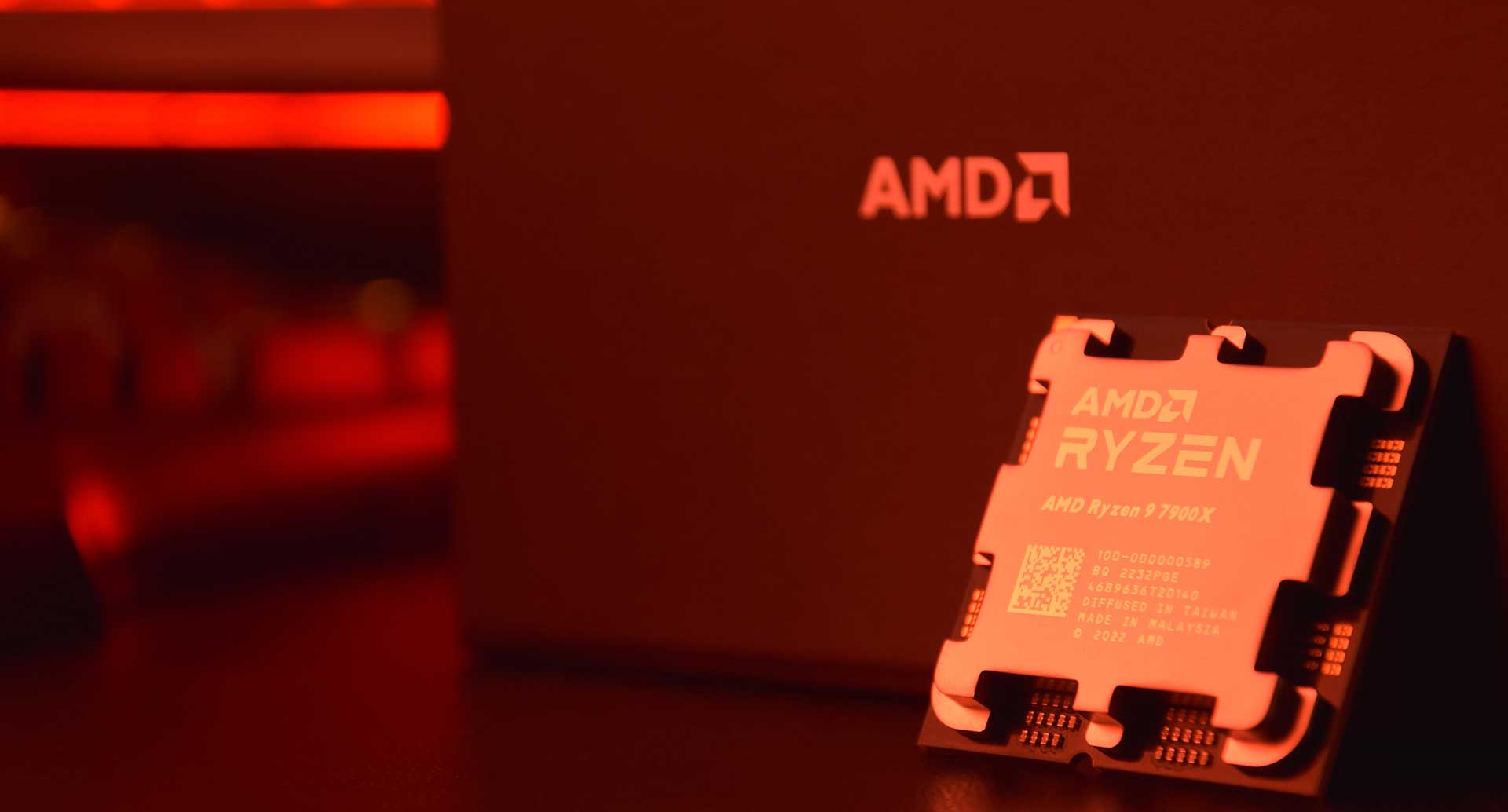
AMD states that its AI PC portfolio expanded 2.5x since 2024. Ryzen powers more than 250 notebook and desktop platforms, with adoption in over half of the Fortune 100. It outlines that its next generation ‘Gorgon’ and ‘Medusa’ processors are expected to reach an AI performance inflection point, with up to 10x gains since 2024.
In Gaming, AMD references a base of more than one billion devices and continues to support console and PC development.
Embedded and adaptive computing
AMD describes its adaptive and embedded portfolio as spanning FPGAs, embedded x86 processors, and semi-custom solutions. It states that it secured more than $50 billion in design wins since 2022 and positions itself to support AI-driven workloads from Cloud to Edge. It adds that semi-custom and physical AI solutions are expected to widen its long-term growth opportunities.
Technology leadership
AMD introduced its 5th Gen Infinity Fabric technology, which supports scale-in, scale-up, and scale-out configurations. It also presented extended roadmaps for x86 CPUs, data centre and gaming GPUs, and NPUs.
Long-term growth expectations
The company outlines growth targets for the next three to five years:
- More than 35% revenue CAGR at company level, a non-GAAP operating margin above 35%, and non-GAAP EPS exceeding $20
- More than 60% revenue CAGR in data centre and more than 10% across embedded, client, and gaming
- More than 50% server CPU revenue market share based on its EPYC portfolio
- More than 80% revenue CAGR in data centre AI
- More than 40% Client revenue share, supported by Ryzen’s enterprise adoption
- More than 70% revenue share in adaptive computing, with expanded opportunities across embedded x86 and semi-custom silicon