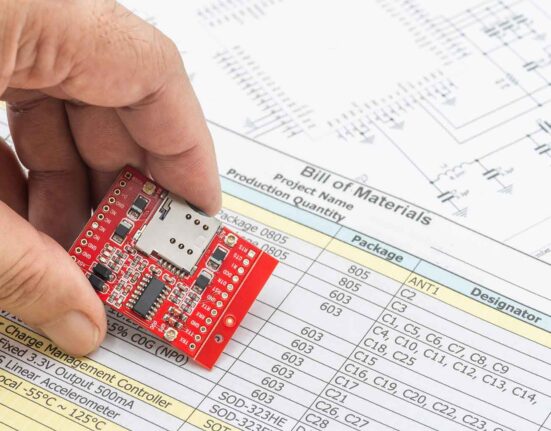


When President Trump announced a 100% tariff on Chinese imports, set to take effect 1st November, the electronics industry felt the jolt immediately. For a sector that depends on Chinese-made components for everything from chips to smart home devices, the move represents more price hikes and the explicit need for a seismic shift in global sourcing strategy.
While many manufacturers and retailers had only just adjusted to the 30% tariffs earlier this year, this sudden escalation leaves little time to react. With China still representing a significant share of global electronics manufacturing capacity, procurement leaders now face a difficult reality of supply chains that were optimised for cost efficiency must rapidly pivot toward risk resilience.
Supplier diversification becomes non-negotiable
In electronics, diversification has long been discussed as a best practice, but today, it’s a survival strategy. Industry data shows that nearly 70% of US consumer electronics still originate from Chinese suppliers. For many organisations, relocating even part of that volume can take 9-12 months, especially when specialised components, tooling, and certifications are involved. Yet those who fail to diversify risk immediate margin erosion once tariffs hit.
The most agile procurement teams are already expanding their supplier networks beyond China to Southeast Asia, Eastern Europe, and Mexico, all regions increasingly seen as cost-effective and politically safer alternatives. Some are even reshoring high-value or sensitive production to North American to improve stability and transparency.
Diversification goes beyond geography. Electronic companies are also exploring dual-sourcing strategies and modular production design, allowing greater flexibility to switch suppliers without disrupting production. For critical components like microcontrollers or connectors, building parallel supplier relationships, even at a slightly higher cost, can mean the difference between continuity and shutdown.
ESG and compliance: risk management’s second layer
As tariffs continue to dominate headlines, the global wave of environmental, social, and governance (ESG) regulations continue quietly. For electronics procurement teams, these new compliance mandates intersect directly with supplier diversification.
Regulations such as the EU’s Corporate Sustainability Due Diligence Directive (CSDDD) and the Uyghur Forced Labor Prevention Act (UFLPA) now require deeper transparency into sourcing practices. Electronics brands that move supply chains out of China to reduce tariff exposure must still verify that new suppliers meet these ESG and human rights standards.
This dual mandate, shifting suppliers quickly while ensuring compliance, demands smarter systems and stronger partnerships. Manual supplier vetting processes can no longer keep pace. Digital supplier management platforms that automate due diligence, monitor ESG metrics, and track documentation across tiers are becoming indispensable.
ESG readiness is a definite market advantage. Retailers and OEMs that can prove responsible sourcing are better positioned to maintain customer and investor trust as global political instability grows. Transparency is fast becoming as valuable as cost efficiency.
Digital transformation is the new backbone of procurement
Tariffs and trade shifts highlight the fact that global supply chains have outgrown the analog systems that manage them. Procurement in electronics has become a data discipline, where visibility and agility are key competitive levers.
Digital transformation through Cloud-based procurement solutions, AI-driven analytics, and multi-enterprise collaboration platforms, are enabling procurement teams to navigate turbulence in real-time. These technologies integrate sourcing, supplier management, and compliance tracking into a single, connected workflow.
For example, machine learning models can now assess supplier risk by analysing shipment data, trade news, and performance metrics, alerting procurement teams before disruptions occur. Digital sourcing tools also help compare landed costs under different tariff scenarios, giving companies the agility to reallocate production swiftly.
Collaboration platforms further connect procurement with engineering and logistics, ensuring that design changes, component substitutions, or logistics shifts are visible across the organisation. The speed of communication is critical in an industry where component lifecycles are measured in months.
Tariffs as a catalyst for smarter sourcing
Though the new 100% tariff threatens short-term profitability, it may accelerate a necessary evolution in electronics procurement. The past decade’s pursuit of ultra-lean, low-cost sourcing left little buffer for disruption. Now, companies are realising that efficiency without resilience is no longer sustainable.
Procurement leaders are rebalancing priorities valuing supply assurance, compliance, and flexibility alongside price. Some are even rethinking supplier partnerships entirely, moving from transactional relationships to long-term collaborations that emphasise shared visibility and co-investment in resilience.
While no procurement team can fully predict political or economic swings, they can design supply chains that absorb shocks rather than break under them. To weather the current tariff wave, and whatever comes next, electronics procurement leaders should focus on three key actions:
- Map and model: use digital tools to gain full visibility into your supplier network, including sub-tier dependencies. Simulate tariff, labour, or logistics disruptions to identify vulnerability and backup options
- Diversify and verify: expand sourcing geographies, but ensure all new partners meet regulatory and ESG standards through continuous, automated compliance monitoring
- Digitise and collaborate: integrate procurement, product development, and supplier management on connected platforms to streamline communication and speed response times
A new reality for electronics procurement
It’s obvious that tariffs move faster than supply chains. The electronics industry, already contending with component shortages and inflationary pressures, now faces an urgent need to adapt quickly and intelligently.
Tariffs and trade policy may fluctuate in the months ahead, but the core of the lesson is that resilience is now the true measure of procurement excellence. Electronics companies that diversify suppliers, embrace digital transformation, and align compliance with strategy will define the upcoming standards of global sourcing. While tariffs may rewrite the rules of trade, smart procurement leaders are already writing the playbook for what comes next.
About the author:

Jono Blackmore is an Enterprise Account Executive at TradeBeyond, where he brings over five years of experience delivering quality, product compliance, and sustainability solutions to global brands. Having worked directly in manufacturing in China, Jono specialises in helping brands digitise their operations, streamline compliance processes, and strengthen supplier collaboration, enabling companies to meet today’s regulatory and sustainability challenges while driving efficiency and trust across their value chains.