
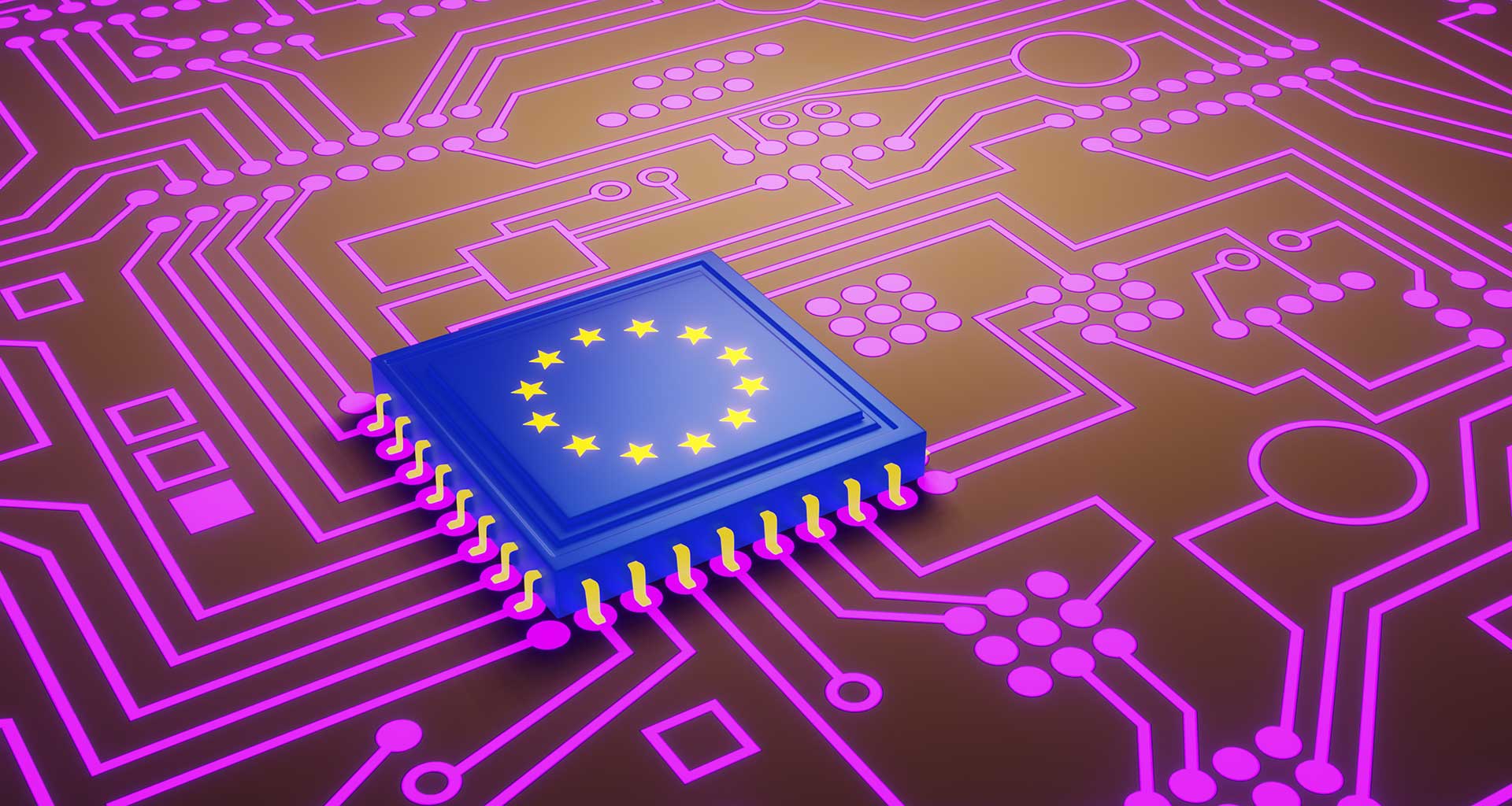
As the European Commission concluded its public consultation on the review of the EU Chips Act, the European Semiconductor Industry Association (ESIA) is calling for a strengthened and future-proof Chips Act 2 that meets Europe’s strategic needs over the next decade.
ESIA welcomes the progress made since the adoption of the first Chips Act but stresses that the next phase must accelerate industrial deployment, enhance EU-wide coordination, commit to structural industry involvement, and create conditions that attract investment, innovation, and talent.
Accordingly, ESIA calls for a clear 10-year EU semiconductor strategy supported by a dedicated EU semiconductor budget under the future European Competitiveness Fund. R&D priorities should better align with market and user industries’ needs (across all technology nodes) to spur innovation. Stronger coordination with Member States and more public-private cooperation are essential to fully realise the EU’s ambitions. ESIA calls for a regular and institutionalised high-level dialogue, a structural industry involvement that advises the European Semiconductor Board (ESB). Europe faces a severe and structural talent shortage, which is why the semiconductor industry in Europe urges joint action to attract, educate and retain STEM talent, including more semiconductor-specific education capacities.
The 2023 EU Chips Act has allowed for the creation of important projects that have strengthened Europe’s manufacturing footprint and supply resilience. However, permitting procedures remain slow and fragmented. ESIA urges the EU to make semiconductor investment conditions more predictable and attractive, for instance by introducing simplified and faster approval processes with clear timelines. The First-of-a-kind (FOAK) state aid framework should be expanded in scope to include critical segments like equipment and materials. The current claw-back mechanism should be revised to become a reinvestment obligation to increase Europe’s attractiveness for private investors. When talking about security of supply, stronger focus should be put on adequate inventory levels of user industries and early warning systems that are determined and triggered by industry.
The Chips Joint Undertaking should be continued and developed further. Future pilot lines must include industry from the earliest stages and maintain a strong link to market needs to ensure commercial success. Approval cycles must be shortened, access for SMEs be improved. Europe should reinforce capabilities in Edge AI, robotics, and industrial automation, Internet of Things, power-efficient semiconductors, as well as heterogenous integration.