
The global electronics supply chain closed out 2025 with renewed momentum as the long-standing component glut finally receded. According to Sourceability’s Q4 2025 Lead Time Report, the industry is emerging from years of pandemic-driven instability and overcorrection, entering a period marked by both growth and heightened volatility.
However, while most component categories are stabilising, memory – particularly DRAM – is becoming the defining pressure point shaping early 2026.
A market moving past the glut
For the first time since the COVID-19 supply shock, the electronic components market is largely free from excess inventory and production drag. Manufacturers had previously exercised caution through controlled output and conservative customer engagement, but 2025’s final quarter signalled a departure from that hesitancy. Yet, the report emphasises that “normal” no longer resembles pre-pandemic conditions. Structural shifts – including the acceleration of artificial intelligence (AI) adoption and new geopolitical tensions – are redefining the supply chain’s baseline dynamics.
AI remains the most powerful driver of this transition. Following the introduction of transformative AI workloads, demand from data centre and high-performance computing applications continues to surge into its third consecutive year. This boom has cascading effects across nearly all component sectors, especially memory, power management, and server-oriented passives and interconnects.
Memory: the tightest market entering 2026
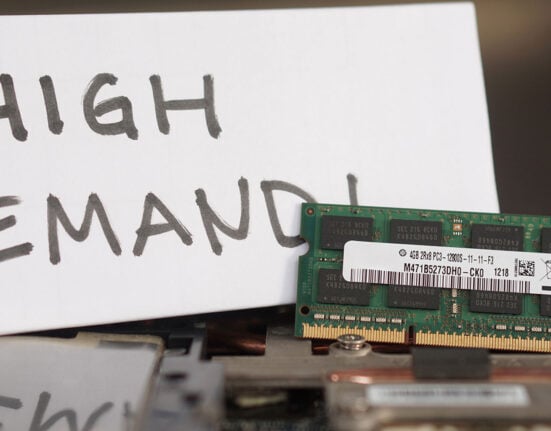
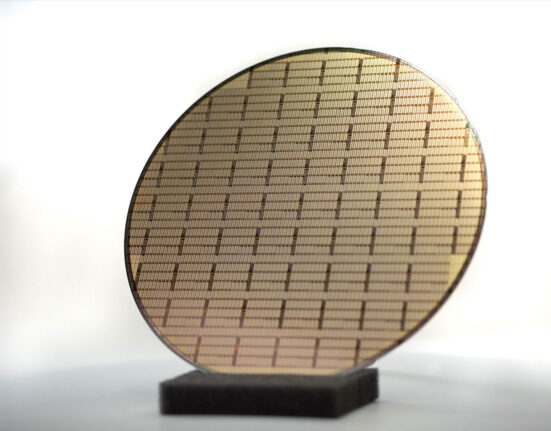
The report makes clear that memory will be the most critical and constrained segment heading into Q1 2026. Rapid wafer reallocation toward high-bandwidth memory (HBM) – required for AI accelerators – is limiting available foundry capacity for conventional DRAM. Meanwhile, DDR4 is progressing through an end-of-life phase-out, further tightening supply.
General-purpose DRAM pricing has already experienced dramatic inflation. DDR5 alone rose 307% between September and late November 2025, and major suppliers have begun imposing aggressive increases to offset shortages and incentivise long-term allocation. Samsung has already raised prices by up to 60%, with more expected.
“A collapse in demand for AI infrastructure would eradicate the supply issues overnight!” Rob Picken, Sourceability’s SVP of Digital Transformation told me. “What [people] forget is that they’re not paying for the parts, they’re paying for immediacy. Regular pricing is available in most shortage markets if [you’re] prepared to wait. If [you’re] not prepared to wait, then the pricing [you’re] seeing is the only way to obtain the materials [you] need.
“Realistically, though, pricing escalations will continue as long as [people] are prepared to pay the cost. We don’t see a huge slowdown in the pricing development until equilibrium is reached, and that’s simply not possible with the current production capacity picture we have today.”
Lead times reflect the strain: components that were available in 8–12 weeks last year are now quoted at 26–40+ weeks across multiple manufacturers. Several lines have moved to allocation-only fulfilment, with Micron suspending quotations entirely for DDR4, DDR5, and LPDDR families. Analysts quoted in the report predict that this is not a cyclical spike but the beginning of a prolonged structural shortage – a potential “super-cycle” of memory price hikes.
“When we listen to our customers a few things become clear very quickly,” notes Picken. “The scale of your operation and consumption tends to dictate how you’re managed by your suppliers (which has always been true) and that the sheer level of uncertainly from other angles in the supply chain is influencing the mismatch in customer vs supplier decision making.
“Think of currency fluctuations. Organisations tend to work with suppliers and finance providers to ‘hedge’ against risk. This is because too many external factors can influence currencies globally.
“Traditionally, though, in physical commodity trade, pricing was governed by supply and demand – a two-sided coin. Now the coin is no longer two sided. We still have supply and demand, but thrown in there now we have geopolitics, tariff, strikes, wilful constraint of critical raw materials, production capacity issues, labour issues, onshoring, protectionism … the list goes on.
“Increasingly, due to fear and uncertainty, customers want longer term contracts and supply agreements. Suppliers want flexibility and short-term dynamic agreements in order to control their pricing better. If you think back to COVID times, this is a total 180º turn!”
In considering how OEMs should approach forecasting and negotiation, Picken said it depends on a few key factors: “If you’re in direct contact with the supplier, you have more control. If you’re removed via EMS and distribution, then you’re more challenged with less control.
“In our view though, working on a strategy to buy a small part of your demand from independent distribution can help to control supply imbalances and gaps, but also drive down your average price.
“Further, over-reliance on a single source tips far too much power into the hands of the suppliers. Active work to de-risk critical technologies and find viable second sources should be a key consideration and driver for any consumer of memory products in 2026.”
Geopolitical risk amplifies market instability
In addition to AI-driven demand, geopolitical factors are raising costs and creating new chokepoints. The uncertain US tariff landscape – particularly the possibility of a 100% tariff on imported semiconductors – remains a looming threat. Even without immediate implementation, the anticipation alone has manufacturers and buyers re-evaluating sourcing strategies and pricing structures.
Logistics costs are climbing as Asia–US freight rates rise from mid-2025 levels. Longer booking times and increased landed-cost exposure are impacting margins and planning cycles. Meanwhile, the report highlights the severe disruption originating from the ongoing Nexperia conflict. Although China has exempted certain Nexperia products from export controls, limited wafer availability at the Dongguan plant has prompted automakers and Tier-1 suppliers to secure inventory aggressively. This has rippled into competitors’ portfolios, putting additional pressure on discrete components entering 2026.
“Many suppliers have drop-in-replacements for each other’s parts, in particular in power discrete, and this helped to soften the Nexperia blow,” notes Picken. “You’ll see a remarkable drop-off in consumers of Nexperia parts as soon as full-time certifications and approvals for cross-ref components get released in critical industries. Automotive, medical, aerospace for example take a long time to approve changes in registered designs. The full cycle into drop-in-replacements to get away from problem, or unreliable or erratic suppliers will hit hard in 2026.
“Look at this another way – when was the last time you heard of a significant issue in the power discrete marketplace? If a single, high-volume supplier had not thrown up so many issues we would be sailing into 2026 talking exclusively about AI infrastructure demand.”
Component category highlights
Volatile memory
Volatile memory is by far the most constrained category. Lead times for DRAM and related products range from 20 to 42 weeks, with ongoing price escalation expected. Micron’s quotation freeze and Samsung’s steep increases underscore deteriorating availability.
Non-volatile memory
NOR, NAND, EEPROM, and FRAM are generally more stable but trending upward. NAND, in particular, is tightening due to AI-driven storage demand and suppliers reallocating capacity. Price increases are expected through early 2026 as inventories shrink.
Storage (eMMC, SSDs, memory cards)
Storage solutions are increasingly aligned with server and AI expansion. SSDs from major brands are recording sharp demand growth, particularly in enterprise-class product families. Lead times are edging upward, and pricing is firmly in an inflationary cycle.
Discrete components
Discrete semiconductors are heavily affected by the Nexperia situation. Lead times for key products such as small-signal devices, MOSFETs, and protection components commonly span 12–52 weeks, with Nexperia products consistently at the upper extreme. Automotive-grade components are particularly constrained.
Logic
Logic ICs are relatively stable compared to memory and discretes. Standard logic remains widely available across most suppliers – except Nexperia, where 52-week lead times persist. Programmable logic (e.g., FPGA-class devices) shows moderate 12–24-week lead times without significant volatility expected.
Advanced analog
Advanced analog device availability is improving, though lead times still vary due to package popularity and verification complexity. Most suppliers remain in the 12–30-week range, with pricing expected to stay steady unless tariff changes materialise.
Embedded processing (MCUs)
Microcontrollers remain broadly stable across 8-bit, 16-bit, and 32-bit families. Most manufacturers report 10–28-week lead times, though some Renesas MCU lines extend up to 48 weeks. No major pricing shocks are expected near-term.
Optoelectronics
Optoelectronic components are one of the few segments experiencing clear stability. Lead times remain in the 8–25-week window with minimal pricing volatility, despite increased constraints in neighbouring markets.
Passives, Interconnect, and Electromechanical
Although detailed charts follow later in the report, the narrative section highlights rising prices in passives and interconnects driven by AI server build-outs and raw material inflation. Panasonic’s early-2026 price increases for POSCAP products serve as an indicator of wider cost pressures. PCB production also tightened in Q3, with further strain expected from data centre hardware demand.
A stabilising market, but a challenging 2026 ahead
The Q4 2025 Lead Time Report shows an industry that has finally left the supply-demand imbalance behind and is heading into a growth phase. However, growth comes with sharp volatility – fuelled by AI expansion, memory shortages, geopolitical uncertainty, and rising logistics costs.
In early 2026, memory will be the defining constraint. Discrete semiconductors and certain passives will also remain pressured due to external factors. Meanwhile, logic, embedded processing, and optoelectronics will provide some welcome stability.
Overall, while the market is no longer in recovery mode, supply chain resilience will remain a central focus as the industry prepares for another transformative year.