
The global gallium nitride semiconductor devices market is entering a decisive growth phase, driven by technological innovation, expanding applications in high-performance electronics, and widespread industry adoption.
The latest market research indicates that gallium nitride (GaN) semiconductor devices are rapidly transforming the landscape of power electronics, RF communications, and high-efficiency systems – positioning GaN as a core component of next-generation semiconductor technology.
As a wide-bandgap semiconductor material, GaN offers compelling advantages over traditional silicon, including higher electron mobility, greater power density, and superior high-frequency performance. These properties make GaN devices essential in sectors ranging from 5G telecommunications and electric vehicles (EVs) to consumer electronics and renewable energy systems – all of which demand efficiency, miniaturisation, and reliability.
Explosive market growth forecasts
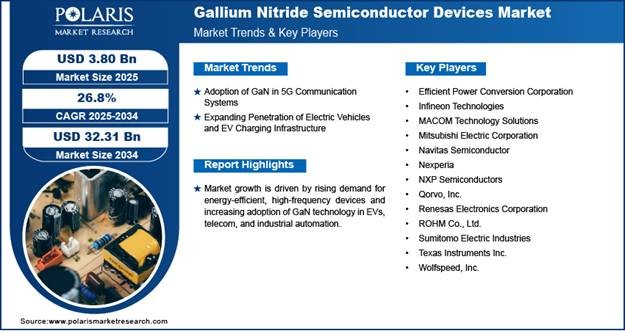
The global GaN semiconductor devices market is poised for significant expansion through 2034, with demand driven by multiple high-growth applications. According to industry projections, the market is expected to grow to approximately $32.31 billion by 2034, reflecting a robust compound annual growth rate (CAGR) led by accelerating adoption across key industries.
This momentum is part of a broader industry trend toward wide-bandgap semiconductors that deliver higher energy efficiency, smaller form factors, and enhanced thermal performance, creating an ecosystem that increasingly favours GaN over legacy silicon technologies – especially in demanding use cases such as power conversion, RF amplification, and high-speed data transmission.
Drivers fuelling GaN adoption
A number of powerful market forces are propelling the adoption of GaN semiconductor devices:
- 5G communication systems: the global rollout of 5G infrastructure is a major growth catalyst for GaN devices, particularly in RF and microwave components. GaN’s ability to operate efficiently at high frequencies with low power loss makes it ideal for 5G base stations and massive-MIMO architectures – critical for supporting higher data rates and expanded network capacity
- Electric vehicles & charging infrastructure: the rapid expansion of electric vehicle adoption and EV charging networks is creating strong demand for GaN power devices. These devices enable faster switching, increased energy efficiency, and reduced system size in onboard inverters and chargers, making them attractive for next-generation electrified mobility solutions
- High-efficiency power electronics: across consumer and industrial electronics, GaN power devices support compact, low-loss designs that improve energy conversion efficiency. From fast chargers for smartphones and laptops to high-performance data centre power supplies and renewable energy converters, GaN is delivering measurable operational advantages
Market segmentation & trends
The GaN semiconductor market’s growth is not uniform – several segments are emerging as leaders:
- Power devices & transistors: power semiconductor components, including high-electron-mobility transistors (HEMTs) and integrated power ICs, dominate GaN device adoption due to their critical role in energy-efficient systems and converters
- RF & communications devices: GaN RF devices continue to be highly sought after for telecommunications equipment, including amplifiers for 5G and satellite communications, where performance at high frequencies is essential
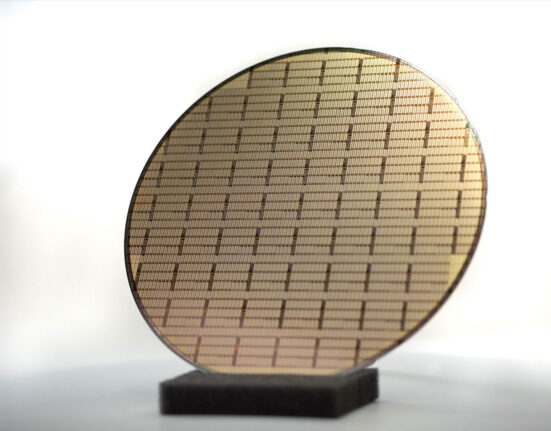
- Wafer scaling & manufacturing innovation: advances in wafer production – including the shift toward larger wafer sizes and GaN-on-Si integration – are helping reduce manufacturing costs and improve output yields. This scaling trend is making GaN more competitive with silicon while enabling broader commercial adoption
Regional growth dynamics
North America remains a dominant market for GaN semiconductor devices, supported by strong R&D capabilities, robust industrial infrastructure, and significant deployment of 5G, EV, and high-performance computing technologies.
Meanwhile, the Asia Pacific region is emerging as the fastest-growing market due to rising investments in telecommunications, automotive electrification, and consumer electronics. Countries such as China, Japan, and South Korea are aggressively increasing production capacity and technological innovation, further expanding regional market share.
Industry outlook and strategic implications
The rise of GaN semiconductor devices represents a strategic shift for the entire electronics, semiconductors & electronic devices industry. Companies that embrace GaN technology stand to gain a competitive edge as markets transition toward solutions requiring higher efficiency, greater power density, and smaller footprints.
From telecom carriers upgrading to 5G infrastructure to EV manufacturers seeking energy-efficient power electronics, the advantages of GaN are being realised across a wide spectrum of applications. As supply chains mature and manufacturing processes scale, GaN is set to play an increasingly central role in the evolution of global electronics systems.
Conclusion: GaN at the forefront of semiconductor innovation
As global demand for high-performance, energy-efficient electronics continues to rise, gallium nitride semiconductor devices are positioned at the forefront of this technological transformation. With strong growth projections, diversified applications, and accelerating adoption across industries, the GaN semiconductor devices market is not just expanding – it’s reshaping the future of semiconductor technology.
View more information: https://www.polarismarketresearch.com/industry-analysis/gan-gallium-nitride-semiconductor-devices-market/request-for-sample