
For electronic component procurement professionals, staying current with microprocessor sales trends is a strategic necessity. Trends in microprocessor sales reflect broader shifts in demand, supply chain pressures, pricing movement, and emerging technologies that directly influence procurement decisions, supplier negotiations, and risk mitigation throughout 2026.
Microprocessor market growth
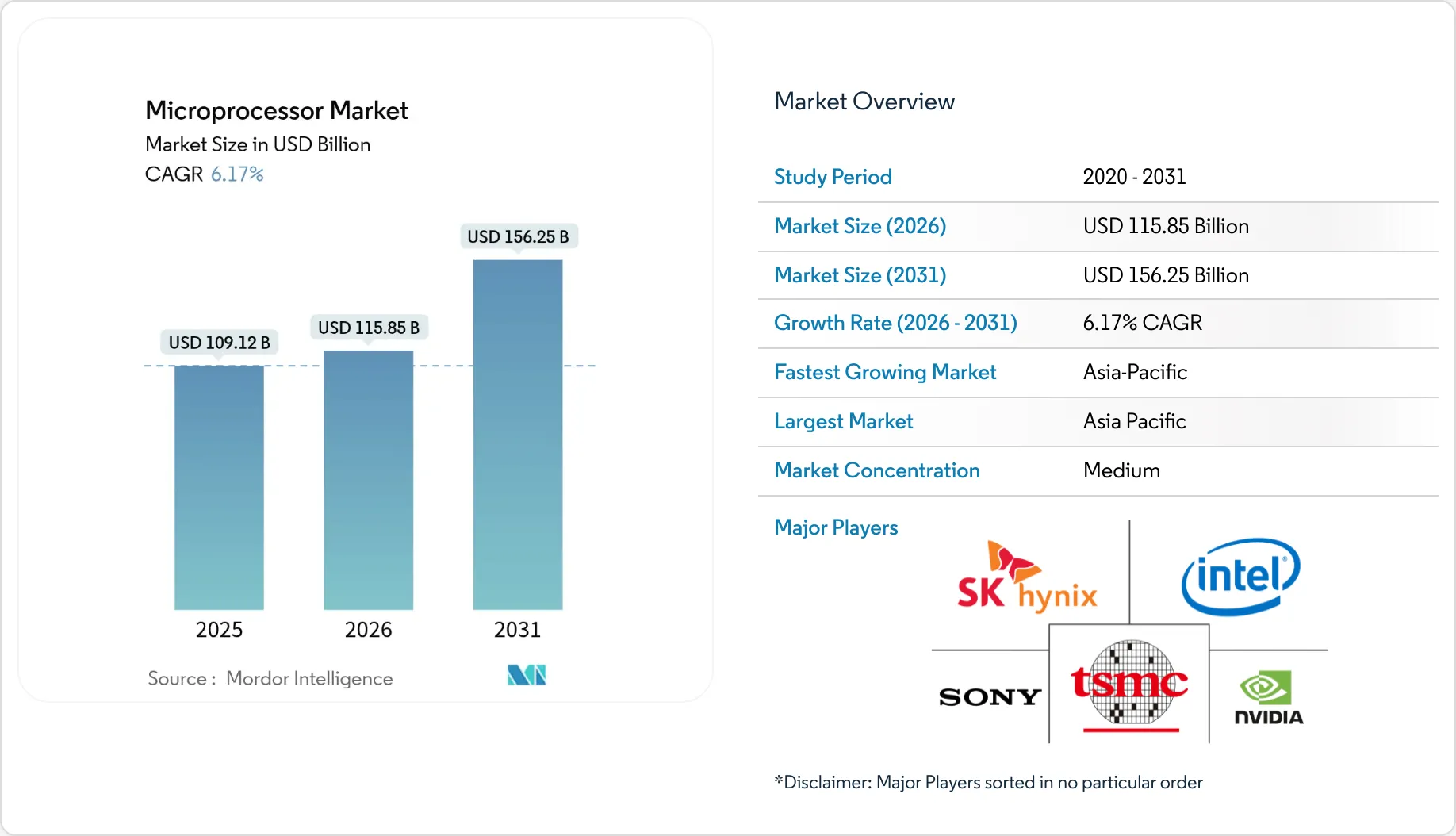
The global microprocessor market continues to expand, driven by demand across sectors such as embedded systems, AI-enabled devices, industrial applications, and automotive electronics. Recent industry analysis shows the market is projected to grow from around $109 billion in 2025 to approximately $115–108 billion in 2026, with continued growth. These estimates suggest a solid CAGR in the mid-single digits over the next several years.
Multiple forecasts indicate that below-3nm and advanced process technologies are increasingly critical, reflecting a shift toward higher-performance microprocessors in data centres and AI applications.
Why you must watch microprocessor sales closely
For procurement professionals, microprocessor sales trends are a leading indicator of demand pressure and supply constraints that affect the wider semiconductor ecosystem.
1. Demand signals across end markets
Microprocessors are used in a broad range of high-growth applications:
- AI and data-intensive systems that require advanced logic and compute-heavy processors
- Automotive and industrial electronics with long lifecycles and rigorous quality requirements
- Smart devices, IoT, and connected infrastructure with growing unit volumes
The diversity in demand means sales growth in one sector (for example, AI accelerators) can tighten supply in another (such as automotive-grade processors).
2. Supply restrictions still influence lead times
Although general semiconductor sales are forecast to approach $1 trillion in 2026, notable supply imbalances persist, particularly for high-performance components and memory chips that are vital to microprocessor systems.
Recent industry reports confirm that manufacturers are prioritising capacity for AI-driven logic chips and memory, which means procurement teams must navigate longer lead times and allocation-driven supply agreements for certain microprocessor families.
3. Pricing pressures and allocation strategies
With strong demand for cutting-edge chips, pricing dynamics have shifted – especially where supply cannot immediately keep up. Procurement leaders should watch ASP (average selling price) movement across microprocessor categories, as price increases can quickly erode cost savings or disrupt budget forecasts.
In parallel, memory shortages – driven by AI demand – are causing ripple effects in component pricing and priority allocation, which indirectly impacts microprocessor procurement.
What does this mean for procurement in 2026?
Microprocessor sales figures – whether quarterly industry data, supplier shipment reports, or market forecasts – should feed directly into procurement demand forecasting models. Early identification of sales acceleration in specific microprocessor classes helps planners adjust safety stock levels and optimise order cadence.
Understanding where sales growth is strongest allows procurement to tailor sourcing strategies. For example:
- Locking in multi-year agreements with foundries for advanced nodes
- Securing preferred allocation slots with distributors
- Cultivating relationships with second-tier suppliers for legacy or niche processors
Regions with strong production capacity continue to dominate manufacturing, creating concentration risk. Procurement teams should look beyond headline sales figures to evaluate geographic supply risk and include dual-source options where feasible.
Microprocessor trends should not be siloed. They influence and are influenced by memory pricing, logic chip demand, end-market cycles, and technology shifts. Integrating microprocessor sales insights into a broader dashboard of component trends equips procurement teams with a more holistic view of supply dynamics.
The bottom line
In 2026, microprocessor sales trends are powerful forward indicators for procurement teams. Rather than reacting to supply disruptions after they happen, procurement leaders who regularly monitor market sales intelligence – and understand the implications of demand shifts – can make more informed sourcing decisions, negotiate stronger terms, and align inventory strategies with real-world market dynamics.