




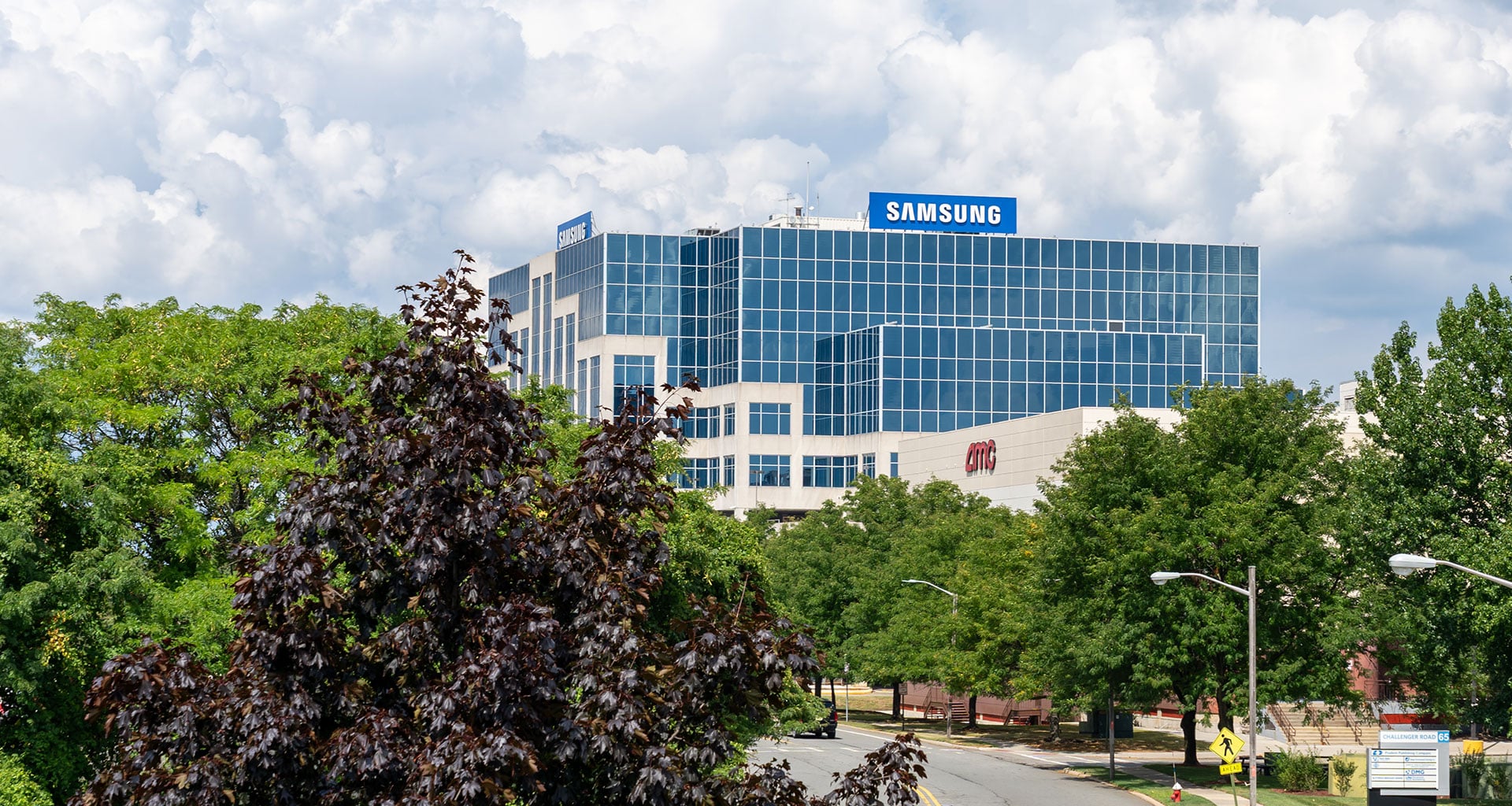
Samsung Electronics has crossed the $1 trillion market capitalisation threshold – a milestone that places it alongside a handful of the world’s most valuable technology companies, and only the second Asian company after TSMC to reach that height.
The reason? An AI-driven memory supercycle that is reshaping the economics of the semiconductor industry.
Shares surged nearly 15% after the news, on pace for their single biggest daily gain in the company’s history, as the company announced a set of Q1 2026 results that broke records. Consolidated revenue hit KRW 133.9 trillion – an all-time quarterly high, up 43% quarter-on-quarter – while operating profit climbed to KRW 57.2 trillion, itself a new record.
HBM4 and the AI infrastructure race
The company’s Device Solutions (DS) Division – home to its semiconductor businesses – was the standout of the quarter, posting KRW 81.7 trillion in revenue and KRW 53.7 trillion in operating profit on an 86% QoQ sales increase. The Memory Business was also key: it surpassed its own quarterly sales record by capitalising on soaring demand for high-bandwidth, AI-grade products, with industry-wide average selling price increases adding further tailwind.
Most significantly for the engineering community, Samsung became the first in the industry to begin mass product sales of HBM4 – the fourth-generation High Bandwidth Memory standard essential for next-generation AI accelerators – and SOCAMM2, both targeting NVIDIA’s Vera Rubin platform. The company also announced the development of PCIe Gen6 SSDs, positioning itself at the front of storage performance for inference workloads.
Samsung says it will deliver its first HBM4E samples in Q2 2026 and is targeting proactive positioning ahead of new GPU and CPU platform launches anticipated in the second half of the year. Looking further out, the company expects server memory demand to remain robust as hyperscalers scale infrastructure to meet enterprise adoption of large language models and agentic AI services – a trend it cited as a structural demand accelerator.
Samsung’s Foundry Business posted softer earnings due to seasonal factors but maintained design win momentum in high-performance compute. The division is now targeting full utilisation of its advanced process nodes in Q2, while continuing to develop its 1.4nm node – and pushing into silicon photonics as a long-term strategic bet. Mass production of a second-generation 2nm process for mobile is scheduled to begin ramping in H2 2026, alongside 4nm memory products and LPUs aimed at AI and HPC customers.
The Apple factor
Adding further fuel to investor enthusiasm was a widely-reported possibility that Apple may turn to Samsung to manufacture chips for its US-based devices – a development that, if confirmed, would represent a significant shift in the foundry landscape and further cement Samsung’s position as a dual-force in both memory and advanced logic.
Beyond semiconductors
The DX Division – covering mobile, networks, and consumer electronics – contributed with a 19% QoQ revenue uplift, supported by Samsung’s latest flagship smartphone launch. The MX business secured single-digit profitability through proactive cost management, while Samsung Display posted stable large-display revenues on robust OLED gaming monitor demand. Harman, the audio and automotive division, saw an earnings dip due to memory cost pressures, but expects recovery in Q2 on automotive supply growth.