
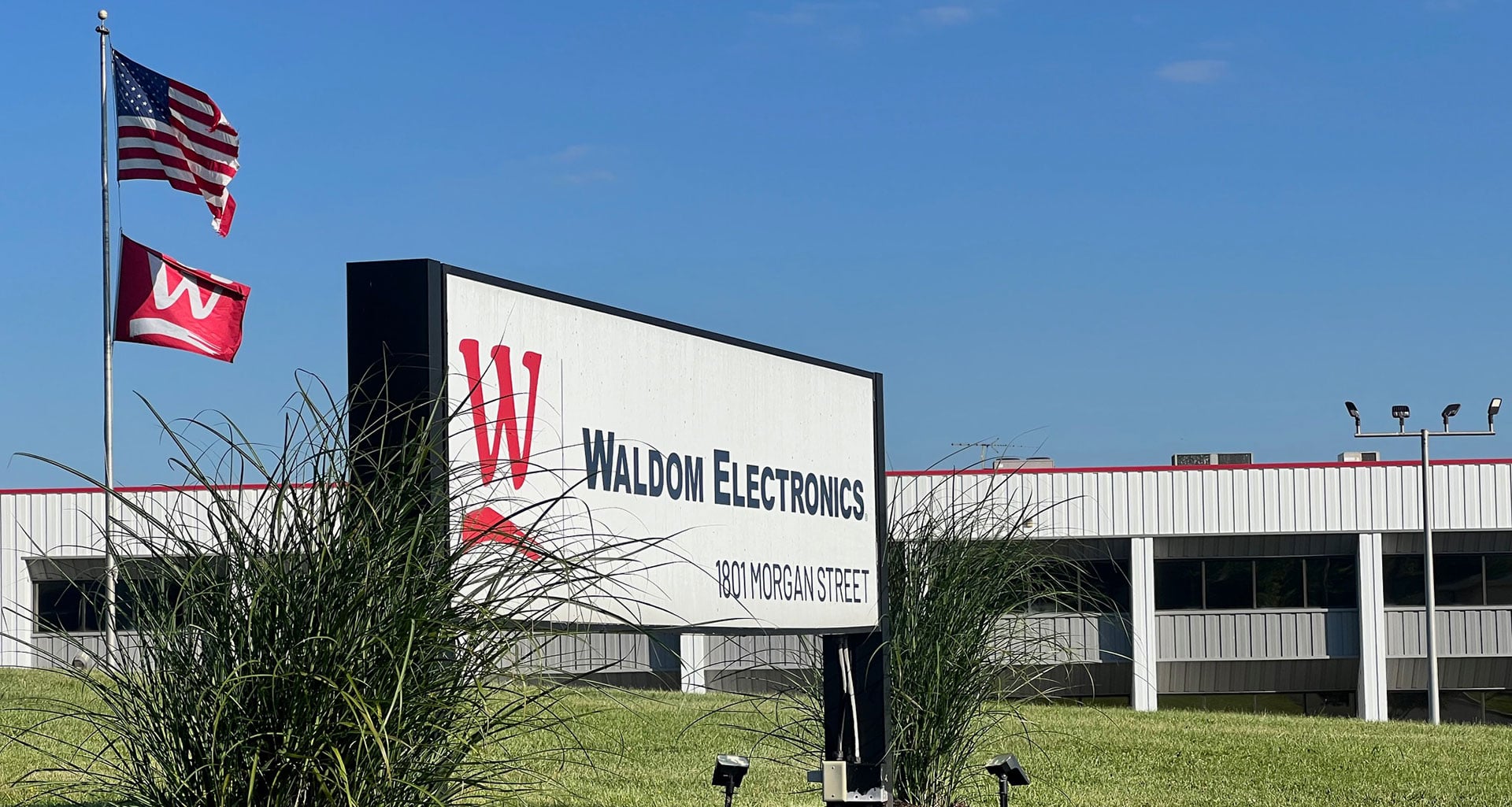
Founded in 1947 in Chicago, Illinois, Waldom began as a distributor of wartime surplus products before expanding into the manufacturing of speaker components. During the 1960s, the company became part of GC under Katy Industries, broadening its product portfolio to serve the electronics, automotive, and communications industries.
A pivotal milestone came in 1967 when Waldom signed its first agreement with Molex, establishing a partnership that remains Molex’s longest-standing distributor relationship. In 1986, Waldom moved into a new facility, supporting continued growth and consolidation.
In 2003, Waldom was acquired by the Nizam family, with Basel Nizam leading the company’s transformation under a master distribution model. That same year, Waldom signed TE Connectivity, reinforcing its position as a key global distributor. Over the following years, Waldom expanded rapidly, launching its Green Stock excess inventory solution in 2010 and opening offices in Amsterdam and Singapore to support EMEA and Asia-Pacific operations.
By 2018, Waldom had further strengthened its global footprint with offices in Shanghai and Shenzhen, surpassing $100 million in annual global turnover. Continued growth led to the opening of a new US warehouse in Georgetown, Ohio, in 2020.
In 2022, Don Akery was appointed CEO, ushering in a new phase of leadership. More recently, Waldom has deepened its commitment to sustainability, publishing its first ESG report in 2024 and, in 2025, achieving global ISO 9001 and 14001 certifications, committing to a net zero roadmap, and installing solar panels across key facilities. Today, Waldom serves more than 2,500 distributors worldwide, with a significantly expanded inventory and a strong foundation for continued global growth.
“Waldom is a nearly 80-year-old company, recognised as a trusted and well-established brand in electronic and electrical component distribution. The company works with 60+ leading IP&E manufacturers and supports major global and regional distributors worldwide through its unique master distribution model,” said Roger Raley, Vice President & General Manager, Waldom Electronics.
Waldom maintains over $600 million in strategic inventory across more than 265,000 SKUs, positioned to support the growth of its global distribution channel.
What differentiates Waldom from other distributors?
Waldom’s differentiation is rooted in its unique business model, channel alignment, inventory visibility, sustainability leadership, and inventory strategy.
Waldom operates a unique, non-competing master distribution model designed to support and strengthen the distribution ecosystem. Rather than selling to end customers, the company works exclusively with other distributors, ensuring complete channel alignment.
By acting as an extension of its supplier partners and a strategic ally to distributors, Waldom adds value without creating channel conflict. This non-competitive approach enables Waldom to reinforce trust, enhance collaboration, and ultimately strengthen and accelerate the growth of the global distribution channel.
Waldom concentrates its stocking strategy on long-tail components that complement, rather than compete with, distributor inventory profiles.
“With more than 265,000 SKUs – many of which are uniquely stocked by Waldom – distributors can offer a broader range of parts without taking on additional inventory risk, enabling them to meet customer demand more effectively,” notes Raley.
Waldom integrates its inventory directly into the ERP systems, websites, and e-commerce platforms of major distributors worldwide. This deep integration generates approximately 17 million inventory views each month across global distributor digital channels. As a result, manufacturers gain expanded reach to end customers through the distribution channel without creating channel conflict, while distributors gain immediate access to inventory they do not stock themselves – significantly expanding their available offering.
Beyond component distribution, Waldom provides a range of programmes designed to remove barriers, expand market reach, and improve supply chain efficiency for manufacturers and distributors.
The company’s model is designed to make components easier to buy while preserving manufacturing efficiency and expanding market reach. By purchasing parts at factory-level minimum order quantities (MOQs) and redistributing them to distributors in smaller, more flexible quantities, Waldom removes traditional ordering barriers and unlocks new sales opportunities. This approach allows manufacturers to maintain efficient production runs while enabling distributors to respond more effectively to customer demand.
Waldom also supports new product introductions by stocking components at launch and offering them to distributors with reduced MOQs, accelerating adoption and lowering barriers to entry across the global market.
Sustainability & environmental commitment
Sustainability is core to Waldom’s operating model. The company powers approximately 80% of its warehouse capacity with solar energy, with solar panels installed across all US facilities, significantly reducing its operational carbon footprint. It also maintains consistent environmental management practices worldwide through ISO 14001 certification across all regions and has been recognised with an EcoVadis Silver rating for its sustainability performance. These achievements reflect a long-standing commitment to responsible operations and continuous environmental improvement.
Central to its sustainability approach is Waldom’s Green Stock programme, established more than 15 years ago, which has prevented over nine billion components from being sent to landfill by recovering value from slow-moving and excess inventory and reintegrating it into the supply chain. Manufacturers and distributors transfer excess stock to Waldom, where it undergoes rigorous quality and inspection processes before being reintegrated into the supply chain.
“This approach minimises waste, recovers value, and gives components a second life to meet ongoing market demand,” said Raley.
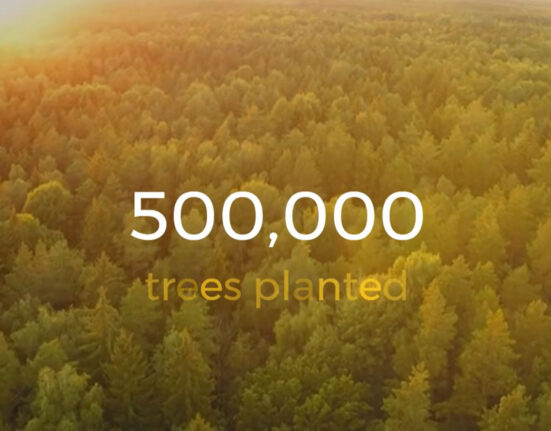
To further reinforce its environmental commitment, Waldom plants a tree for every Green Stock order. In just two years, more than 500,000 trees have been planted, making it one of the largest collective tree planting initiatives in the industry.
Market expectations in 2026
Recent supply chain disruptions have reinforced the strength and resilience of Waldom’s business model. By maintaining deep inventory positions in hard-to-source components, the company has been able to support distributors precisely when availability elsewhere tightened. During the COVID period, this approach drove record sales, and more recently, tariff-related volatility led many distributors to slow or pause imports. With hundreds of millions of dollars of inventory already stocked and available in the US, Waldom was well positioned to meet demand and provide continuity of supply.
These experiences are shaping how Waldom prepares for the future. As tariffs evolve from short-term disruptions into a more permanent cost factor, the company is focusing on holding more inventory closer to customers in its EMEA and Asia-Pacific regions. In parallel, Waldom is working to convert its US warehouses into Foreign Trade Zones (FTZs), providing greater flexibility to move product into and out of the US while mitigating tariff impacts and improving regional support.
Looking ahead to 2026, Waldom anticipates a strong demand environment.
“When I look at end-markets, AI and defence really drove the market in 2025. For 2026, in addition to those two, we’re seeing broader industries like consumer and industrial getting back to growth. Couple that with leaner inventory in the supply chain and I believe 2026 could be a record year,” notes Raley.
The company also expects continued acceleration in onshoring and near-shoring as customers seek greater supply chain resilience.
One of the key challenges Waldom sees ahead is the pace of automation and AI adoption. While these technologies offer significant opportunities to modernise and improve business processes, the challenge lies in moving quickly enough to turn innovation into a true competitive advantage – rather than simply keeping pace with the market.
What will the next five years look like for Waldom?
Over the next five years, Waldom sees significant opportunities to further support customers by continuing to invest in automation and artificial intelligence to streamline and modernise processes across the organisation. These initiatives are already underway and are focused on improving efficiency, scalability, and responsiveness as customer and supplier needs continue to evolve.
In parallel, Waldom has been optimising its warehouse infrastructure to maximise space utilisation and support long-term growth. Over the past several years, the company has implemented enhancements such as narrow-aisle racking and increased rack heights to significantly expand storage capacity. These upgrades are nearly complete at the Georgetown, Ohio facility, with similar improvements planned for Rockford, Illinois. With approximately $650 million in inventory today, these investments will enable Waldom to scale toward holding up to $1 billion in inventory, strengthening its ability to support customers during both stable and volatile market conditions.
Waldom is also focused on expanding its market reach and service offering. While the company has traditionally been strongest in electronic components, it has established a growing presence in the electrical and industrial sectors. Expanding and aligning its product portfolio to better serve these markets represents a key growth initiative. At the same time, Waldom plans to accelerate geographic expansion into high-growth regions such as India and Latin America, broadening its global footprint and bringing its model to new customers and partners.
This article originally appeared in the Jan/Feb 26 issue of Procurement Pro.