
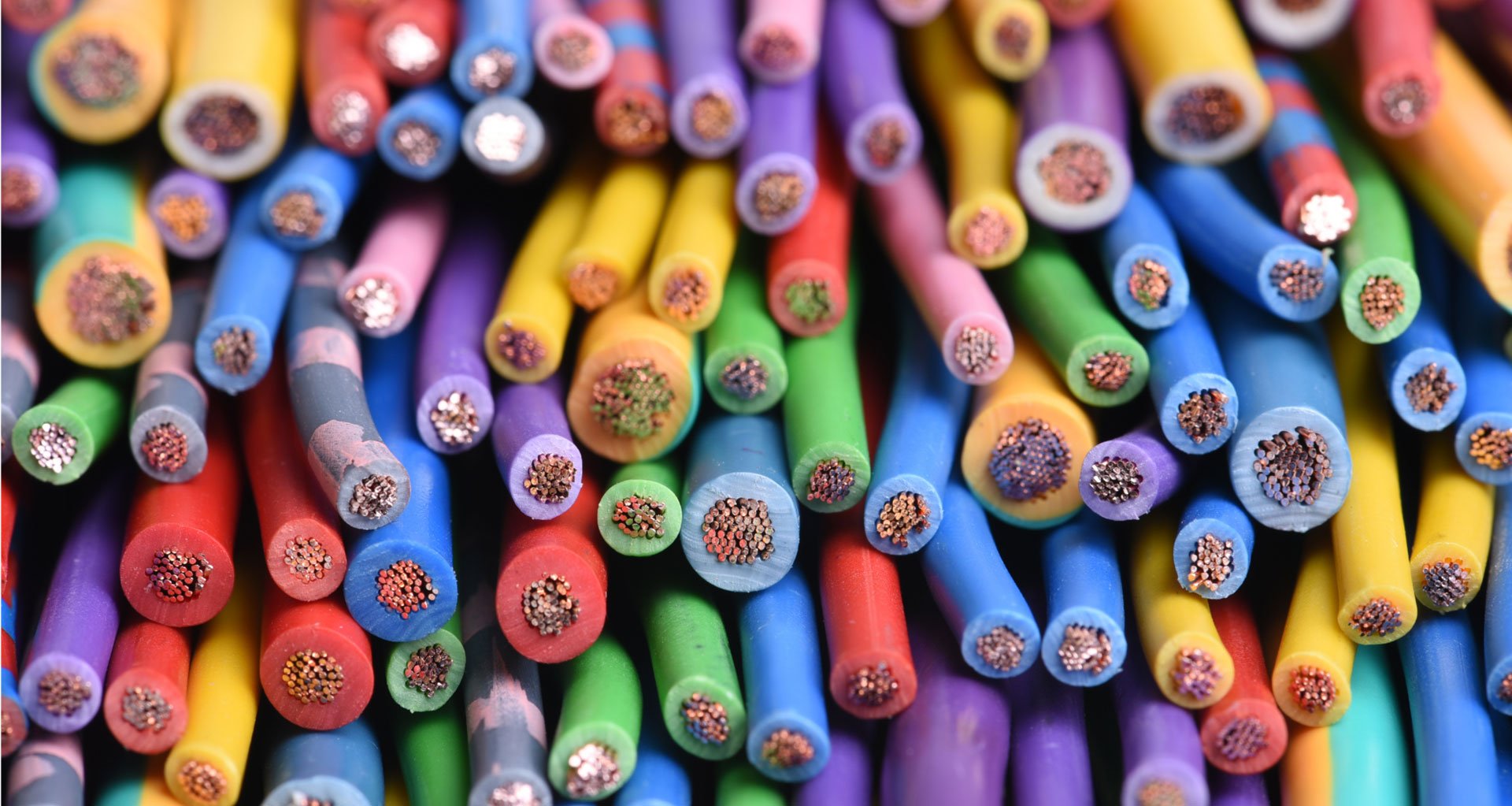
The cable manufacturing industry sits at the centre of many sectors that are currently driving economic growth and technological transformation. It supplies high-power cables and shielded data solutions for electric vehicles (EVs), enabling electrification, connectivity, and safety in next-generation mobility. At the same time, the industry delivers mission-critical components that underpin the renewable energy transition, from wind and solar installations to energy storage and grid interconnections.
Beyond energy and mobility, cabling plays a key role in the expansion and modernisation of transport networks, the development of data centres and critical infrastructure. As global demand for electrification, digitalisation, and resilient supply chains grows exponentially, cables have evolved from standardised components into highly engineered products tailored to very specific industry, compliance, and sustainability requirements. In this context, the cable industry is no longer a supporting player, but it has become the backbone of the modern global economy.
With the multiple applications of cabling comes an increasing demand for raw materials which face unprecedented demand unpredictability. Key components such as copper, aluminium, and polymers are prone to extreme price swings and tariffs are adding to geopolitical pressures that add high costs to scarcity issues. Specifically, the US tariffs of up to 25-50% on aluminium and semi-finished copper products have raised costs for industries that import these materials. Even minor price changes can have major bottom-line impacts on wire drawing, insulation, and stranding, which rely heavily on these materials.
Although overall global demand for these materials has grown exponentially over the past decade or so, demand from single buyers shifts greatly with OEMs and utility providers ordering smaller batches. In addition to this, smaller orders are coming with tighter timelines and custom specs, especially for niche products like fibre optics or EV-specific cables. This makes demand highly unpredictable.
These pressures affect long-term supplier agreements which need to become more flexible, speedy and integrated with production planning. Price fluctuations are a challenge to budgeting accuracy leaving to last-minute renegotiations in response to unexpected disruptions.
In this environment, procurement and supply chain functions can no longer operate in silos. Greater transparency across suppliers, real-time demand signals, and tighter coordination between sourcing, manufacturing, and logistics are becoming essential. Companies that succeed will be those able to anticipate change rather than simply react to it, turning uncertainty into a managed risk and transforming supplier relationships into a strategic advantage.
New regulations are also putting compliance departments under strain. The EU Registration, Evaluation, Authorisation and Restriction of Chemicals (REACH), for example, regulates the chemical substances inside insulation, sheathing, fillers, inks and additives and thus directly affects design, sourcing, and cost. Similarly, the EU RoHS (Restriction of Hazardous Substances) applies to all Electrical and Electronic Equipment (EEE) placed on the EU market, so all cables need to be designed to be RoHS-compliant to avoid dual SKUs.
As regulatory scope and documentation requirements continue to expand, managing compliance manually becomes both time-consuming and highly risky. Without automation and centralised data management, organisations face fragmented information, limited traceability, and increased exposure to audit failures. To remain compliant while maintaining speed and flexibility, companies must embed regulatory intelligence directly into their sourcing, design, and supplier collaboration processes.
Beyond product-level compliance, the regulatory landscape is widening across the entire value chain. The EU Carbon Border Adjustment Mechanism (CBAM) enters its definitive phase in 2026, increasing pressure on manufacturers to quantify and report embedded emissions in upstream materials such as aluminium and steel. At the same time, sustainability reporting and due-diligence requirements under the Corporate Sustainability Reporting Directive (CSRD) and the Corporate Sustainability Due Diligence Directive (CSDDD) are driving deeper transparency expectations across multi-tier supplier networks. Emerging product-data frameworks under the Ecodesign for Sustainable Products Regulation further reinforce the need for traceable, centralised product and supplier data.
The difficulties of monitoring for ESG violations, geopolitical instability, delivery delays, and the impact of tariffs spill over onto supplier relationships and agreements. Traditional supplier scorecards, often manually maintained and based on historical performance snapshots, struggle to capture today’s multi-tier risks, regulatory exposure, and real-time volatility. In addition to this, siloed data and manual processes make transparency impossible and hinder collaboration between procurement and engineering or production teams for example. Lack of integration means RFx cycles are laborious and inefficient, compliance reporting is inconsistent and decision-making can only be partially informed.
To face the increasing pressures it is under, the cabling industry needs to invest in intelligent supplier collaboration platforms that create transparent and up-to-the-minute snapshots of ecosystems where data, systems, and stakeholders are fully visible. Connecting procurement, engineering, suppliers, and quality teams provides a seamless experience that responds to the intelligence and agility today’s challenges demand.
With truly intelligent solutions sourcing cycle times can be reduced by up to 85%, providing a crucial competitive advantage. Users of new AI-powered platforms also report a marked reduction in quality incidents and delivery delays, thanks to improved supplier evaluation and real-time performance monitoring. Finally, audit readiness, compliance, and reporting have improved thanks to streamlined documentation processes.
The cable industry can no longer afford to rely on an outdated reactive-only procurement model. Success in today’s volatile markets depends on digital, connected, and forward-looking procurement that enables intelligent collaboration both internally, between departments, and across the supplier ecosystem. This approach is essential to address raw-material volatility, regulatory complexity, and global sourcing challenges. The disruptions of the last five years have driven procurement long way from being regarded as merely a back-office function, to being seen as the strategic lever for resilience, agility, and value creation that it truly is.
In an environment defined by regulatory expansion, geopolitical fragmentation, and material volatility, procurement’s role is no longer transactional. It is becoming the orchestrator of resilience, compliance, and long-term competitiveness across the industrial ecosystem.
About the author:

Sami Heil, Senior Manager, Global Manufacturing Strategy, JAGGAER