

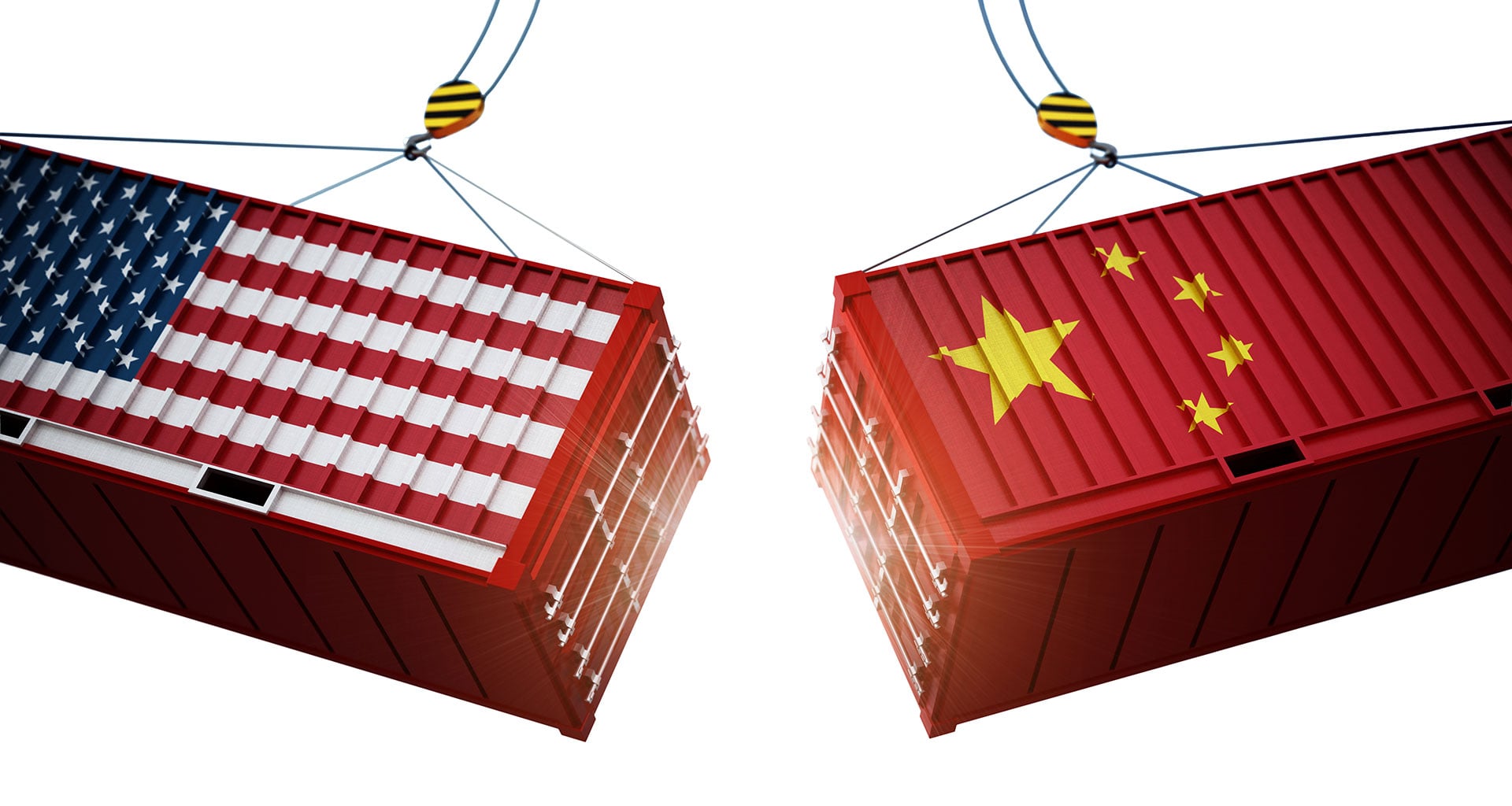
Industrial buyers entered 2026 with very different semiconductor cost structures compared to two years earlier, primarily due to significant increases in US tariffs on Chinese components and broader changes in global sourcing strategies. From late 2024 through 2025, the US administration raised the Section 301 tariff on Chinese semiconductors from 25 to 50%. PCB assemblies, electronic components, and electrical equipment have also been subject to increased duties. As a result, in the industrial sector, semiconductors ranging from MCUs in PLCs to sensors in condition-monitoring systems to MPUs in Edge gateways, as well as memory devices and power ICs in drives and power supplies, all became more expensive when China was identified as the country of origin. There was also a broader geopolitical shift that impacted sourcing decisions, including changes in critical minerals and the US government’s approach to securing semiconductor and materials supply chains, known as ‘Pax Silica’.
In 2025, the impact of tariffs was distributed throughout the entire component stack. We expect that the situation will continue, subject to any agreements between the US government and individual countries. As of the time of writing, tariffs apply not only to standalone chips but also to populated boards and subassemblies that include them. A combined rate of 35% or more applies to industrial HMIs, drive control boards, safety I/O modules, and communication cards fabricated in China.
Power ICs, discretes, and all semiconductors faced significant impacts due to the 50% Section 301 tariff, which applies broadly to the entire semiconductor portfolio when China is the country of origin (either fabbed or packaged there). This includes voltage regulators, gate drivers, MOSFETs, memory, MCUs, sensors, analog ICs, and mixed-signal devices, all of which share the same duty burden. For industrial drives and servo systems, where the power stage is a significant cost element, this pushed tariffs into double-digit percentages of the overall bill of materials (BOM), forcing OEMs to either raise prices or sacrifice margins. When Chinese manufacturers delivered these devices inside assembled power modules or complete drives, the tariff load compounded across both the semiconductor and assembly levels.
Electric equipment and sectors adjacent to the grid face challenges due to multiple tariffs. The duty on switchgear, transformers, and other hardware from China ranges from 7.5 to 25% before factoring in semiconductors. The cost of importing a complete industrial UPS, motor starter, or advanced protection relay could increase by 15-30% relative to pre-tariff baselines, as 50% tariffs imposed on Chinese semiconductors and higher rates apply to PCB assemblies. Utility companies and large industrial companies that purchase such equipment under multiyear contracts suddenly face project cost increases that they cannot always pass on to end users.
A visible response emerged from companies in 2025. ABB and Siemens, major industrial automation suppliers, began evaluating nearshoring power electronic assembly to Mexico and Eastern Europe, both tariff-favoured jurisdictions under the United States-Mexico-Canada Agreement (USMCA). TI and Infineon, suppliers of microcontrollers, power ICs, and drivers for industrial applications, announced capacity expansions in the US and allied countries, though meaningful production is still years away. EMS providers – Flex and Celestica have relocated portions of PCB and power module assembly from China to Vietnam, Thailand, and Mexico to mitigate tariff exposure.
Underlying these tactical moves is a fundamental geopolitical reorientation influencing longer-term strategy. Countries globally view semiconductor and critical-material supply chains as strategic infrastructure. The US government launched the ‘Pax Silica’ alliance to secure these supply chains and reduce dependence on any single hostile actor. Venezuela’s geopolitical shifts and potential access to rare-earth minerals highlight that supply chain realignment involves geopolitical control and national security as much as economics.
For industrial semiconductor procurement, this has two immediate implications. First, tariff-advantaged jurisdictions such as Mexico, Vietnam, and Thailand receive explicit government support and investment, enhancing their credibility as long-term sourcing bases. Second, suppliers aligning with US priorities around ‘Pax Silica’ and critical minerals security can qualify for grants, tax incentives, or preferential contract treatment for defence-adjacent or critical infrastructure projects.
Geopolitical pressures and government initiatives have driven companies to diversify sourcing and invest in resilient supply chains – STMicroelectronics and onsemi exemplify this shift with strategic capacity expansions. In 2025, ST announced plans to scale its Agrate, Italy, fab into a high-volume site for smart-power and mixed-signal technologies, targeting 4,000 wafers per week by 2027, with potential expansion to 14,000 wafers per week. Concurrently, ST expanded its Crolles, France fab for MCU production and advanced MEMS sensors in Singapore. These moves position ST as a key supplier of MCUs, power ICs, and sensors, offering non-China sourcing options for industrial and automotive OEMs.
Onsemi has similarly focused on vertically integrated power solutions, with a $1.91 billion (€1.64 billion) investment in a silicon-carbide (SiC) fab in the Czech Republic, supported by $524 million (€450 million) in state aid. This facility, operational by 2027, will produce SiC devices for EVs and industrial applications, aligning with the EU’s supply chain resilience goals. Meanwhile, Renesas and NXP are also adapting to tariff and geopolitical pressures. Renesas expanded 28nm MCU production in Japan and Europe to reduce reliance on China, while NXP partnered with Vanguard to build a $7.8 billion fab in Singapore, targeting mixed-signal and power-management ICs. These efforts reflect a broader industry realignment toward tariff-advantaged, geopolitically secure manufacturing hubs.
In 2025, OEMs re-evaluated suppliers, finding Chinese lower-cost options unattractive due to tariffs and conflicts with emerging government supply chain strategies shaping investment and incentives. The broader narrative is now clear: in 2026, industrial buyers will seek suppliers and geographies aligned with government strategies, including ‘Pax Silica’, critical minerals security, and regional allies. TI, Siemens, and ABB are investing in Mexico, Southeast Asia, and allied nations to mitigate tariff and geopolitical risks.
For procurement professionals in the industrial sector, the lesson is clear: tariff exposure spans all semiconductors, particularly when China is involved. The practical response includes mapping China-origin components and identifying tariff-advantaged alternatives from suppliers such as Renesas (Japan and Europe), NXP (Singapore VSMC), STMicroelectronics (Europe and Singapore), and onsemi (US, Europe, and the Czech Republic). Supplier selection now involves geopolitical and economic considerations. Companies aligning sourcing with government initiatives may gain better pricing, improved availability, and access to incentives that offset short-term costs. In 2026, semiconductor sourcing will no longer focus solely on securing parts at competitive prices but will require building supply chains aligned with securing critical industrial infrastructure.
About the authors:


Saloni Gankar, Senior Analyst, Industrial Semiconductors & Paul Pickering, Research Director, Semiconductors, Omdia
This article originally appeared in the Jan/Feb 26 issue of Procurement Pro.