

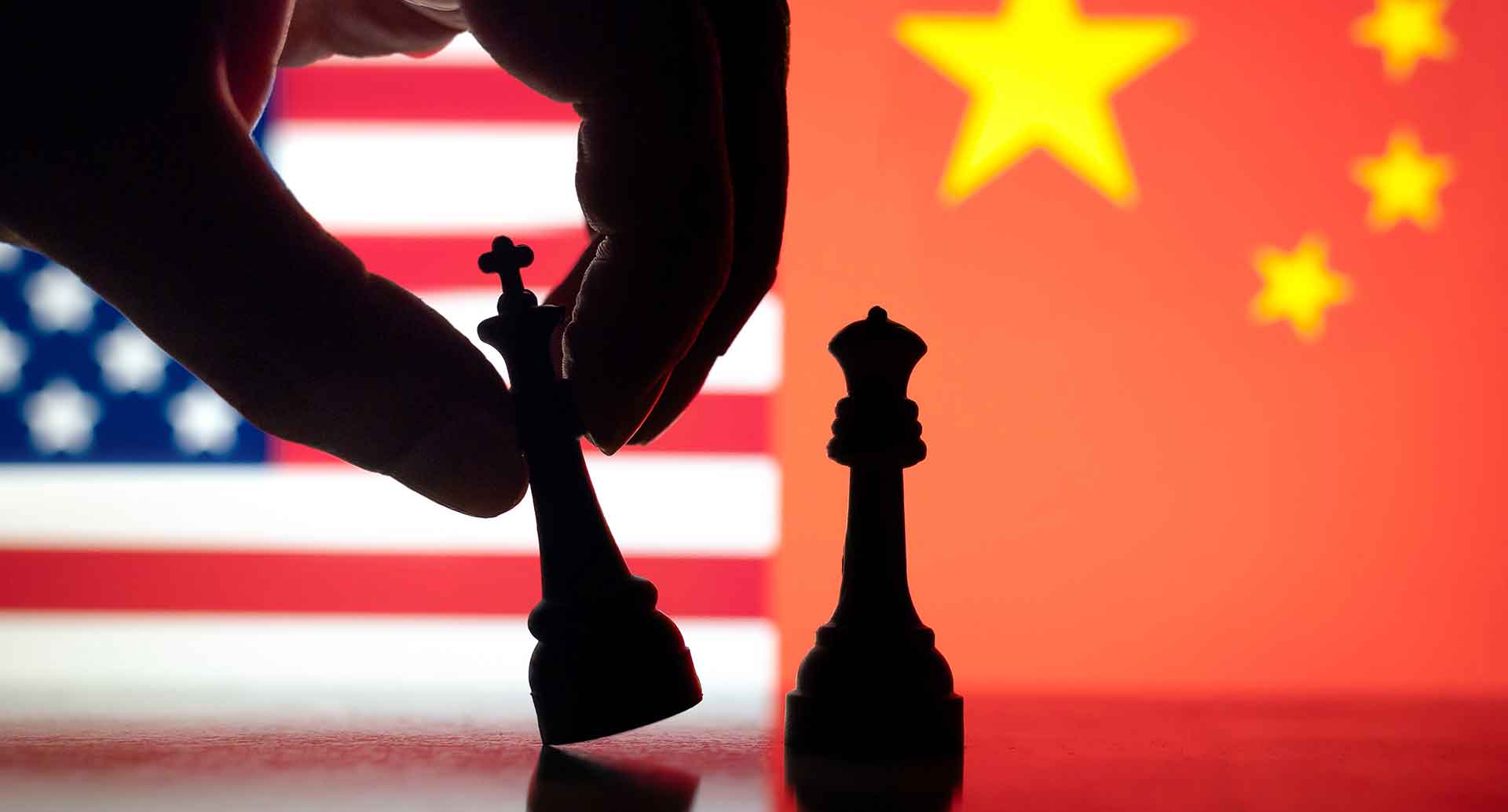
The long-anticipated meeting between US President Donald Trump and Chinese President Xi Jinping in Busan, South Korea, has sparked cautious optimism across global markets.
Both leaders described the encounter as ‘constructive’ and ‘historic’, though much of the market reaction points to a tactical pause rather than a structural reset in the world’s most powerful economic relationship.
Trump called the meeting a “12 out of 10,” while markets shared a brief wave of enthusiasm, Chinese equities rose on Friday morning, and the yuan strengthened slightly. Yet the Busan summit stopped short of resolving deeper geopolitical rifts around technology, tariffs, and security, leaving investors with more questions than answers.
“Markets always respond well to a handshake, even when concrete outcomes are still pending,” said David Barrett, CEO of EBC Financial Group (UK) Ltd. “Sentiment is leading the way for now, but the underlying fundamentals remain unchanged – the US–China dynamic continues to shape the global narrative.”
A tactical truce, not a transformation
The most tangible outcomes include a tariff reduction, a rare-earth reprieve, and renewed agricultural trade, but each move comes with caveats. The US agreed to cut its ‘fentanyl-linked’ tariff on Chinese imports from 20% to 10%, trimming the overall US tariff burden on Chinese goods from about 57% to 47%. In return, Beijing pledged to suspend its new export restrictions on rare earth minerals for one year, providing temporary relief for manufacturers across the electric vehicle and semiconductor industries.
China also committed to resume large-scale purchases of US soybeans and farm goods, signalling a partial thaw in agricultural trade. However, the leaders avoided the most politically sensitive issues like Taiwan, AI chip export bans, and military tensions in the South China Sea, indicating the truce was designed to stabilise markets, not rewrite the rules.
“While it may not mark a full breakthrough, the meeting represents a meaningful pause in tensions,” said Barrett. “For traders, it provides a short-term sense of stability and an opportunity to reassess exposure to US–China–linked assets. Still, it’s too early to call this a long-term realignment.”
Market reactions: relief rally or false dawn?
Markets reacted predictably. Chinese stocks surged more than 2% on Friday, led by industrials and consumer discretionary names, while the yuan strengthened modestly as traders priced in a softer trade environment. The US dollar index slipped slightly, and commodity-linked currencies such as the Australian dollar benefited from the improved tone.
Commodity markets also saw immediate movement: rare-earth and nickel futures fell as supply fears eased, though analysts remain cautious given the one-year suspension limit. “The relief rally is understandable,” Barrett noted. “But a temporary tariff cut doesn’t rewrite the rules of engagement. Until there’s progress on tech exports, investment screening, and supply-chain diversification, we’re still operating in a fragmented global market.”
Gold prices edged higher as markets digested the Busan outcome, with spot bullion climbing back above $3,980/oz after recent declines. The modest uptick reflected a weaker dollar and improved risk sentiment, though analysts note that any sustained upside will depend on whether tariff relief translates into lasting trade stability. For now, gold’s rebound signals relief rather than renewed safe-haven demand – a mirror of the meeting’s broader tone.
The bigger picture: fragmentation persists
While the Xi–Trump meeting may have cooled tempers, it does little to reverse the trend toward economic fragmentation. Washington’s ongoing push for reshoring, Beijing’s industrial self-reliance strategy, and their mutual race for semiconductor supremacy all point toward a more divided global system.
EBC analysts believe emerging Asian markets such as Vietnam, Malaysia, and Indonesia could continue to benefit from strategic spillover as multinational firms expand their ‘China-plus-one’ manufacturing strategies. “Supply-chain diversification isn’t just a buzzword anymore, it’s a survival mechanism,” said Barrett. “And this truce doesn’t change that trajectory.”
What traders should watch next
According to EBC analysts, the next phase hinges on implementation. Markets will monitor how quickly tariff reductions take effect and whether China follows through on its agricultural commitments. Any sign of renewed friction, particularly around AI technology and semiconductor exports, could reignite volatility. And with Trump’s protectionist rhetoric expected to ramp up ahead of the 2026 election cycle, the window for stability may prove short-lived.
EBC Financial Group notes that the Busan outcome should be seen as a temporary reprieve rather than a turning point. Maintaining diversified currency exposure, cautious positioning in commodities, and close attention to US–China trade data will remain essential as policy volatility continues to shape global markets.