
Artificial intelligence has rapidly emerged as the defining buzzword of our decade. It brings with it bold promises of autonomous systems, self-healing infrastructures, and strategies to reshape entire industries. The future certainly looks bright, but CIOs cannot afford to live in a hypothetical future and must step back to review what real, pragmatic targets they can achieve through AI right now.
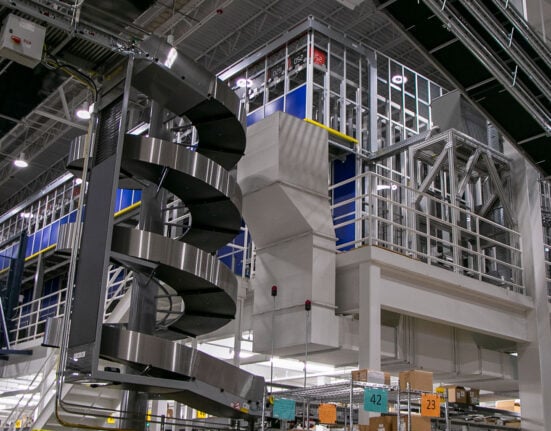
In the world of ICT and development in particular, AI holds enormous potential, and, in the future, we’ll probably see servers that repair themselves, predictive cybersecurity that neutralises attacks before they land, and factories that operate as autonomous entities, continuously simulating and optimising workflows. Digital twins will be used in manufacturing to model processes, supply chains, and production lines, simulating activities in real time to predict how changes in equipment, scheduling or logistics may impact output, quality, and costs. Combined with predictive maintenance powered by AI, autonomous quality control and AI-driven robotics coordinators, digital twins could also enable nearly self-sufficient factories, relying on data-driven decision to maximise efficiency, reduce waste, and adapt dynamically to changing conditions.
However, the majority of businesses are nowhere near implementing fully autonomous IT or industrial ecosystems and for most organisations, the biggest benefit of implementing AI lies in addressing ‘engineering toil’, i.e. routine, repetitive tasks that drain skilled professionals’ time and motivation. AI can already support over-burdened engineers on multiple fronts: AI-driven observability platforms can identify anomalies across distributed systems, generate root-cause hypotheses and automate remediation steps. In continuous integration and deployment (CI/CD) pipelines, AI can optimise build times, spot unreliable tests, and even purpose code improvements, while ML-powered infrastructure automation can manage compliance checks, scaling decisions and configuration drift with far less human supervision. All this is possible now and helps reduce pressure on engineering teams.
By shifting the burden of repetitive work onto AI systems, these tools have the potential to save countless of hours of manual troubleshooting, allowing engineers to focus on creative problem-solving, innovation, and value creation, precisely the kind of work that retains top talent.
One of the big misconceptions about AI adoption is that installing the right platform and feeding it existing data is all you need to make it effective. In reality, most enterprises still rely on fragmented information landscapes, with CRM systems that rarely integrate seamlessly with ERPs, and security platforms, HR tools, supply chain systems, and analytics dashboards all operating in siloes. Hybrid IT environments only add to the problem, as Cloud platforms typically update faster than on-premise, legacy systems, leading to inconsistencies in telemetry data. This means AI tools often work with incomplete or even contradictory datasets, meaning their insights are limited and can negatively impact critical decisions.
To extract real data value from AI, CIOs must first and foremost invest in data preparation and governance. Systems such as ERP, MES, CRM, HR, and IT platforms must be able to communicate through standardised APIs or integration layers, but data cleansing and normalisation are equally important, as duplicates, conflicting records, or outdated entries can quickly undermine AI-driven insights. The unglamorous truth is that data integration and governance form the bedrock of successful AI and businesses that skip this step risk pouring resources into tools that cannot deliver what they promise.
CIOs therefore need to get their house in order to make the most of this opportunity, especially if they want to come out winning in the AI talent wars. In fact, the AI boom has created an increasingly competitive hiring environment with large organisations (with even larger budgets) are recruiting aggressively, snapping up top talent. Startups and mid-sized businesses thus face intense competition, struggling not only to offer salaries and career opportunities that rival those of global tech giants, but also to retain talented employees, that can be lured away by lucrative pay packages.
Since competing on pay alone can become unsustainable, especially in the long run, CIOs should focus on creating an environment where engineers feel valued, challenged and inspired, not mere ‘systems babysitters’. AI can play a crucial role here, by automating low-value tasks such as incident triage, ticket management, and compliance checks, ensuring that engineers spend time on more rewarding, high-impact projects and creating a workplace that fosters opportunities to innovate, solve complex problem and shape future systems.
To achieve this, CIOs should focus on investing in data quality, governance, and integration, ensuring that systems speak the same language and information can flow seamlessly across siloes; on deploying AI where it can deliver immediate impact (monitoring, incident response, CI/CD optimisation, infrastructure automation) and on positioning AI as a tool to free engineers from drudgery.
The AI hype would have us believe that AI tools will instantly revolutionise business operation, truth is it demands preparation, investment, and cultural change to fully reap the benefits. In the long term, AI may certainly deliver on its promises of self-sufficient IT environments, autonomous factories, and predictive cybersecurity that outsmarts attackers, and CIOs that lay the groundwork today and make their organisation AI-ready will be best positioned to harness those benefits as they become reality.
About the author:

Eric Lefebvre, Chief Engineering Officer at JAGGAER
This article originally appeared in the Nov/Dec issue of Procurement Pro.