




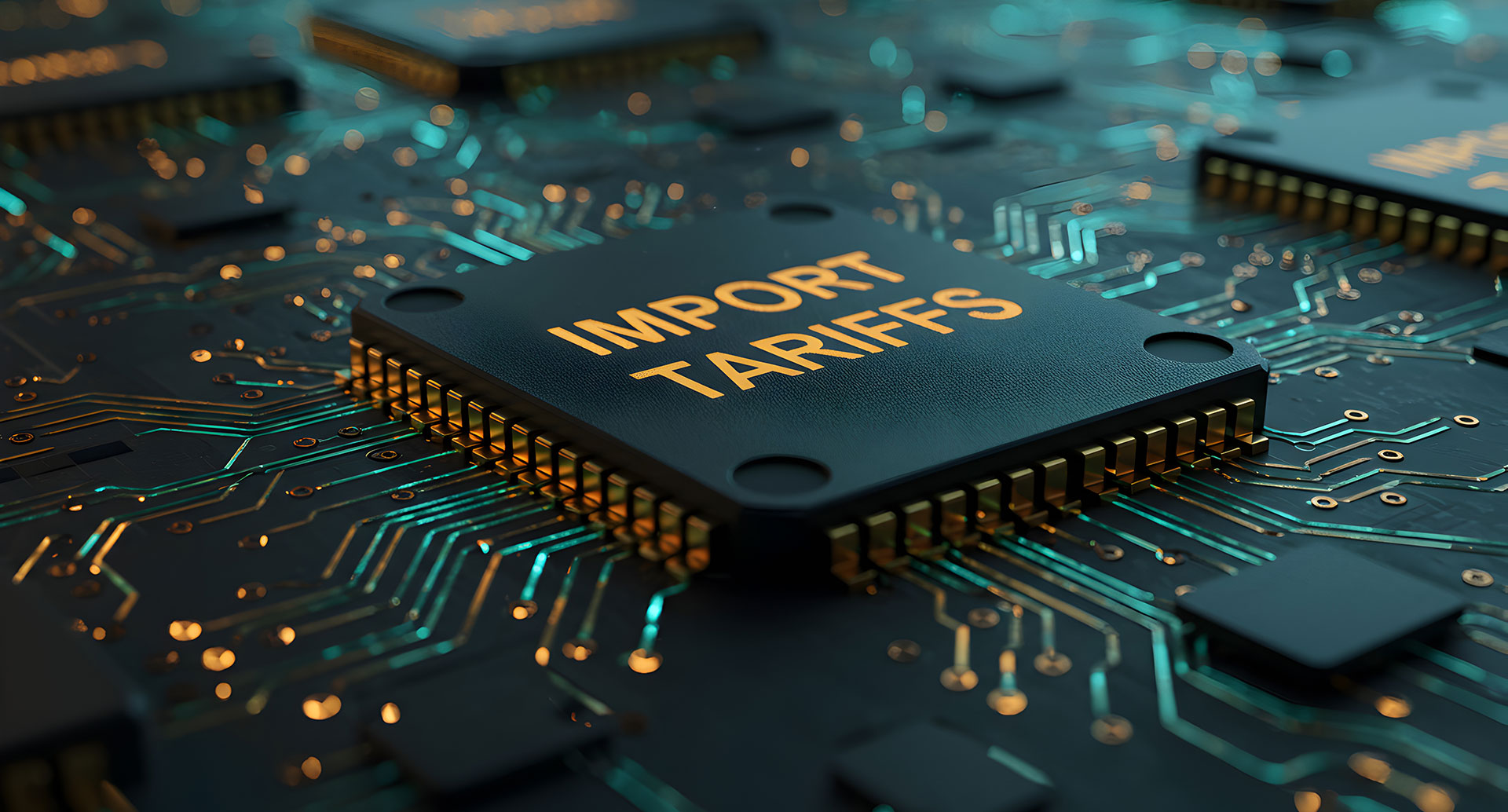
President Trump has announced plans to impose a 100% tariff on imported semiconductors, signalling a potentially significant escalation in trade policy that could impact the global electronics supply chain.
The proposed levy would apply to foreign-made computer chips, raising costs on a wide array of consumer and industrial goods, including electronics, vehicles, and household appliances.
Speaking from the Oval Office during a meeting with Apple CEO Tim Cook, Trump said: “We’ll be putting a tariff on approximately 100% on chips and semiconductors. But if you’re building in the United States of America, there’s no charge.”
The move forms part of a wider push to drive chip production back to US soil, with Trump confirming that domestic manufacturers would be spared from the tax.
In the same meeting, Apple revealed a fresh $100 billion investment into its US manufacturing operations, adding to the $500 billion already pledged earlier this year. The company said the funding would be deployed over a four-year period, with the aim of strengthening local supply chains and boosting domestic innovation capacity.
The White House stated the additional investment was designed to support the production of more Apple components in the US.
Despite efforts to diversify production away from China – including relocating iPhone manufacturing for the US market to India, and expanding assembly of other product lines to Vietnam – Apple continues to face mounting trade headwinds. Both India and Vietnam are expected to fall within the scope of the proposed tariffs, leaving limited alternatives for circumventing import duties.
Meanwhile, several major foreign semiconductor manufacturers are reportedly exempt from the proposed tariff. According to The Guardian, TSMC, the world’s largest contract chipmaker, has been told it would not be subject to the levy. South Korean firms Samsung Electronics and SK Hynix are also understood to be excluded, as is US-based NVIDIA, which has domestic manufacturing facilities.
The full scope and implementation timeline of the tariff remain unclear, but the announcement adds new uncertainty for the electronics industry as it navigates an already complex landscape of global supply chain pressures, trade fragmentation, and geopolitical risk.