




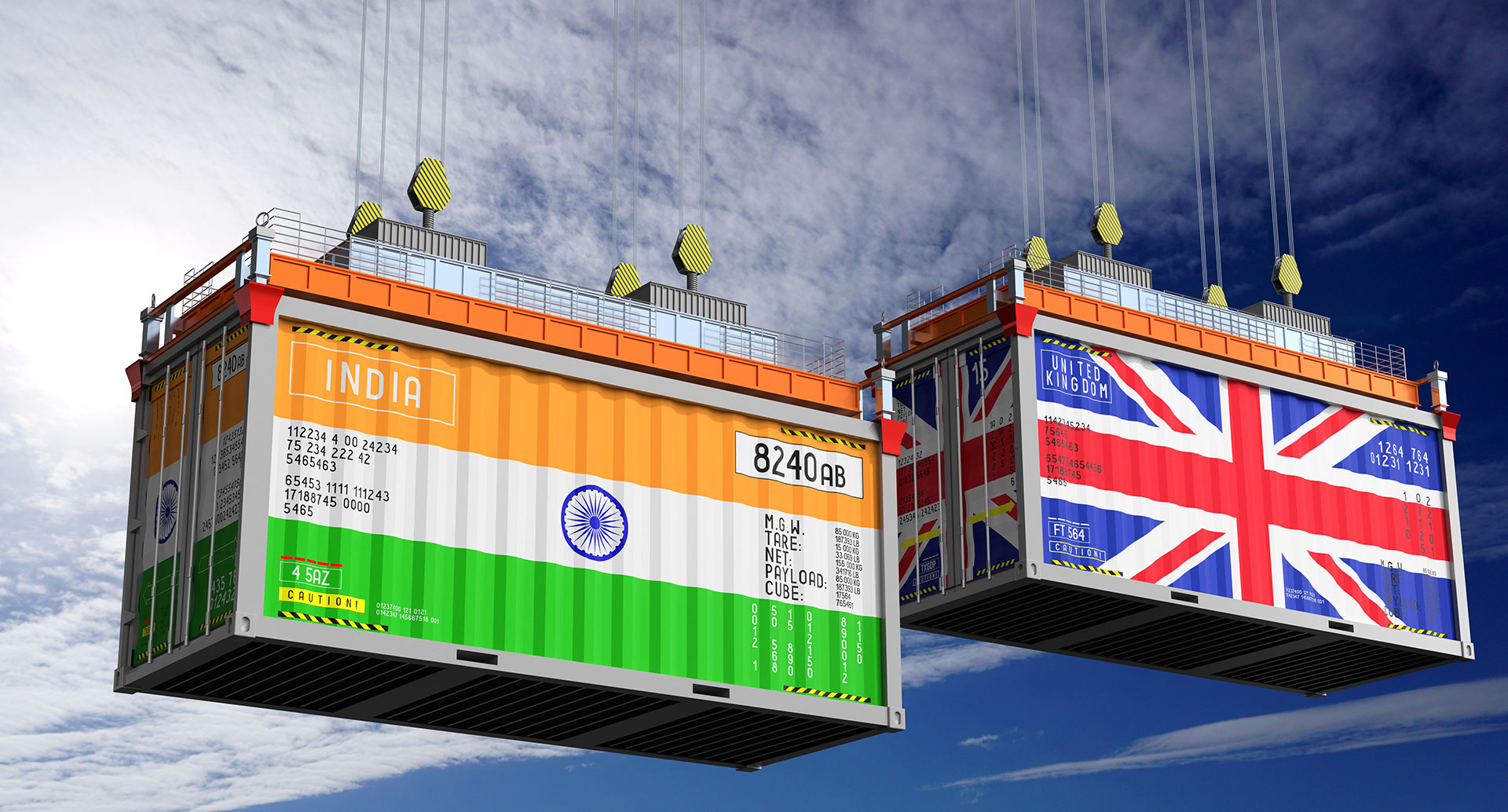
The UK and India strengthen their collaboration on securing future technology supply chains with the launch of Phase 2 of the UK-India Critical Mineral Supply Chain Observatory.
The initiative was formally announced during the UK-India trade deal signing ceremony, where Indian Prime Minister Narendra Modi and UK Prime Minister Sir Keir Starmer highlighted the role of critical minerals in driving sustainable growth and industrial resilience.
The timing of the announcement coincides with the first anniversary of the UK-India Technology Security Initiative (TSI), a bilateral agreement designed to advance cooperation in frontier technologies and national security. Both governments position the Observatory as a practical demonstration of how industrial policy and technological ambition can be combined to build long-term resilience.
The Observatory is led by the Industrial Resilience Research Group at the University of Cambridge’s Institute for Manufacturing (IfM), working in close partnership with the Indian Institute of Technology (IIT) Bombay and others. Its role is to map critical mineral supply chains, evaluate risks, and identify both investment and recycling opportunities across the two nations.
Critical minerals such as lithium, copper, nickel, and cobalt are essential for modern technologies, from electric vehicles to renewable energy systems and semiconductors. Recognising their strategic importance, both governments prioritise the development of resilient and transparent supply chains to reduce dependency on single-source suppliers and accelerate the transition to clean energy.
Mukesh Kumar, Head of IfM’s Industrial Resilience Group, explains: “The project is considered of significant importance for both countries’ national and economic security. By building the largest data infrastructure for critical minerals, we aim to identify supply chain vulnerabilities, enhance capabilities, and promote ESG and sustainability.”
Phase 2 of the Observatory, backed by £1.8 million in funding, expands its scope to include the development of what is expected to become the world’s largest industrial data infrastructure for the critical minerals value chain. It also establishes a satellite campus at the Indian School of Mines in Dhanbad, further strengthening research and collaboration.
Industry engagement is reinforced through a collaboration with the Gujarat Mineral Development Corporation Ltd-promoted International Centre of Excellence in Mining (iCEM). With £600,000 of additional funding, iCEM focuses on the practical application of the Observatory in the Rare Earth Element supply chain. The partnership also places strong emphasis on skill development for mid-stream operations of critical minerals.
The combined work generates recommendations to strengthen global supply chains, mitigate disruptions, and embed circular economy practices.
By directly supporting the objectives of the TSI, the Observatory offers a framework for how nations can jointly address supply chain fragility in an uncertain global environment – bringing together digital innovation, industrial policy, and sustainability to secure the resources essential for future technologies.
Professor John Aston, Pro-Vice-Chancellor for Research at the University of Cambridge, says: “The University of Cambridge’s researchers engage in some of the most urgent and complex challenges facing the world today. Critical minerals have a key role to play in all our lives, in India and the UK and beyond, especially in energy transition and new technologies. So, we welcome the opportunity to work more closely with our Indian colleagues in analysing the links (and breaks) in the supply chains of these essential elements.”
Professor Tim Minshall, Dr John C Taylor Professor of Innovation & Head of the IfM, says: “The launch of Phase 2 marks a significant step forward in the UK-India partnership on critical minerals. As global demand for such resources continues to grow at an extraordinary pace, resilient and transparent supply chains are essential to delivering both technological innovation and net-zero targets. This Observatory reflects a shared commitment to long-term collaboration, bringing together academia, governments and industry to build the digital infrastructure needed for sustainable and secure access to critical resources.”
Roopwant Singh, IAS, Managing Director of GMDC Ltd, says: “The India-UK Technology Security Initiative provides a very good platform for academic and research centres like the IfM at the University of Cambridge to partner with institutions like iCEM, which are solving real-world challenges faced by companies like GMDC Ltd. As it works closely with global partners, GMDC Ltd is actually building out the infrastructure that will lead to enhanced, global, supply chain resilience.”
Kiran Srirama, Field CTO (Industries), Google Cloud says: “Google Cloud is excited to collaborate with University of Cambridge Industrial Resilience Group (IRG) on founding the technology innovation platform required for the highly innovative and ambitious ‘Global Supply Chain Observatory’ programme. The collaboration helps create a multi-purpose foundation for leveraging cutting-edge AI and machine learning to achieve supply chain resiliency for critical minerals by creating a comprehensive data infrastructure to monitor and analyse the entire supply chain for critical minerals, from mining to manufacturing in key markets and regions.”