




C-103 might sound like the cheeky niece of C-3PO from Star Wars, but it promises to do more than talk a good game.
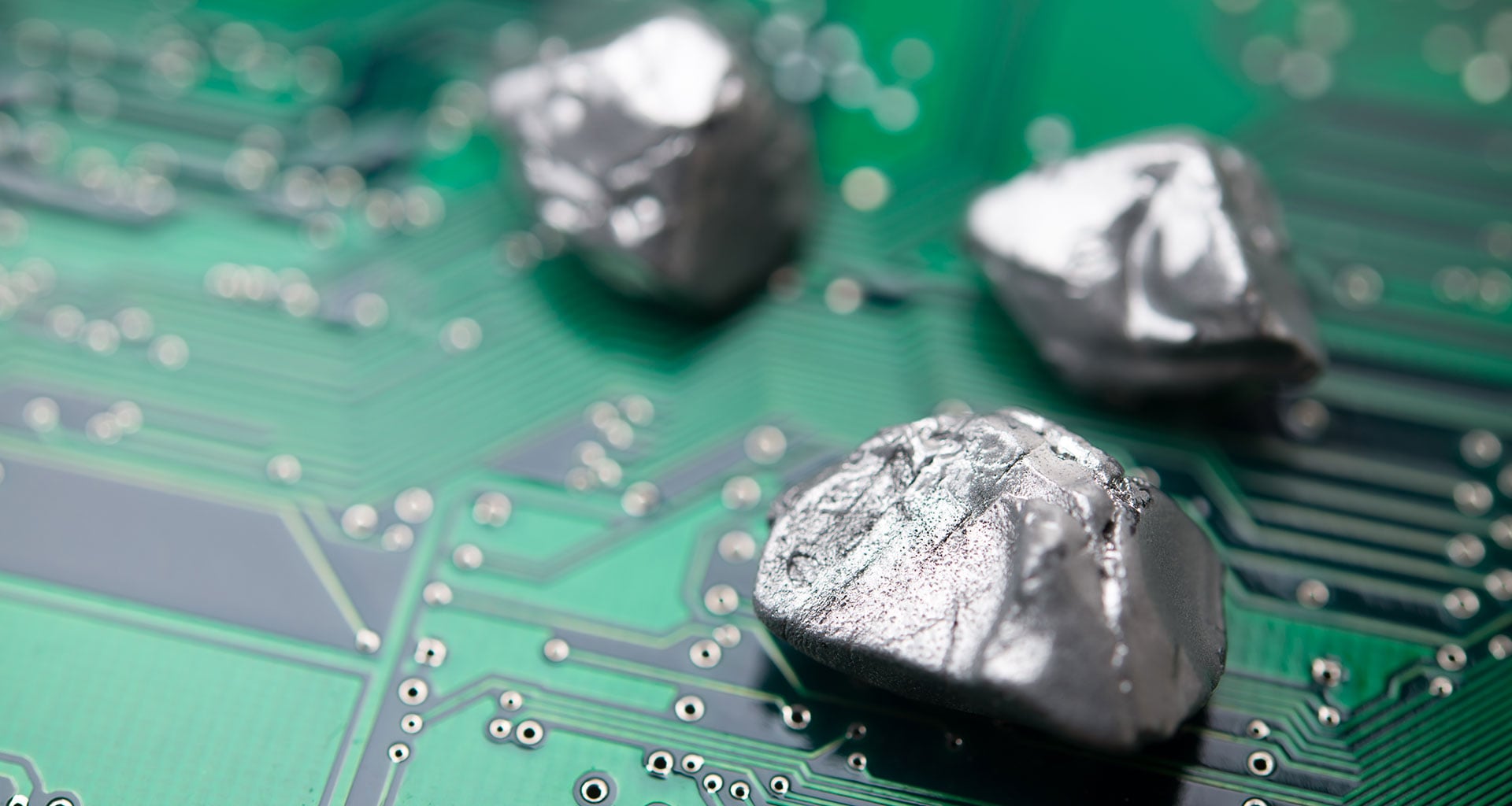
It is a metal alloy that is highly resistant to heat and is vital for space and hypersonic rockets, as well as satellites. There is a global shortage and now, for the first time, it can be produced to the necessary specification in Rotherham.
“You have to wait two years before you can get it, is what we are hearing,” says Nitesh Shah, the Chief Executive of the company called Metalysis that is behind it. He expects to have capacity to make 15 tonnes a year from the start of 2027.
Metalysis is setting itself up to help western supply chains wean themselves off relying on Chinese processors for their critical minerals.
It is already able to produce commercial quantities of high-concentration aluminium-scandium that’s used in the production of silicon chips. Next up is tantalum, for use in capacitors in consumer electronics, and it is also able to create tanbium for jet engines and space rockets, as well as the niobium-hafnium-titanium alloy, known as C-103.
These metals are all in short supply since China imposed controls on their export last year and Russia ceased being a viable source following its invasion of Ukraine in 2022. Even if the metals are acquired from non-Chinese sources, they are often still sent to China for processing because it controls the majority of the production capacity.
Metalysis is offering itself up as an alternative. Rather than melt metals together at high temperatures to create alloys, the company uses a patented electrolysis process developed at Cambridge University in the late 1990s that reduces metal oxides into the desired metal powders in a molten salt. The process significantly reduces the capital and energy cost of producing the metals. As the feedstocks are oxides rather than metals, they can be sourced from more reliable countries.
The process also has the merit of making oxygen as a byproduct. The latter has piqued the interests of space agencies in the UK and Europe. They have commissioned Metalysis to find a way to mine lunar regolith for oxygen to support permanent settlements on the moon.
Other interested parties include John Healey, because one of Metalysis’s two facilities on the edges of Rotherham is located in the chancellor’s constituency. In March he described Metalysis as “a world-leading innovator”.
The 25-year-old company has experienced false dawns before, but in 2026 could Metalysis’s moment finally have arrived? Shah thinks so. He points to the broad “acceptance” that critical minerals play an important role in supply chains.
“When you realise China are not your friend anymore, it is a case of, ‘where do we go?’” he says. “We are one of the very few mid-stream players. There has been a lot of focus on the mining industry [as the source of critical minerals], but lately people are realising that once you have made an oxide you still have to send it to China. People like us break the chain to China. They can come to us, we make the powders, totally avoiding China and Russia.”
Shah can see small volume orders starting to snowball. “I’d be disappointed if we don’t have £10 million [in revenues] next year,” he says. “It will be an upward trajectory after that.”
Tipping point
It’s a windy day when your correspondent arrives in Rotherham, navigating the tight streets of the 150-acre Advanced Manufacturing Park where there isn’t enough room on the roads for the cars and lorries to pass each other safely. A giant wind turbine that sits at the centre of the park, overlooking plants run by Boeing, McClaren, and Rolls-Royce, is gradually stirring. The movement is something of an “event” according to Ian Mellor, Metalysis’s Managing Director, hinting it doesn’t turn very often.
While the turbine may be having one of its off days, Metalysis’s 20,000 sq. ft plant on the park appears to be living up to its promise. Inside, the company’s solid-state cells are working away, producing specialty metals.
The know-how that Metalysis is commercialising dates back to a breakthrough in solid-state electrolysis techniques in 1997 at the University of Cambridge by George Chen, Derek Fray, and Thomas Farthing. The process is energy efficient and produces a level of purity in the alloy, and performance, that others struggle to replicate, the company claims. For instance, its aluminium-scandium is 36% concentrated, versus between 0.5 and 1.5% typical elsewhere, says Shah. This opens up new applications in advanced electronics when, by March next year, Shah expects Metalysis to be producing 50 to 100kg of the alloy powder a month. It will sell for thousands of pounds per kilogram.
It has other metals ready to be produced at the correct specification. Tanbium is earmarked for the Scottish rocket company Skyrora, but the majority of the company’s target customers are based overseas. Shah says while the focus is on expanding production in Rotherham, he expects that “within the next two years” they will have a small unit producing tantalum in the US.
The company’s output at present is small. It has made one tonne of powder in the last 12 months and has the capacity to produce between 12 and 25 tonnes a year, depending on the density of the metals it makes. “If you are looking at things like steel and iron ore, that is nothing, but when you are talking about speciality products like ours that is a very substantial capacity,” he says.
Since its incorporation in 2001, there has been a steady stream of notable names beating a path to see the company. Early investors included Ikea; the mining giant BHP Billiton; 3i, the private equity company; and ETF Partners, a European sustainable venture capital firm. More recently, Iluka Resources, the Australian mining group, took a 29 per cent stake as part of the £20 million fundraising round that also saw the one-time star fund manager Neil Woodford invest.
However, since 2019 Metalysis has been majority-owned by Canada’s Reimer Group, a family business. James Reimer is chairman of Metalysis. The group took control for $2.5 million after Metalysis placed itself into administration, having failed to raise the additional capital it required to keep trading. Just 10 staff out of the 59 kept their jobs. Today Metalysis is back to 50 staff and expects to double that figure by next year.
As production ramps up, Shah is sounding out new investors to support the expansion. Its fourth-generation cells, capable of producing between 10 and 20 tonnes a year in batches, cost roughly £10 million to commission and he wants at least one to meet demand in the short term. “To scale up now, we need anything from £10 million upwards, depending on how big do you want the business to be,” he says.
Metalysis has held talks with the British Business Bank, the government’s economic development agency, and the National Wealth Fund in the past, but Shah says they have not led anywhere yet.
“The problem is when you talk to the British Business Bank they all love the technology and understand the sectors we are in, but they are too risk-averse,” he says. “It is, ‘Come and talk to us when you have revenues’. Well, by the time I have revenues I will not need you. I need help now to scale up. I have the technology: in terms of the TRL (technology readiness level) it is an eight, nine. I have products that I have customers for. I just need help to scale up. That has been the challenge.”
Metalysis’s majority owner has invested $50 million in equipment, people and product development, but it has now reached its limit. The investment takes the total sunk into the technology since it was spun out of Cambridge to close to $200 million.
The Department for Business, Innovation, Science and Trade has recognised Metalysis’s potential, including in its critical minerals strategy. Shah sees a change of language in government, under the Burnham regime, about state support in the north of England as a positive step.
“The fact that the government is now talking about supporting businesses like ours, hopefully should help. We need to scale up now,” says Shah.