




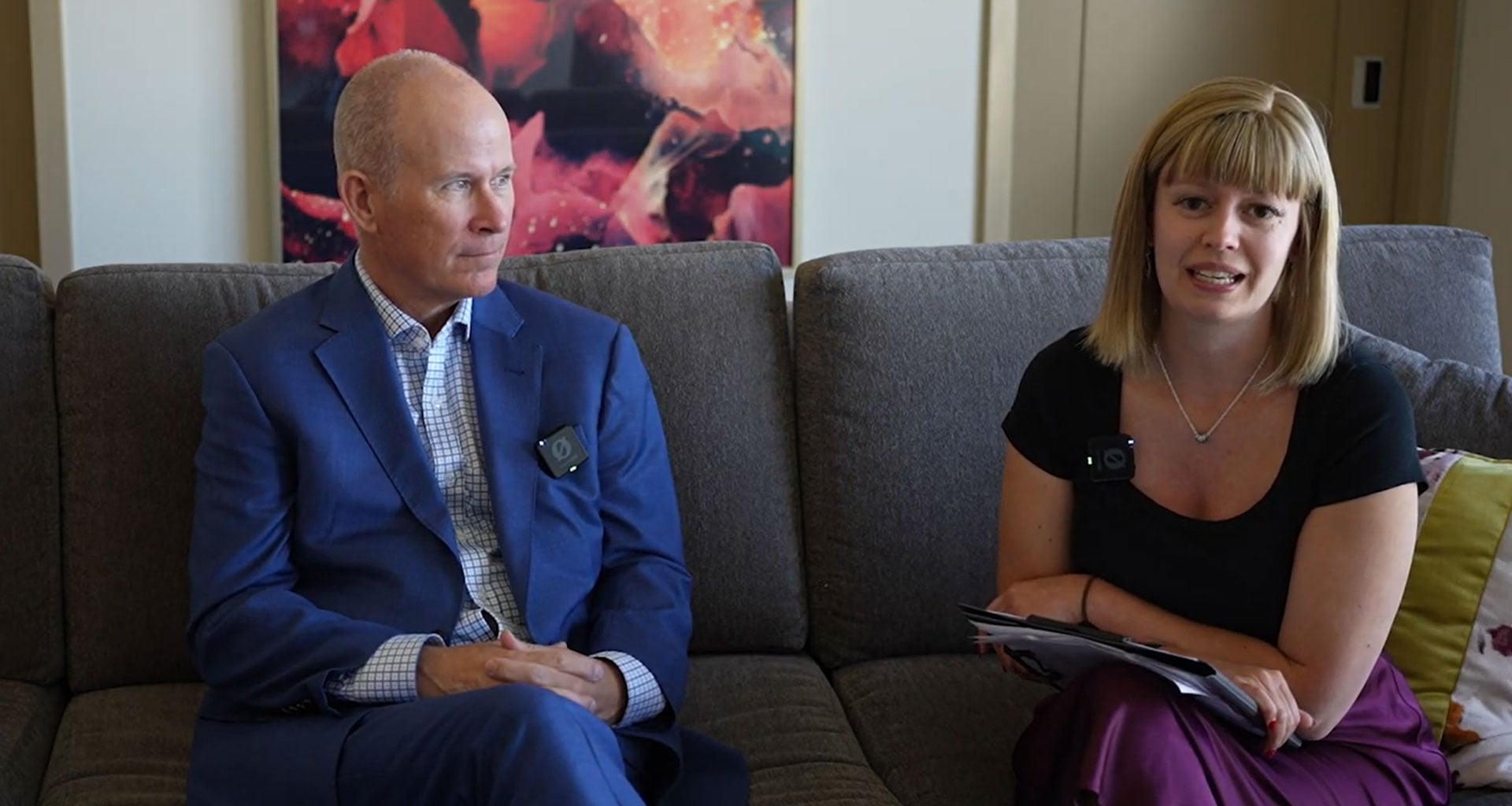
Speaking at the EDS Leadership Summit in Las Vegas, Jeff Newell, President of Mouser Electronics, outlined how the global electronics market is once again entering a pronounced upcycle – one that in many ways echoes the turbulence of the pandemic era, but with critical differences and new demand drivers.
Lead times stretching, memory under pressure
A central theme of the conversation was tightening supply and lengthening lead times across many component categories. While the situation has not yet reached the extremes seen during the pandemic, the trajectory is unmistakable.
Newell pointed to memory as the most constrained category today: “The long pole in the tent right now is memory. Memory is basically fully allocated globally,” he said. “It’s almost a scenario where it doesn’t matter what the price is, you’re probably not going to get what you need.”
Average lead times that sat in the 8-12 week range a couple of quarters ago are now “pushing 20 weeks, maybe more for some technologies”. While he hasn’t yet seen the 26–52-week extremes of the previous cycle, Newell believes the market is “headed” in that direction if demand continues at its current pace.
AI, data centres, and mil/aero fuel the upcycle
The current cycle is being powered by a different mix of end markets than in the past, with AI and data centres front and centre.
Newell noted that the data centre build-out, driven by AI workloads, is a major force behind surging demand for components such as memory, MLCCs, and power management devices.
“A lot of MLCC demand [is] again being driven by AI build out,” he said. “We’re seeing a lot of power management and power supply demand, again driven by the power management requirements for an AI data centre.”
Mouser’s OEM customer segment is showing particularly strong growth, especially in computing and military/aerospace (mil/aero).
Demand patterns: shortage orders and no soft spots
Despite recent macroeconomic uncertainty in many regions, Newell sees no softness in demand.
Mouser has seen an influx of shortage orders from late last year into the beginning of this year, and that pattern has continued. While Mouser’s model is not to build large customer backlogs, the company is experiencing robust engineering and new product activity, signalling healthy design and prototype pipelines.
Ship-from-stock under strain
Mouser’s core value proposition remains its ship-from-stock, same-day dispatch model, but Newell acknowledged that this is becoming more challenging as supply tightens.
“We’re very much a ship from stock type of distributor … but as lead times stretch, as products become more hard to get, some customers are asking us for help in that,” he said.
He revealed that Mouser is currently sitting on about $2.5 million in customer demand that could ship immediately. As product arrives, much of it “goes right back out the door” to fulfil waiting orders, leaving little opportunity for inventories to build.
Outlook: strong near term, uncertain timing for the downturn
Looking ahead to the rest of the year and into 2027, Newell expects continued strength.
“I would expect the rest of this year is going to be pretty solid … I don’t think it’s going to decline at all,” he said.
Based on his experience with industry cycles, Newell sees roughly a 50/50 chance that next year will look as strong as this one, with a possible flattening rather than a sharp decline when the cycle eventually turns.
Advice for engineers and procurement teams
For engineers, Mouser’s strategy is to continue protecting inventory to support design activity, which typically involves lower quantities per part number.
For procurement teams, Newell’s message is clear: plan ahead.
He recommends that purchasing teams “continue to just try to get their demand placed ahead of when they might need it. Lead times are going to go out for sure. There’s no lead time this year that is likely going to come in”.
Smaller and mid-sized OEM/EMS customers are encouraged to share visibility into future needs so Mouser can prioritise and support them through the cycle.
A dynamic, demanding industry
Reflecting on the broader industry, Newell described electronics as exciting but unforgiving: “It’s a great industry to work in … there’s never a dull moment,” he said. “We’re trying to make sure that we have a soft landing, not a rough landing, like we did last time.”
As AI, data centres, and mil/aero continue to drive demand, distributors like Mouser are bracing for a sustained, if volatile, upcycle – working to balance inventory, support innovation, and avoid a repeat of the painful correction that followed the pandemic boom.