




At the TTI Family of Specialists executive breakfast at the 2026 EDS Leadership Summit, against the backdrop of a record-setting year for TTI, keynote analyst Alex Chausovsky delivered a comprehensive assessment of the forces reshaping the electronics industry.
Three themes dominated: the escalating impact of the Middle East conflict on global supply chains, the entrenched reality of tariffs as a permanent feature of trade policy, and the extraordinary, economy-defining scale of AI and data centre investment.
While the macro environment presents genuine headwinds, the industry remains positioned for multi-year growth – provided companies adapt with agility, protect margins, and deepen supply chain partnerships.
The Middle East crisis: underestimated systemic risk
Chausovsky opened with a stark warning: financial markets and business leaders are significantly underestimating the downstream impact of the current Middle East conflict. For 18 months, he and his colleagues have been running geopolitical crisis simulations around what happens to the world economy if Iran closes the Strait of Hormuz – and those scenarios are now partly playing out.
The headline figures are well understood – 20% of global oil and 20% of global LNG transit the Strait daily. US consumers are already feeling this at the pump, with gas prices approaching $5 per gallon. But Chausovsky emphasised the less-covered systemic risks that flow from this disruption:
- 30% of global fertiliser passes through the Strait on a daily basis. A sustained reduction of this magnitude means approximately 30% less food produced worldwide – raising serious concerns about famine conditions emerging in Sub-Saharan Africa, Southeast Asia, and parts of Latin America in the second half of 2026 and into 2027
- 30% of global chemical feedstocks – including methanol and polypropylene used in plastics and rubber manufacturing – transit the same route, creating inflationary pressure across manufacturing supply chains
- 30% of global helium supply is sourced from Qatar, the UAE, and the region. Helium is a critical input to semiconductor fabrication. South Korean manufacturers including Samsung and LG sourced up to 70% of their helium needs from the region via contract. Those companies are now buying on the open market at prices nearly double their contracted rates
- 7% of US crude oil is imported through the Strait – a figure many overlook given the perception that the US is energy independent. The issue is refinery configuration: US refineries are tooled to process heavy sour crude from the Middle East, Venezuela, and Canada
- Diesel price surges are squeezing logistics capacity. Small owner-operators cannot front the cash required to absorb a 50% increase in diesel costs, causing many to park trucks and wait – removing freight capacity from the system and placing upward pressure on shipping and transportation costs for the next three to six months
The Suez Canal is currently experiencing an 80% increase in transit volume as companies reroute shipments to avoid the Middle East. The cost of a single ship transit has risen from $150,000 to nearly $500,000 in just six to eight weeks.
Even if hostilities ceased today, recovery would not be immediate. Two Qatari natural gas processing facilities – bombed by Iran – together produced 2% of global LNG. Replacing that infrastructure will take an estimated five years. Recovery timelines for full supply chain normalisation are expected to range from three to six months after cessation of conflict at minimum.
Critical minerals: China’s economic chokepoint
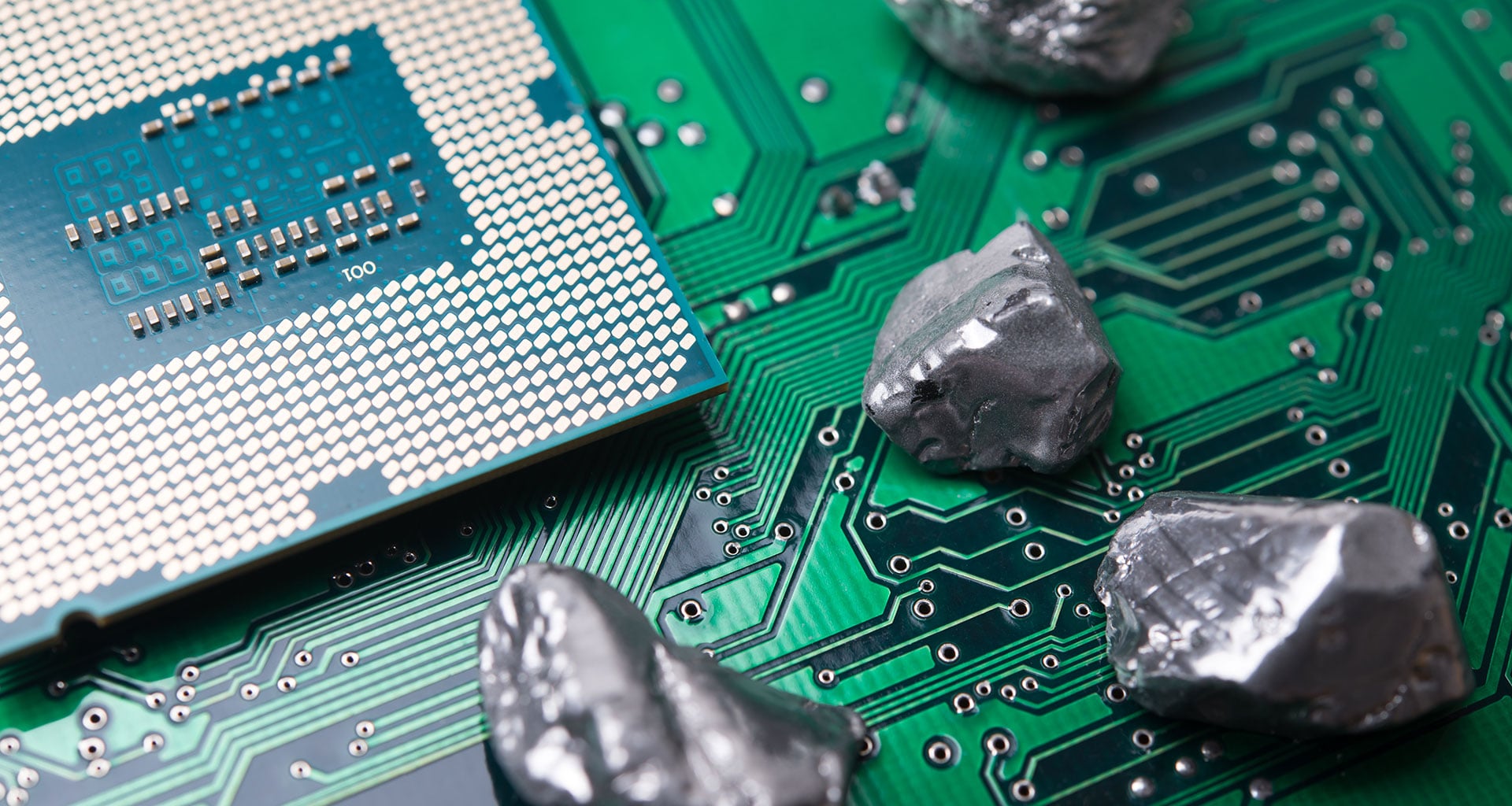
Parallel to geographic chokepoints, the briefing addressed China’s hold on critical minerals. China controls 98.7% of global gallium production – a material used extensively in electronic components, satellite systems, defence technology, and green tech. Similar dominance exists across rare earths, tungsten, and other materials essential to the electronics industry.
This leverage is not theoretical. When the Trump administration raised tariffs on China to 145%, Beijing’s response was to halt rare earth and critical mineral exports. The tariff was walked back to 30% within weeks. Building alternative supply infrastructure will require decades – there is no near-term fix.
Supply chain pressure index – third worst in 40 years
The New York Federation’s Global Supply Chain Pressure Index has risen dramatically in recent weeks. The industry is now experiencing the third largest supply chain disruption of the past 40 years – behind only COVID-19 and the post-COVID recovery boom. Component-level lead time data underscores the severity:
- Power management ICs: lead times extended from 21-26 weeks to 35-40 weeks
- CPUs and PCBs: approaching 12-month lead times, with AI server components absorbing priority allocation
- STM32 microcontrollers: lead times of 52-55 weeks in some cases
Tariffs: here to stay
Chausovsky delivered a clear message on trade policy: tariffs are not going away. The Trump administration anticipated losing its IEEPA-based tariffs at the Supreme Court level and began launching Section 232 investigations as early as April 2025.
Congressional tariffs enacted under Section 232 are far less vulnerable to court challenges, since Congress is the constitutional authority on trade law. The administration has been systematic: the top ten investigations now span semiconductors, finished silicon, industrial machinery, and most recently, Section 301 anti-dumping tariffs filed in March 2026.
The first concrete Section 232 action materialised in January 2026: a 25% tariff on semiconductors. The tariff came with extensive exclusions – data centres over 100 megawatts, R&D use, US-based repair and replacement, startups, consumer electronics, and civil industrial uses – making the practical scope genuinely complex to navigate. However, the direction of travel is unmistakable.
Tariffs are no longer a policy experiment to be waited out. They are entering a phase of normalisation, evolution, and expansion. Companies that build tariff costs into their long-term pricing and supply chain models will be better positioned than those still waiting for a return to the pre-2025 environment.
Inflation: the compounding effect
The impact of tariffs and the Middle East conflict is producing a measurable inflationary surge. The Consumer Price Index has risen from 2.4% year-over-year to 3.8% in just two months – a substantial move in a short period. Chausovsky projects the CPI will reach the upper end of a 3-5% range by year-end.
For the electronics industry specifically, the Producer Price Index for semiconductor and electronic component manufacturing shows a 26% year-over-year increase as of April 2026 – the highest on record across the last decade. Specific component categories are seeing acute pressure:
- DRAM prices: up over 100% year-over-year
- MLCCs (multi-layer ceramic capacitors): double-digit price increases as of early 2026
- Across key component categories: price increases of 15-35% recorded in April and May 2026
Chausovsky issued an important caution to commercial leaders: revenue growth driven by price inflation can be illusory. Top-line growth figures may look strong, but profitability – at the product line and customer level – is the true measure. Companies must hold focus on the bottom line.
AI & data centres: the industry’s defining growth engine
In contrast to the risk environment, Chausovsky offered a powerful counterweight: the AI and data centre buildout represents a generational, economy-defining investment wave that will sustain the electronics industry for years to come. The numbers are extraordinary by any historical comparison.
Over the last 12 months alone, total AI investment – combining data centre physical infrastructure with computers, servers, and electronic components – reached $450 billion in capital expenditure. To contextualise this:
- Larger than all new single-family housing construction in the US over the same period
- Larger than all industrial equipment investment
- Larger than all factory construction
- Larger than electricity generation, multifamily housing, and oil and gas mining activity combined
Over the past six years, approximately $1 trillion has been allocated to data centre investment. The entire US railroad network cost roughly half that amount in inflation-adjusted terms – built over 70 years. The American highway system cost approximately $400 billion over 40 years. The entire F-35 programme has cost less than AI infrastructure over a comparable timeframe. This is genuinely different in scale.
One of the most striking data points of the briefing: data centres have now crossed the 50% threshold of all office building construction activity in the United States – the first time in history. Traditional office building construction, which once dominated this category, now accounts for less than half. Data centres are the new benchmark for construction activity in this segment.
This is not a speculative trend. It is a structural, capital-committed reality driven by the insatiable power and compute demands of AI model training, inference, and the broader Cloud ecosystem.
Supply chain implications: AI is reshaping allocation
The scale of AI infrastructure spending is already reshaping component allocation at a systemic level. CPU and PCB lead times are approaching 12 months, with manufacturers giving explicit priority to high-margin AI server components over other sectors. Power management IC lead times have extended sharply – partly a reflection of AI data centre power demand requirements that are orders of magnitude above traditional data centre specifications.
This creates both opportunity and friction. Companies positioned in the AI supply chain – particularly those supplying passives, connectors, power semiconductors, and thermal management components to hyperscale data centre projects – are experiencing strong demand pull. However, the prioritisation of AI server components creates secondary lead time pressure across broader industrial and commercial markets.
The long-term outlook
Leading indicators support continued positive momentum for the data centre and AI-driven segment. The PMI (Purchasing Managers’ Index), which leads industrial production by 12 months, is pushing into expansion territory and – projected forward – suggests the industry remains in positive growth through the second half of 2027.
Chausovsky was explicit: this is not a bubble or a speculative cycle. The capital has been committed. The infrastructure is being built. The revenue opportunity for the electronics distribution channel is real, sustained, and multi-year. The challenge is execution – positioning early, securing supply, and protecting margins through an inflationary cost environment.