





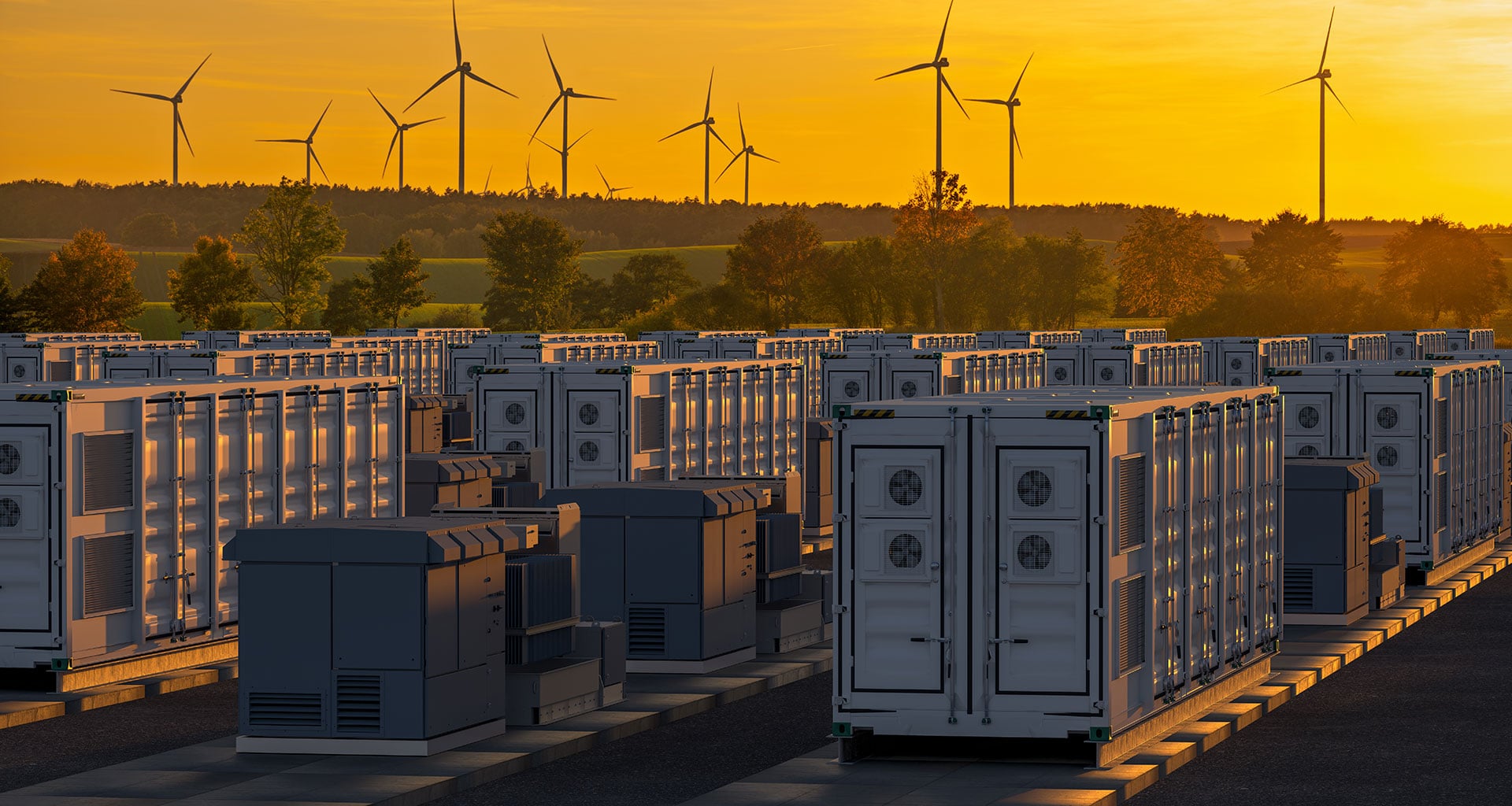
In 2026, AI will drive the most advanced industrial battery projects. Grid‑scale battery energy storage systems (BESS), factory microgrids, ports, warehouses, and heavy machinery fleets now rely on AI‑enabled electronics to hit efficiency, safety, and sustainability targets and to satisfy tightening regulations in Europe and North America. From a semiconductor analyst’s perspective, industrial batteries now behave as data‑driven infrastructure assets, and the chips that measure, switch, and communicate inside them form the foundation for both AI and traceability.
The EU Battery Regulation 2023/1542 sets the framework for industrial systems. Lawmakers brought it into force in 2023 and started applying it in 2024, then stepped up obligations through 2025 and 2026 for industrial batteries as well as EV packs. By early 2026, manufacturers of larger rechargeable industrial batteries plan on submitting carbon‑footprint declarations and prepare for the February 2027 milestone when every industrial battery over 2kWh sold into the EU carries a digital battery passport accessible via a QR code. That passport will embed technical, lifecycle, and ESG data, so industrial OEMs and project developers are now designing BESS architectures, BMS electronics, and data platforms to generate AI‑ready data streams over the full asset lifetime.
Industrial projects across Europe demonstrate how quickly AI enters the BESS stack. In Belgium, ENGIE and Sungrow build Europe’s largest BESS at Vilvoorde and deploy Sungrow’s PowerTitan liquid‑cooled containers with integrated converters and advanced controls. The project operator streams high‑resolution telemetry – voltages, currents, temperatures, alarms, and operating modes – from hundreds of megawatt‑hours of batteries into analytics platforms and are using AI to spot anomalies and optimise dispatch. Similar 2025-2026 projects in Germany, the UK, and southern Europe use containerised systems from Tesla, CATL, LG Energy Solution, BYD, and regional integrators, and the most advanced fleets stand out because they combine semiconductor‑level monitoring with AI models to manage degradation, cut fire risk, and deliver predictable performance for grid and capacity‑market contracts.
AI sits directly on top of semiconductor‑based BMS hardware. Modern battery‑management ICs from Infineon, STMicroelectronics, and other vendors measure cell voltages, currents, and temperatures and feed that data into microcontrollers (MCUs) that run estimation and control algorithms. Infineon’s collaboration with Eatron shows this clearly: Eatron’s software runs on Infineon PSoC MCUs and uses AI and hybrid physics‑plus‑machine‑learning models to estimate state of charge, health, and remaining useful life and to detect anomalies more accurately than static models. The partners initially targeted automotive packs and now extend the same AI‑driven BMS stack into industrial and residential energy‑storage systems, so operators can run assets closer to their limits without sacrificing safety. Industrial BESS integrators that choose this kind of AI‑enabled BMS forecast degradation at rack and container level, schedule maintenance and cell replacements more intelligently and keep assets within safe temperature and current envelopes under increasingly aggressive cycling profiles.
Insurers and risk consultants are also pushing industrial owners toward AI in batteries. After several high‑profile BESS fires, risk specialists emphasise how AI‑driven data analytics reduces incident rates by detecting weak cells, failing components, and dangerous operating patterns earlier than traditional threshold‑based systems ever did. They point to use cases where AI models trained on historical incident and degradation data flag ‘hidden risks’ in batteries that still look healthy under simple metrics and prompt pre‑emptive interventions that prevent thermal events in grid‑connected storage and industrial backup systems. Asset owners who follow this direction demand BMS and sensing ICs, MCUs, and communication interfaces that support high‑frequency, high‑resolution data capture, and secure data transfer into Cloud analytics platforms over many years, not just minimal telemetry for basic safety.
Industrial electrification pulls AI deeper into machine‑level battery packs. OEMs that electrify construction equipment, mining trucks, forklifts, and factory AGVs now use high‑voltage LFP packs with embedded telematics and AI‑enabled fleet‑management software. Companies such as Flash Battery integrate their own BMS hardware with Cloud analytics and deliver predictive maintenance to industrial customers: they track each pack’s usage profile, detect abnormal patterns early, and push recommendations or firmware updates before failures interrupt operations. In practice, an electric excavator on a construction site and a BESS container at a substation share many semiconductor building blocks – BMS ICs, MCUs, SiC, or fast silicon power devices – and both feed data into AI models that decide how to operate and service the battery over its life.
Semiconductor choices in power stages also influence AI and sustainability outcomes. STMicroelectronics promotes its SiC MOSFET technology not only for EV traction inverters but also for renewable‑energy and industrial power‑conversion systems, and onsemi expands its EliteSiC platform and wafer capacity to serve EV, solar‑plus‑storage, and industrial‑power customers. When an industrial developer designs a 10-50MW grid‑connected BESS around SiC‑based inverters instead of silicon IGBTs, the design achieves higher round‑trip efficiency, smaller magnetics, lighter cooling hardware, and a more compact footprint. AI‑driven controllers then exploit those characteristics by choosing operating points and dispatch patterns that balance revenue with degradation, and lifecycle‑assessment teams use the resulting data to substantiate carbon‑footprint and sustainability claims.
AI and traceability reinforce each other as the EU battery passport moves toward deployment. Platform providers such as Circularise define data models and interfaces that expose carbon footprint, material composition, and supply chain provenance through digital records linked to each industrial or EV battery. EU‑backed projects and Global Battery Alliance pilots show how manufacturers can add operational data, such as cumulative energy throughput, average temperature, and AI‑derived health indicators, into those records to support second‑life decisions and recycling strategies. In industrial BESS fleets, project owners increasingly expect to scan a QR code on a container, retrieve a passport that lists cell and module suppliers, BMS and inverter part numbers, key lifecycle metrics and AI‑based health and risk indicators, and then use that information in financing, insurance, and ESG discussions. That expectation flows upstream to semiconductor vendors, who now design components, diagnostics hooks and software support with passport and AI integration in mind.
From a semiconductor analyst’s vantage point in 2026, AI will turn industrial batteries from static assets into continuously optimised systems. Industrial BESS, microgrids, and electrified machinery rely on AI models running on, or fed by, semiconductor platforms to meet performance, lifetime, and safety targets while they also generate the traceable data streams that regulators, investors, and customers now expect. Battery manufacturers such as CATL, BYD, LG Energy Solution, and specialist industrial suppliers compete on how effectively they integrate BMS silicon, AI algorithms, and passport‑ready data flows into their products. Semiconductor vendors such as Infineon, STMicroelectronics, and onsemi sit at the centre of this ecosystem and enable AI‑ready, traceable industrial‑battery platforms that can withstand regulatory audits, tariff shocks, and rapid technology shifts through the second half of the decade.
About the authors:


This article originally appeared in the March/April issue of Procurement Pro