




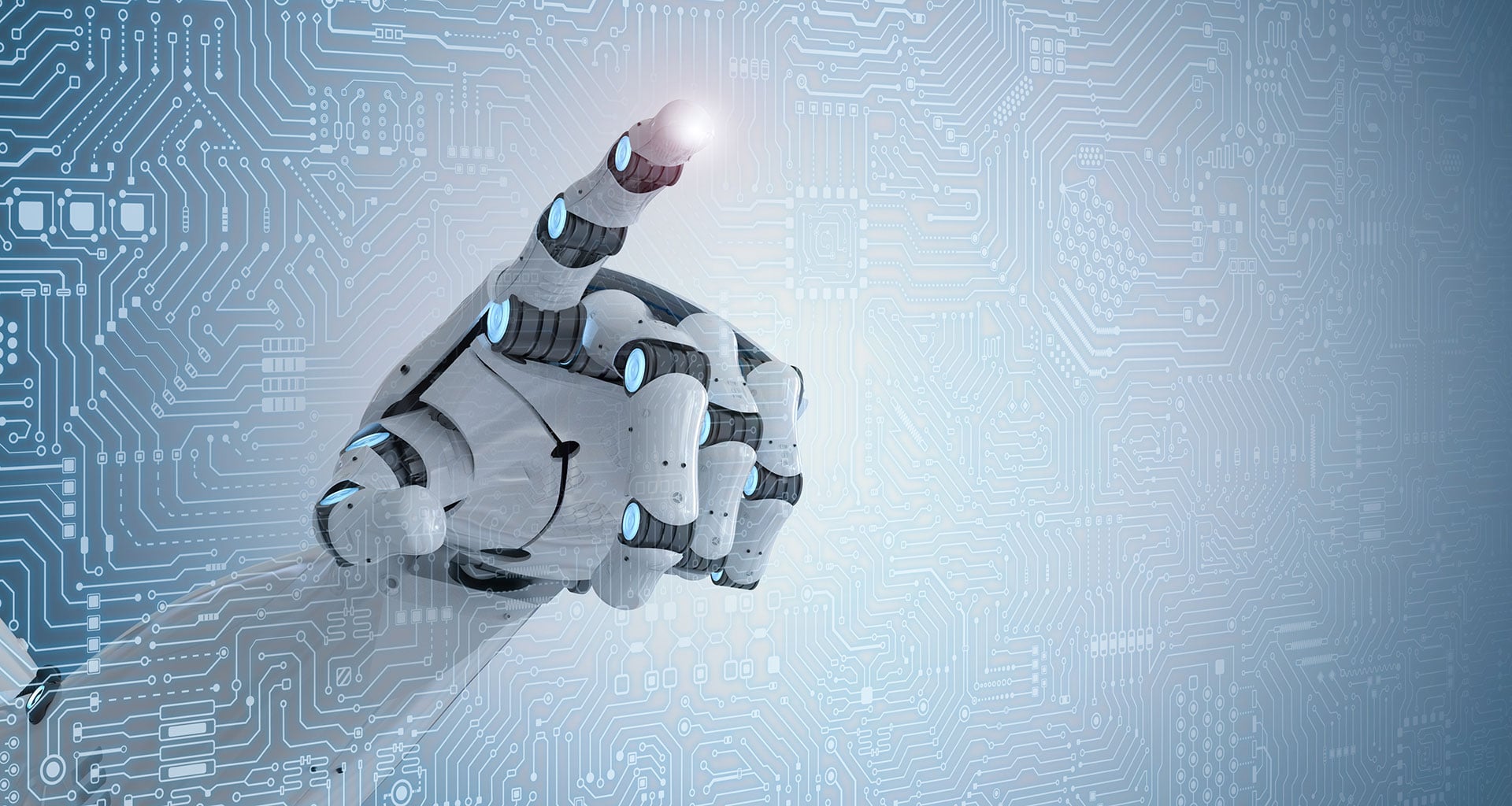
A robotic hand challenges visitors to rock-paper-scissors. A humanoid robot moves with coordinated precision. Futuristic smart glasses offer a glimpse of how we might interact with technology tomorrow.
At electronica 2026 in Munich, these eye-catching demonstrations pointed to something bigger: electronics are becoming more intelligent, more interactive, and increasingly connected to the physical world.
At the heart of this shift is Physical AI, bringing artificial intelligence into real-world machines so they can see, sense, understand, and respond to what is happening around them.
And behind that intelligence are the sensors, processors, connectors, power technologies, and other electronic components that make it possible.
Robots that see, feel, and react
At Macnica’s booth, a bionic robotic hand used cameras and AI to mirror human finger movements in real time, even playing rock-paper-scissors with visitors.
Entertaining? Absolutely.
But the technology points toward a much bigger opportunity. Imagine factory robots that can recognise different products, respond when objects aren’t exactly where expected, and adapt their movements without constant reprogramming.
At Mouser Electronics and TTI, RoboTUM, a humanoid robot developed by a student-led robotics initiative at the Technical University of Munich, demonstrated how computing, sensors and motors can work together to create coordinated movement.
But what if robots could feel as well as see?
TDK highlighted the Nibotics Dexterous Hand, using advanced sensing technology to detect pressure, force, slip, texture, shape, and temperature.
Giving machines this kind of feedback could allow robots to handle delicate or unfamiliar objects with greater precision, opening the door to more flexible forms of industrial automation.
Edge AI: intelligence closer to the action
For machines to respond intelligently, they increasingly need to process information quickly.
That’s where Edge AI becomes important.
Instead of sending every piece of information to the Cloud, Edge AI allows data to be processed directly on or near the device.
Picture a factory camera spotting a defective product on a moving production line. Rather than sending the image to a remote server and waiting for a response, an Edge AI system can analyse it locally and trigger immediate action.
The result is faster decision-making, less dependence on connectivity and more responsive machines.
Platforms such as the Arduino VENTUNO Q illustrate how increasingly powerful AI processing can move directly onto devices, giving developers the ability to build machines that interpret information and respond locally.
Making everyday machines more intelligent
Physical AI isn’t limited to humanoid robots.
Some of its biggest applications could come from making the equipment already used in factories, warehouses, agriculture, and construction more autonomous and adaptable.
RAFI’s Autonomy Kit showed how existing machinery could become more independent. By combining cameras, sensors, and AI, the technology could help construction vehicles detect obstacles, agricultural machines navigate fields, and logistics equipment respond to changing surroundings, with less need for constant human control.
The same principle extends to less visible applications. Sensors monitoring vibration, temperature, or other operating conditions can identify changes in machinery before they turn into serious problems.
For manufacturers, intelligence doesn’t always need to look like a humanoid robot. Sometimes it simply means a machine that can better understand what’s happening around it and respond accordingly.
The technology behind the intelligence
Behind every intelligent robot or autonomous machine lies another important challenge: delivering power and data reliably.
Consider the number of connections inside a humanoid robot. Every time it walks, bends, twists, or turns, those connections must continue functioning despite constant movement, vibration, and increasingly limited space.
TE Connectivity explored these challenges during the electronica conference programme, highlighting the connectivity requirements of humanoid robots and the importance of reliable connections in advanced robotic systems.
Beyond robotics, the exhibition also showcased innovations designed to make electrical connectivity simpler and more efficient. At Phoenix Contact’s booth, visitors could experience Push-X, a tool-free connection technology designed to make wiring faster and easier.
While these technologies address different challenges, they highlight an important point: advances in automation depend not only on increasingly sophisticated software and AI, but also on the electrical infrastructure that supports them.
These innovations may not attract the same attention as a humanoid robot interacting with visitors, but they are just as essential to making intelligent machines work reliably.
AI can provide the intelligence. Sensors can provide awareness. But machines still need reliable power, connectivity, and components to bring everything together.
From the show floor to the real world
electronica 2026 showed how quickly the boundaries between AI and the physical world are beginning to blur.
Robots are becoming better at seeing and feeling. Devices are processing more intelligence locally. Displays are changing how people interact with digital information. And machines that once simply followed instructions are beginning to interpret what’s happening around them.
The next challenge is turning those impressive demonstrations into products that work reliably and economically beyond the exhibition floor.
That’s where the electronics supply chain becomes part of the story.
As emerging technologies move from prototypes to production, companies need access to the right components in practical quantities. Through its manufacturer and distributor network, Waldom helps distributors source the components behind these technologies, including low-volume and reduced-MOQ requirements that can otherwise be difficult to source efficiently.
Behind every robot that moves, sensor that detects, and device that thinks are the electronic components making it possible.
The components may be small. What they make possible isn’t.