




The announcement of Elon Musk’s plans for a new, multi-billion-dollar TeraFab complex came 99 years after Henry Ford’s massive River Rouge motor plant started churning out cars.
Whereas Ford first pioneered vertical integration and took it to its logical extremes – he built an onsite power plant, steel mill, and glass factory, as well as owning the rubber plantations and iron ore mines – Musk is responding to global uncertainties that challenge the logic behind the last two decades of fabless orthodoxy.
It’s not that the fabless model was wrong – it wasn’t – but that the geopolitical conditions underwriting it have shifted in ways that are material enough to show up in procurement conversations, boardroom risk registers, and the legislative language of both the US CHIPS Act and the EU Chips Act. The repricing of supply chain risk is real, and it’s happening now.
New fab capacity is still years away from volume production
The EU Chips Act committed €43 billion to building new semiconductor manufacturing capacity on European soil, with the goal of doubling Europe’s global market share in chip production from roughly 10% to 20%. The investment thesis rests on the assumption that manufacturing presence equals strategic control. Own the fabs, the logic runs, and you own the supply chain. It’s an assumption with genuine historical grounding, yet one that the fabless revolution already complicated once, and that the current geopolitical moment is complicating again in a different way.
But even with public funding and committed industrial partners, the manufacturing capacity Europe is investing in today will not materially reduce supply chain exposure in the near term. And the deeper issue is that manufacturing presence, even when achieved, does not confer sovereignty over the part of the stack where the most critical and hardest-to-replicate value resides. The policy conversation has almost entirely missed what Europe already has – a genuinely world-class capability at what I would argue is the most strategically valuable point in the semiconductor supply chain: design and test.
A different route to supply chain sovereignty
Consider what a truly fab-independent design house actually provides. It holds the engineering relationship with the customer at every stage: from architecture definition through design, verification, wafer test, and volume supply management. It maintains working relationships with multiple foundries across multiple geographies and process nodes.
When one supply route is disrupted, the option to route programmes through another foundry is real, but not frictionless. Switching fabrication processes demands new mask sets, process re-qualification, and significant engineering effort; under typical circumstances, a substantial amount of dedicated work. What determines if that option is genuinely viable for a customer? Whether their design partner has invested in the methodology and tooling infrastructure to execute the transition efficiently.
That’s the less visible route to supply chain sovereignty: somewhat difficult to achieve, but certainly faster than a new fab and more durable than dependence on a single geography. Look at it this way; a customer that locks its design to a single foundry – even a domestic one – must contend with a single point of failure. A customer whose design house has made process-node portability a foundational part of its working model has built resilience into the architecture itself.
Europe has the engineering depth to do this well. There is a cluster of European custom-ASIC and design services firms with genuine depth – in functional safety, in high-voltage mixed-signal design, in regulated-market certification – that simply does not exist at equivalent scale anywhere else. These capabilities took decades to build, cannot be replicated quickly, and are not dependent on which country’s soil the wafer happens to be fabricated on.
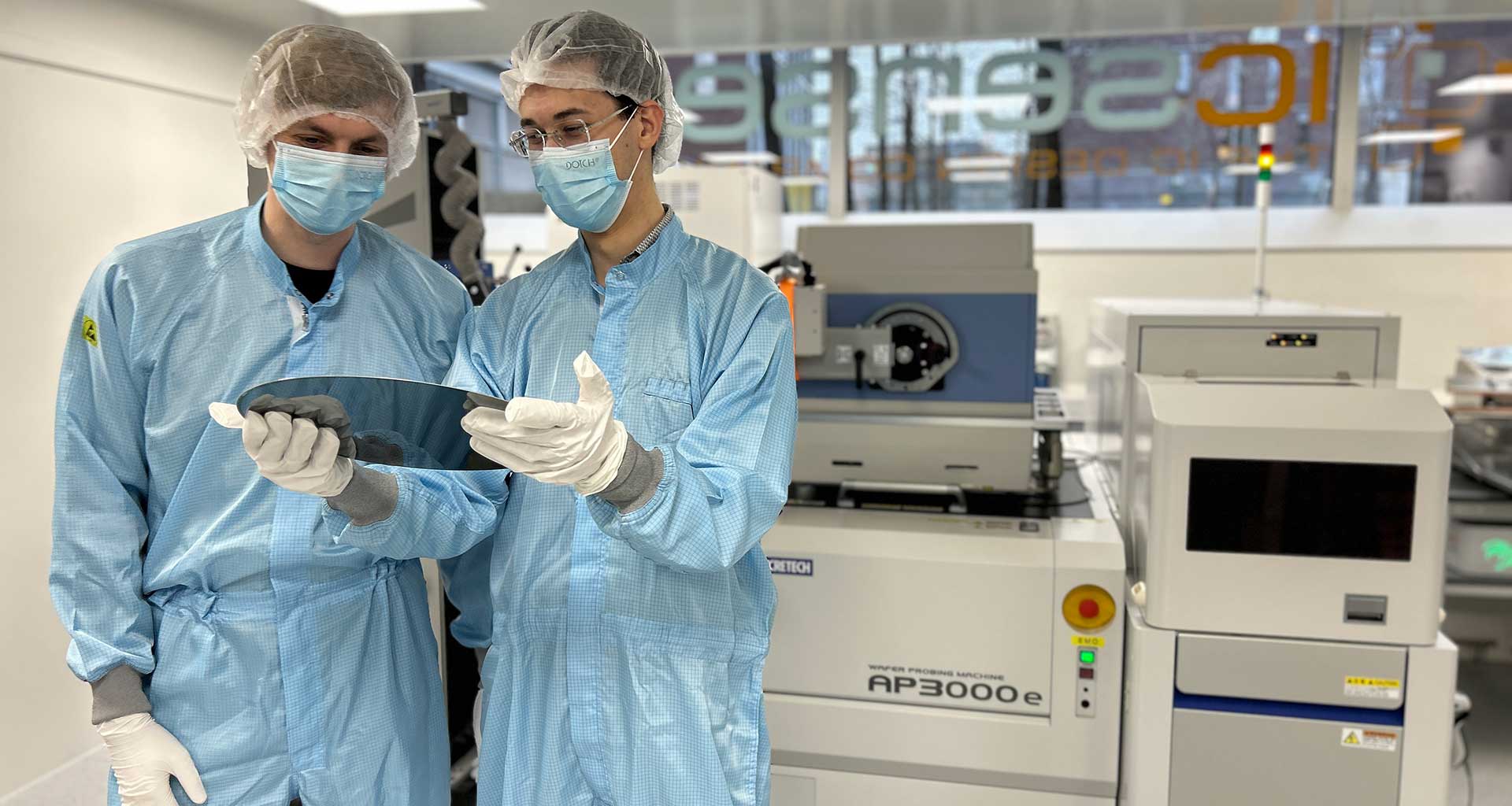
ICsense, for example, designs custom ASICs for automotive, medical, and industrial applications; sectors where supply continuity is a regulatory and safety requirement, not a mere preference. We have one of the largest design teams in Europe, in-house electrical wafer sort capability, and active relationships across multiple foundry partners globally, supported by our position as part of the TDK Group. Over two decades we have developed a script-based design environment that lets us manage fab-porting with significantly greater efficiency than the industry norm. We’re also actively integrating AI into that flow to stay ahead of the engineering curve.
The design layer is where value compounds
Ford’s River Rouge blueprint did not survive the century that followed (perhaps it’s vertical counterpart – the IDM model – won’t either). But it’s worth exploring what did.
The Italian ‘carrozzerie’ – Bertone, Pininfarina, Italdesign, Ghia – emerged as specialist design houses that created designs and bodies for multiple car manufacturers simultaneously. Their unconstrained independence led to some of the most innovative, beautiful and enduring designs ever produced. This continues today with end-market OEMs demanding the optimum interplay between design and production. The same separation of design intelligence from production infrastructure is now the structural logic of the most resilient parts of the semiconductor industry.
My point is that Europe is answering the chip sovereignty question at the wrong layer of the stack. Fab investment is positive because, long-term, Europe should have more manufacturing capacity. But treating design-layer resilience as a secondary concern, or assuming that fab ownership is equivalent to chip sovereignty, misreads where the strategic value sits.
A chip design company that can route around a disrupted fab is more resilient than a fabless house tied to a single geography. A design ecosystem that holds deep engineering relationships with customers across multiple end markets is harder to displace than a manufacturing facility that could be duplicated by a competitor. Europe’s current and future capacity to architect, validate, test, and manage the supply of complex custom silicon is a competitive and strategic asset that deserves to be recognised and supported on those terms.
The certainties that supported three decades of semiconductor globalisation have shifted. How Europe responds to that shift will define its role in the next phase of the industry. The answer should not be fab envy dressed up as industrial policy. It should start with an honest inventory of what Europe already has, and how we can harness it.