




Electronics component production faces growing pressure to maintain compliance across global and highly regulated supply chains. Effective traceability practices help companies verify component origins and meet industry standards that maintain product quality and customer trust.
The high financial stakes of noncompliance
Poor component traceability can lead to substantial financial consequences. Regulatory penalties and large-scale product recalls can quickly disrupt operations and damage customer trust.
Navigating costly regulatory penalties
Government agencies have shown they will levy severe financial consequences on manufacturers that skirt export and trade rules. For example, in April 2023, the Bureau of Industry and Security imposed a $300 million civil penalty on Seagate Technology. This followed findings that the company had shipped millions of hard disk drives to a restricted Chinese buyer in violation of federal export controls.
Commerce officials called the settlement the largest stand-alone administrative penalty in BIS history, which shows how aggressively regulators can pursue export violations. Cases like this teach component manufacturers and their supply chain partners that documentation gaps can carry significant consequences.
Mitigating the financial risk of counterfeit components
Counterfeit electronic components, such as semiconductors and connectors, can compromise product reliability and create safety concerns in critical applications. Aerospace and defence industries face particularly high risks when counterfeit components enter production. Product failures may result in warranty claims, production delays, reputational damage, and increased quality assurance costs.
Manufacturers can reduce these risks through component tracking systems that verify supplier information and lot histories. Maintaining detailed records throughout production helps identify questionable components before they become part of finished products.
Minimising the damage of product recalls
When a defect does surface, the difference between a targeted and a sweeping recall often comes down to how well a manufacturer tracked its components. Without granular visibility, companies may need to recall entire production runs or conduct extensive investigations before identifying affected products.
Modern traceability practices support targeted recalls by linking components to specific lots or batches. Manufacturers can isolate defective products more quickly and avoid unnecessary replacements or affected inventory. This level of visibility reduces replacement costs while also maintaining customer trust during recalls.
An overview of key compliance frameworks
Electronic component manufacturers need to satisfy various regulatory requirements that differ by industry and geographic market. Understanding these standards helps organisations maintain market access and meet customer expectations.
Meeting global standards for hazardous substances
The Restriction of Hazardous Substances (RoHS) Directive and the Registration, Evaluation, Authorisation and Restriction of Chemicals (REACH) regulation establish requirements for materials used in electronic products.
RoHS limits the use of hazardous substances commonly found in electrical and electronic equipment, while REACH governs the safe use and disclosure of chemicals throughout manufacturing processes. Manufacturers selling products in European markets must comply with these requirements and provide supporting documentation when required.
Industry organisations continue to develop standards that help companies maintain sustainable and compliant practices while adapting to changing regulations. For example, the Global Electronics Association has guidelines on materials declaration, manufacturing process data management, packaging materials and more.
Adhering to industry-specific marking mandates
Certain sectors layer additional, highly specific identification requirements on top of general regulations. For instance, defence contractors must follow MIL-STD-130, a standard requiring durable, legible equipment labels on US military property so personnel can identify and track equipment throughout its service life.
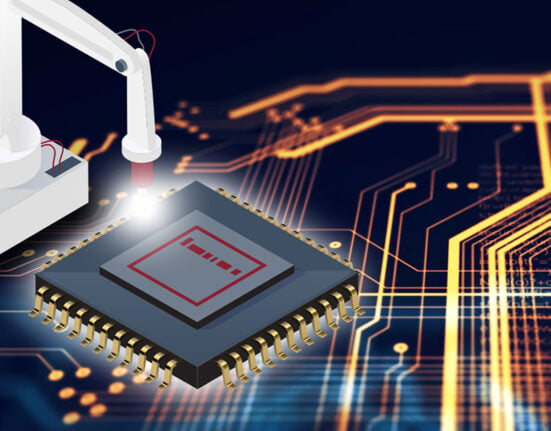
Safety and reliability drive comparable mandates in aerospace and medical device manufacturing. Meeting these standards increasingly depends on marking technology capable of producing permanent, high-resolution identifiers, which is one reason laser cutting and marking systems have become standard equipment on production lines serving these industries.
Core methods for ensuring end-to-end traceability
Successful traceability programmes combine digital tools, standardised documentation processes, and reliable identification technologies.
Implementing digital tracking and data management
Paper-based recordkeeping systems often struggle to support modern global electronics supply chains. Digital tracking platforms provide greater visibility across procurement, production, testing, and distribution activities.
Many manufacturers now implement digital thread strategies that create a unified information source for every component throughout its life cycle. Connecting supplier records and manufacturing data simultaneously improves data accuracy and simplifies component compliance efforts.
The electronics manufacturing services market is projected to grow by 6.51% annually from 2026 to 2031. This growing industry may correlate with a rising demand for tracking systems that support global production operations and supplier management. Digital documentation also helps teams retrieve production records quickly during audits or customer inquiries.
Choosing the right identification technology
Identification technologies are the foundation of effective component tracking programmes. Printed labels and traditional barcodes remain common across many manufacturing environments because they are relatively simple and cost-effective to implement.
However, these identifiers may become difficult to read after prolonged exposure to heat, abrasion or other environmental conditions. Manufacturers producing components for demanding applications often require more durable marking solutions. Permanent marking technologies provide long-term readability and improve supply chain visibility.
Building a more resilient and trustworthy supply chain
Traceability and compliance support safer electronics component production and stronger supply chains. Investing in accurate component tracking and reliable identification methods allows manufacturers to reduce financial risks and meet regulatory requirements in a demanding electronics market.