




I recently visited RS Group’s UK distribution headquarters in Corby, Northamptonshire, and one thing was clear to see: the company’s logistics operations run much more than just parts. It is where precision, people, and community all come together.
Eight decades of delivery
RS was founded in 1937 to provide a part for every job, whether that was for research and development or maintenance and repair. Now, nearly 90 years later, the company’s Corby headquarters sprawls across a 250,000sq ft distribution facility, which is one of two hubs for the company’s UK supply chain activities. In Corby alone, there are more than 250,000 products in stock from more than 1,300 suppliers, serving engineers and procurement professionals both in the UK and internationally.
The site visit was led by Bosiljka Tovilovic, RS Components Team Manager, who has been with the company for more than a decade. Her knowledge of every floor, function, and flow within the building was second to none, and the only thing that matched her knowledge was the pride she clearly felt toward the people who keep all the parts, operations, and systems moving.
The flow of goods
The day at Corby begins at 6am when the deliveries first roll in. The goods-in department sorts through 90 to 120 pallets of incoming stock daily from up to 60 different suppliers. These component consignments are received, verified, matched by article number, scanned, and routed to the right location before the picking clock starts ticking.
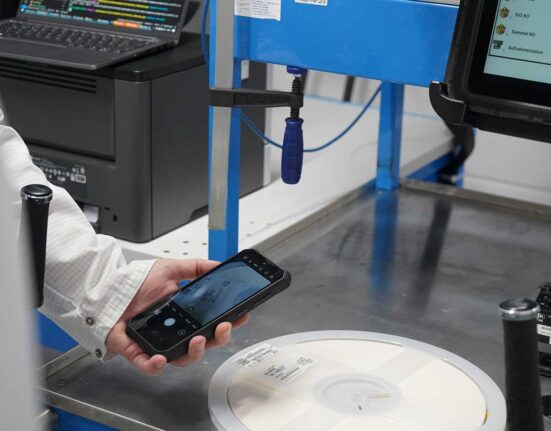
“Everything needs to be perfectly mixed and matched,” Bosiljka explained as we walked across the receiving floor. Incoming deliveries are divided into two piles: the bulk heading for further processing, and anything requiring attention, because, as Bosiljka points out, finding two different articles in near-identical boxes from the same supplier is a more common trap than you’d think. Each item is scanned via a radio data terminal (RDT), checked against the system, and slotted into one of the facility’s colour-coded RM (Replenishment Modules) bins – blue, red, green, or cream – before travelling by conveyor belt to its designated location.
The Corby site holds around 450,000 RM bin spaces and somewhere between 22,000 and 25,000 pallet spaces. This sounds like a lot, until Bosiljka points out that it still isn’t quite enough. The site has expanded from one external storage tent to three, with a potential fourth on the horizon.
The human chain
Unlike RS’s fully automated Nuneaton Global Logistics Centre, Corby has a hands-on approach to its workforce. Although there are conveyor belts, scanning systems, and a soon to be upgraded warehouse management platform, the facility is very much powered by people. Rather than robots, there are staff in the hand-packing department, known internally as HP, who are able to process 155 parts per hour per operative. The floor is divided into zones, each with its own purpose: W-area for put-away, the MTO (Make-to-Order) department for live daily orders, and HP stores for hand-packaging kits and bespoke customer assemblies.
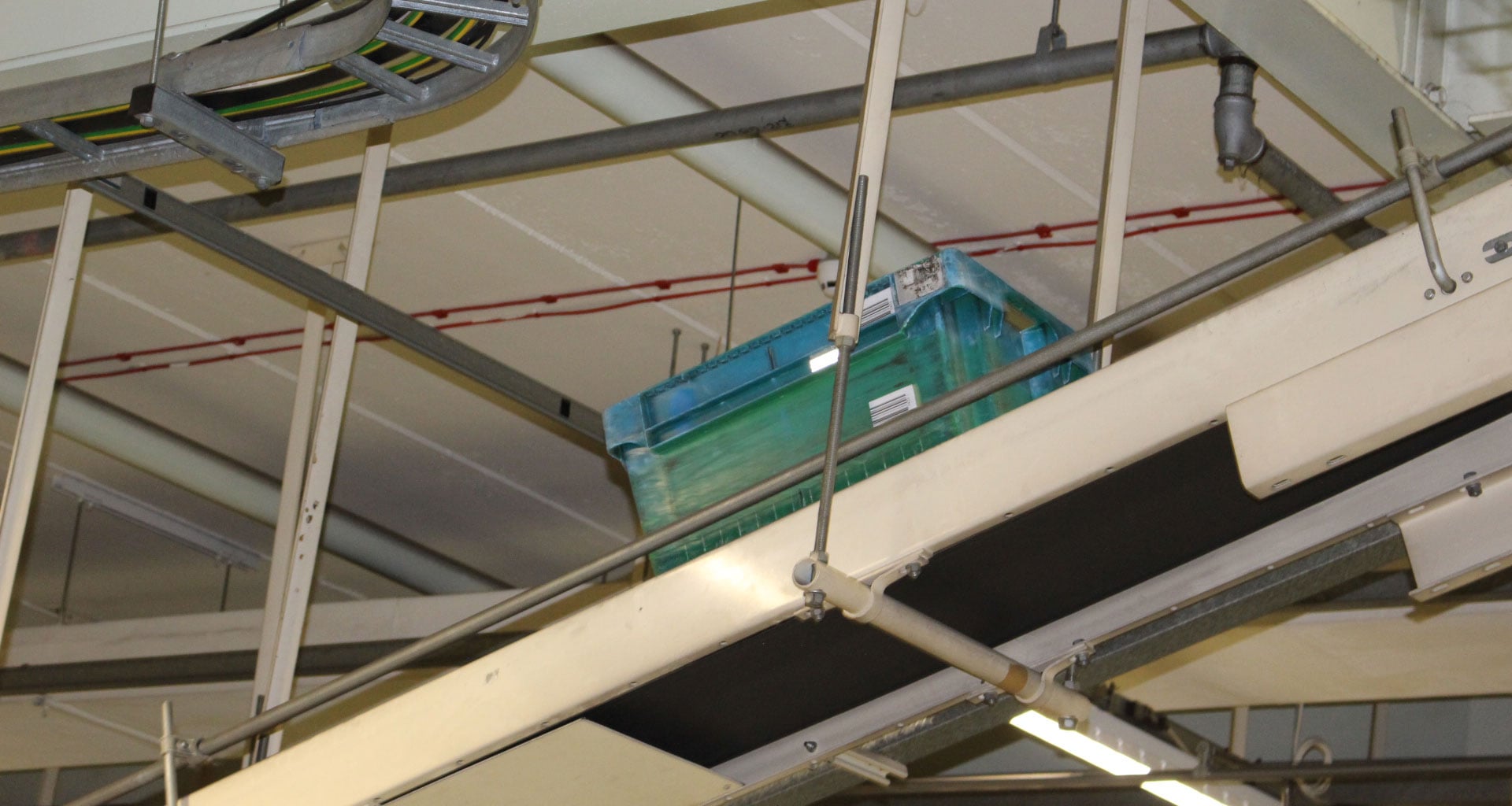
The MTO department is where the “RS delivers” promise is at its most literal. Operating to 11 daily cut-off deadlines – where the majority fall in the afternoon and evening – the team dispatches between 6,500and 7,000 parcels every day, with a 13kg weight limit on GP-line parcels and a next-day delivery deadline of 10pm for UK orders. Orders travel by tote along the conveyor system, are packed to size – RS has updated its box range to include perforated cartons that fold down to size to reduce waste – and exit the building via DHL. Customers are provided with return labels as standard. It’s clear to see that RS has thought through the full procurement cycle.
Approximately 60% of stock processed at Corby is destined for the Nuneaton site before reaching the end customer, with the remaining 40% distributed directly from Corby. For urgent requirements, a trade counter on site allows customers and suppliers to collect orders on the same day.
Closing the sustainable supply chain loop
RS’s has soft plastic, hard plastic, metal, and general waste recycling stations, and it also operates a formal vendor buy-back programme for slow-moving stock. Items that remain unused for three or more years are returned to suppliers rather than written off. There is also a dedicated scrap and buyback area, which works closely with the inventory department and also handles discontinued lines. When a batch of 3D printers was discontinued with no clear disposal route, RS sourced two schools – one in England, one in Ireland – to receive them as donations. “You would be surprised how much we do for families,” said Bosiljka.
RS Group has raised over $1.1 million for The Washing Machine Project since 2020 and enables 30% of employees to volunteer over a two-year period. Sustainability is fundamental to the company, and its ESG strategy covers employees, customers, suppliers, communities, and investors. It holds a twice-yearly staff sale where returned items below £15 are sold at a fraction of their value, with all proceeds split between charities and staff events – meaning that brushes, components, tools, and anything that would otherwise be scrapped find a second use, and the proceeds find people who need them.
The power of community
Though the scale of the Corby site is really quite remarkable, what’s even more remarkable is the extent to which the operation functions as a community in itself. A community that mirrors the wider community purpose RS has pursued for nearly nine decades.
RS believes that if colleagues are happy, healthy, motivated, challenged, and supported, they can do their best work, which has a knock-on effect of happy customers, suppliers, communities, and shareholders. Bosiljka is a case in point. She has spent more than a decade with RS, has worked across multiple departments – hand-packing, repack, global stock return, goods-in – and has accumulated the kind of knowledge that can only be gained through years of work and dedication. And she isn’t an isolated case; she tells us similar stories of the people working alongside her, who have dedicated decades to the company and have years of experience to share with the next generation who join the company.
In a distribution environment where automation is picking up pace and warehouse footprints are expanding, RS Group, Corby, is a reminder that the most resilient supply chains can still be built, in large part, by people who care – not only about the parts, but also about each other, and the communities beyond the loading bay.
RS delivers – it always has and always will.
This article originally appeared in the July/August issue of Procurement Pro