




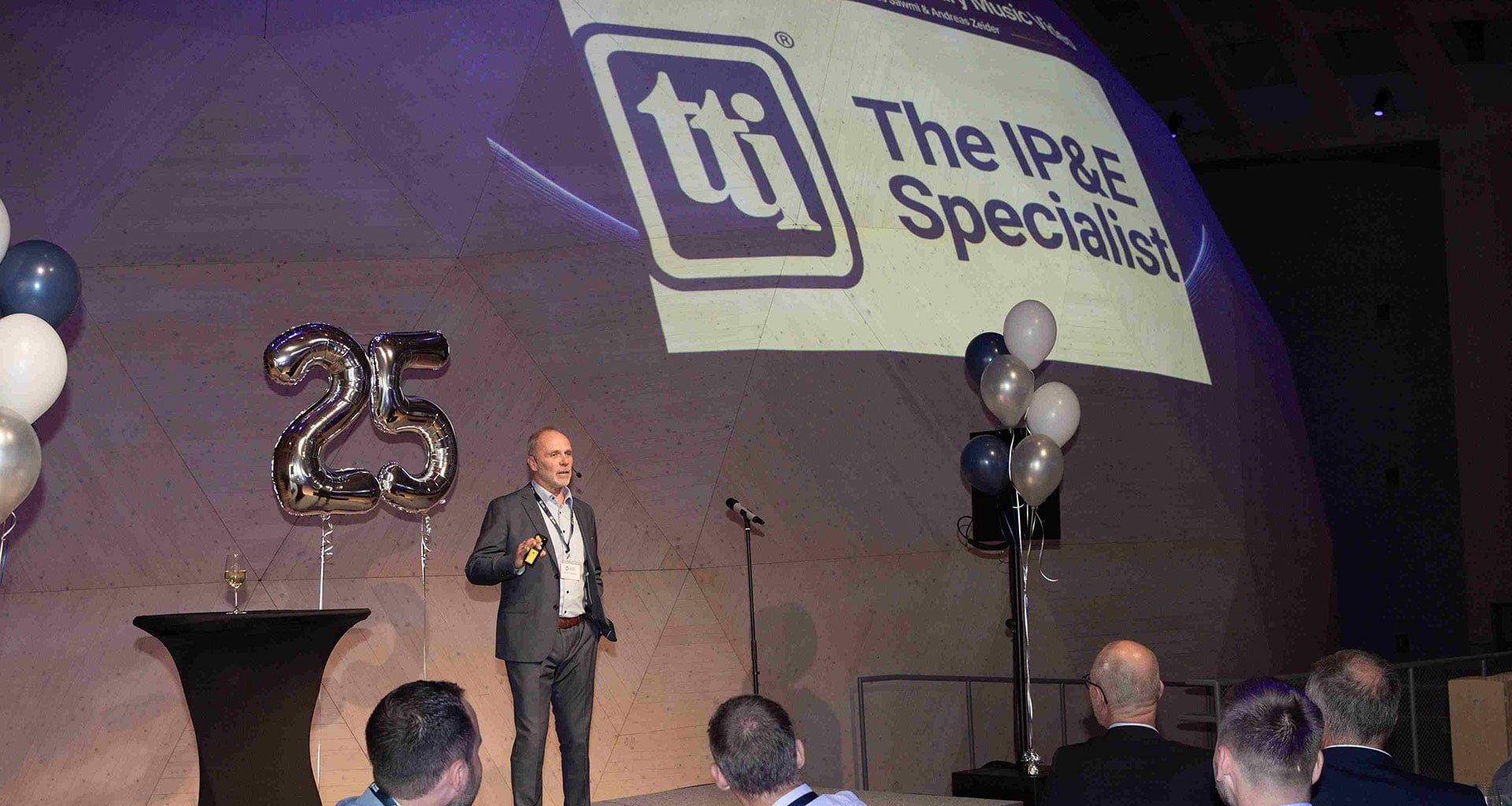
TTI IP&E – Europe marks 25 years of its operations and a journey of successive growth in Sweden, at a time when both the electronics industry and the role of distribution have shifted significantly.
TTI established its Swedish presence in 2001, opening an office in Stockholm, then quickly expanding to Gothenburg as customers and their demands for electronic components grew. This came at a time when outsourcing to EMS providers was beginning to reshape how and where products were consumed and final assemblies built. Having a local presence allowed TTI to stay close to customers, understand their supply chain needs, and respond with its specialist focus on interconnect, passive, and electromechanical (IP&E).
Over the past 25 years, the Swedish electronics industry has evolved, and whilst telecom dominated the early 2000s, demand today is driven by automotive, industrial, robotics, medical, defence, and new energy-related applications. In parallel, manufacturing has continued to move further towards greater outsourced models. At the same time, component manufacturers have reduced their local presence, and the role of distribution has expanded, with TTI evolving from demand fulfilment solutions to providing specialist, expert technical support across a broad range of industry segments, whilst continuing to work collaboratively with its supplier partners.
“It’s no longer just about moving products from A to B,” says Rickard Jangeborg, General Manager, TTI Sweden. “We are expected to understand the technology, support demand creation and, most importantly, ensure continuity of supply in an increasingly complex environment.”
Today, a significant share of TTI Sweden’s business is firmly aligned with EMS customers, reflecting these broader shifts in manufacturing and supply chain models, supported by the broadest and deepest inventory position and well-established supply chain capabilities.
TTI continues to have a specialist focus on IP&E components at its fundamental core. The effective management of these components is critical to its customers as in many applications, individually they represent a relatively small cost in the Bill of Materials (BOM) for a typical PCBA, but collectively they account for around 75% of the total BOM, therefore requiring the focused approach of a stocking specialist.
“Broadliner distributors often see IP&E as the tail of their business; they don’t have the focus to effectively support them,” explains Jangeborg. “These components may be lower in value, but they are critical to our customers’ product builds. Today, TTI Sweden uses forecast-driven models to plan demand with customers, secure inventory, and manage supply over longer time horizons.”
After 25 years in Sweden, the business has grown from a small team to a well-established organisation built on long-standing customer and supplier relationships and supported by a stable, experienced, and dedicated team. The company continues to assist customers in managing complexity through a combination of supply chain stability, technical expertise, and close collaboration across the design-to-production lifecycle.