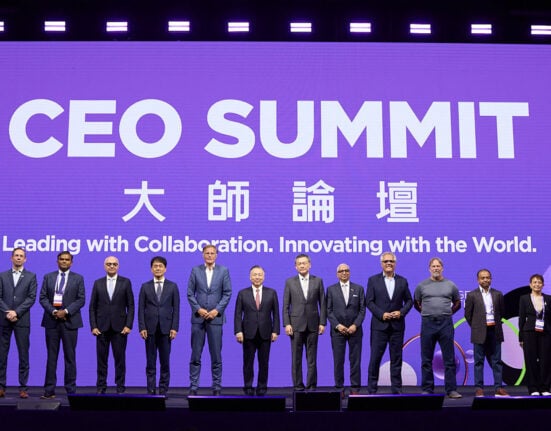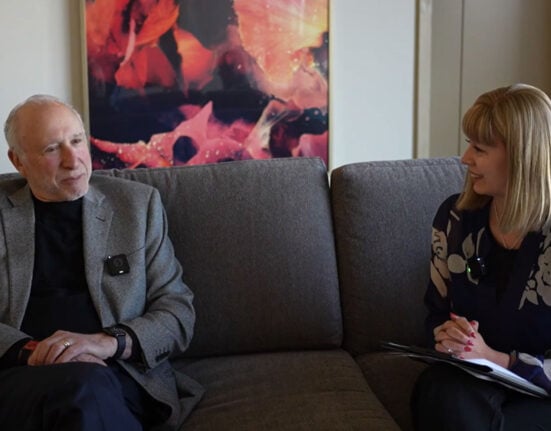






Managing Editor of Procurement Pro, Paige Hookway, interviews Mark Burr-Lonnon, CEO Americas at TME, at the EDS Leadership Summit.
Mark Burr-Lonnon brings decades of senior leadership experience across some of the most recognised names in electronics component distribution. In this conversation, he discusses his decision to join TME, the company’s growth ambitions, and what trends he sees shaping the electronics distribution market in 2026.
Joining TME
Having previously helped scale a prominent distribution business from $150 million to $4 billion – primarily by expanding a North American operation into Europe and Asia – Burr-Lonnon sees a similar comparison in TME’s current position – except in reverse. TME is a strong European distributor, and it has particular strength in Poland and Eastern Europe, but with a relatively limited presence in the Americas and Asia.
“There’s a lot of synergy between what I did and what I learned, and there’s a huge amount of learning to go through, and I can bring that learning and do it again, I hope,” he says.
Building a US footprint
One of the most immediate priorities for the company is establishing a physical warehouse presence in the US. TME already has a US office in Norcross, near Atlanta, and the company has now identified a site in Marietta, also in the Atlanta area, as its first US warehouse location. It aims to have it operational before the end of 2026. Alongside this Burr-Lonnon is also considering the company’s stock strategy: “[B]etween now and then, what we need to work on is ‘what do we put in it?’ Because there’s certain things that we want to continue to have in one place and ship globally … but then there’s other items, which are typically the heavier items, bulkier items, that we feel we can offer a much better service to the US if we hold that stock locally in the US.”
What sets TME apart
TME holds over 1,300 franchise lines. That means more than half of TME’s product portfolio is essentially exclusive in the broader catalogue distribution market. Many of these lines are European in origin – from Poland, Germany, Switzerland, Austria, and across Eastern Europe – representing high-quality suppliers that are underrepresented in the US market. So for customers who are looking for components beyond the standard roster of global names, TME offers that differentiation.
A solid first half of 2026
On market conditions, Burr-Lonnon said that TME is up over 25% in the first half of 2026, which he describes as a “solid” performance. His indication for market health is connectors, TME’s largest product category, as this segment tends to track real underlying demand without the dramatic swings of commodity components. With connector lines performing broadly in line with the company’s overall growth, he views the current trajectory as sustainable.
Outlook and tariff headwinds
Looking ahead, Burr-Lonnon believes the positive market conditions have at least a couple more years of runway. On tariffs, he notes the impact is felt most acutely in the volume purchasing space, where large order quantities make cost fluctuations highly significant. TME’s catalogue-focused, smaller-quantity model insulates it somewhat – an engineer ordering a handful of components at $15 a unit is unlikely to be deterred if tariffs push the price modestly higher.
Supply chain resilience
Burr-Lonnon notes that the most sophisticated buyers – particularly large EMS companies – have made meaningful strides in supply chain resilience, evolving from traditional buying teams into genuine supply chain organisations. AI has played its part in giving procurement professionals far faster access to market intelligence than was possible even a few years ago.
His closing advice to engineers and procurement teams is to avoid sole-sourcing, maintain strong connections across multiple supplier types, and resist the temptation to constantly chase the best short-term deal. When supply gets tight, the companies with established relationships tend to get parts first – and that dynamic, he notes, hasn’t changed regardless of how much AI now informs purchasing decisions.
Watch the full interview with Mark Burr-Lonnon in the video below.