




Nordic Semiconductor (then named Nordic VLSI) was founded in 1983 in Trondheim by four postgraduates from the Norwegian University of Science and Technology (NTNU). Nordic VLSI sold consultancy services for mixed signal (analog and digital) application specific integrated circuits (ASICs) to individual customers in the Nordics and later expanded into high-performance data converters.
In 1998, the company released its first wireless standard products in the 433MHz ISM band. In 2003, it rebranded from Nordic VLSI to Nordic Semiconductor and released its first 2.4GHz wireless devices, marking the shift toward the ultra-low power wireless focus that defines the company today.
Now, Nordic is a complete wireless solution provider, across multiple technologies and verticals, serving every corner of the globe.
The company’s global leadership position in Bluetooth Low Energy SoCs has been expanded into emerging and mature additional technologies across cellular IoT, Wi-Fi, power management, and services.
The core technology
Nordic offers a complete solution – hardware, software, and services.
“Yes, our silicon is outstanding, and we work hard every day to keep pushing further on silicon leadership. However, great software, developer experience, and support needs to go with that, and we have invested heavily in making sure we are best in class there, too,” said David Stone, Vice President, Marketing, Nordic Semiconductor.
With increasing regulatory and customer need for device observability in the field, Nordic is very focused on its services offering – nRF Cloud.
“The lifecycle and fleet management that these services unlock is an incredible value add, and having a single vendor that provides everything from chip-to-Cloud is a compelling reason for choosing Nordic.
“Then, look at the problem we’re solving: a connected product needs to run on a battery or charge for as long as possible while staying wirelessly connected, and most of these products are getting smaller. Our SoCs are engineered to use as little power as possible, whether it’s idle or actively transmitting,” notes Stone.
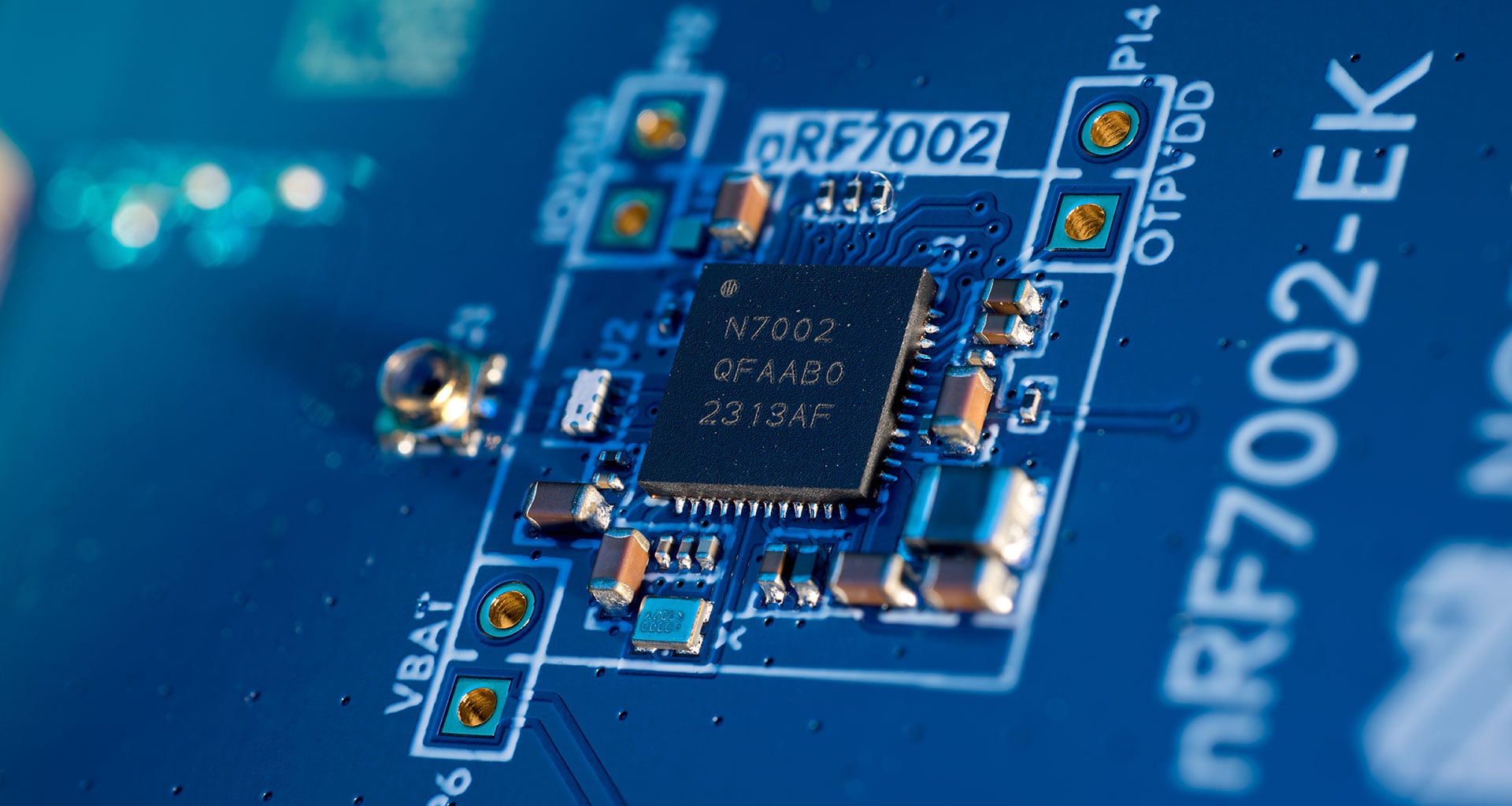
Nordic supports Bluetooth LE, Wi-Fi, cellular, and satellite, along with Matter, Zigbee, Thread, and more, so the right protocol depends on what the product needs to do and where it needs to work. Beyond the chip, Nordic provides the nRF Connect SDK, which handles the wireless protocol stack, so an engineer can focus on application logic instead of writing RF code from scratch. This includes AI-assisted development, and even the option for bare-metal development, if RTOS-based development is not viable or possible.
It also builds power management ICs that pair with the SoC, so a product’s battery management gets the same engineering attention as the wireless side. And it supports the rest of a product’s life too: accessible development tools and support, and Cloud services to support observability and updates once devices are in the field.
There are many milestones for Stone but the launch and then the ascent of the nRF52 Series multiprotocol SoC stands out: “That series has truly defined the Bluetooth Low Energy market. While we have surpassed ourselves since then, with products like nRF54L Series, nRF52 put the company on the path it is on today and was foundational in the construction of our market position, and our brand.”
Problem solving
Essentially there are three problems Nordic’s products solve for engineers:
- Optimised battery life: ultra-low-power design means a product can run for years on a coin cell instead of months
- RF complexity: the SDK and tools mean you don’t need a radio engineer to get a reliable wireless connection working
- Development speed: once your product ships, Nordic’s Cloud tools handle monitoring device health and pushing firmware updates, instead of every customer building that infrastructure themselves from scratch
The nRF Connect SDK sits at the centre of all this. It bundles the protocol stacks, drivers, and sample code an engineer needs, and it uses Zephyr as its foundation, so engineers aren’t locked into a closed ecosystem.
Around that sits nRF Connect for Desktop and mobile tools for testing and debugging, DevZone as a community and support forum where Nordic’s own engineers answer questions, and extensive documentation and technical libraries.
“Nordic provides the full stack, from chip to Cloud, so customers aren’t left to build the missing pieces themselves. We also invest heavily in developer tooling and documentation, including our Developer Academy. Support doesn’t depend on order volume either: our documentation, DevZone, and Developer Academy are open to everyone, from hobbyists to large commercial teams,” notes Stone.
A green heart
Nordic takes sustainability seriously and has just been named the 53rd most sustainable company on earth by TIME and Statista.
On the product side, ultra-low-power chips mean devices draw less energy over their lifetime, which is why products built on Nordic chips, like smart lighting, environmental sensors, and asset trackers, can run for years on a single battery. This means smarter solutions, less battery waste, and more.
“Customers using our technology in smart lighting have measured real cuts to their own energy consumption as a result,” said Stone.
Product longevity is also very important to the company. Nordic products are designed for a minimum operational life of nine years, and its Cloud services let customers monitor devices and push firmware updates over the air once deployed. A device that stays current without being replaced or remanufactured spreads its embodied carbon across more years of use.
Nordic also works on reducing the environmental impact of its packaging. Purity requirements rule out recycled inputs in the semiconductor process itself, but Nordic can change what devices ship in. A plastic reduction programme with its assembly suppliers has taken recycled content in device containers to 51% in 2025. Reels are fully recyclable, and development kits ship in FSC-certified cardboard.
What should engineers be paying attention to?
Edge AI
Nordic’s Axon NPUs put inference on the device itself, which cuts the power and bandwidth cost of moving raw sensor data to the Cloud and changes what a battery-powered sensor can do on its own.
NTN
With 3GPP-compliant NTN on the nRF9151, a device can now hold a connection where no cellular network exists. For logistics, agriculture, energy, and remote infrastructure, that removes the coverage assumption that has constrained IoT deployment for a decade.
AI-assisted development
AI can help across the whole product lifecycle, from prototyping and board bring-up to debugging, release validation, and fleet management, and a lot of teams are experimenting with this now. However, generic AI assistants often lack the hardware, SDK, configuration, and device-specific context required for reliable, embedded development which creates real pain points for developers.
Nordic’s AI-assisted development tools address that by giving AI assistants access to verified Nordic context, including nRF Connect SDK documentation, API references, device configurations, and field data from nRF Cloud.
“Grounding in real, high-quality data is what makes it useful, and it’s already helping developers move faster and get more reliable results,” said Stone.
The key takeaway
If there’s one thing Stone wished more engineers knew about Nordic it’s that the whole portfolio, across short-range, cellular, and Wi-Fi, runs on one SDK.
A decision made early, like starting a prototype on Bluetooth LE, keeps the door open for adding cellular or satellite later, without a full software rewrite.
“That’s a bigger deal than it sounds like at the concept stage, and it’s the kind of detail that’s easy to miss until a product roadmap changes,” concludes Stone.
This article originally appeared in the Sept/Oct issue of Procurement Pro