





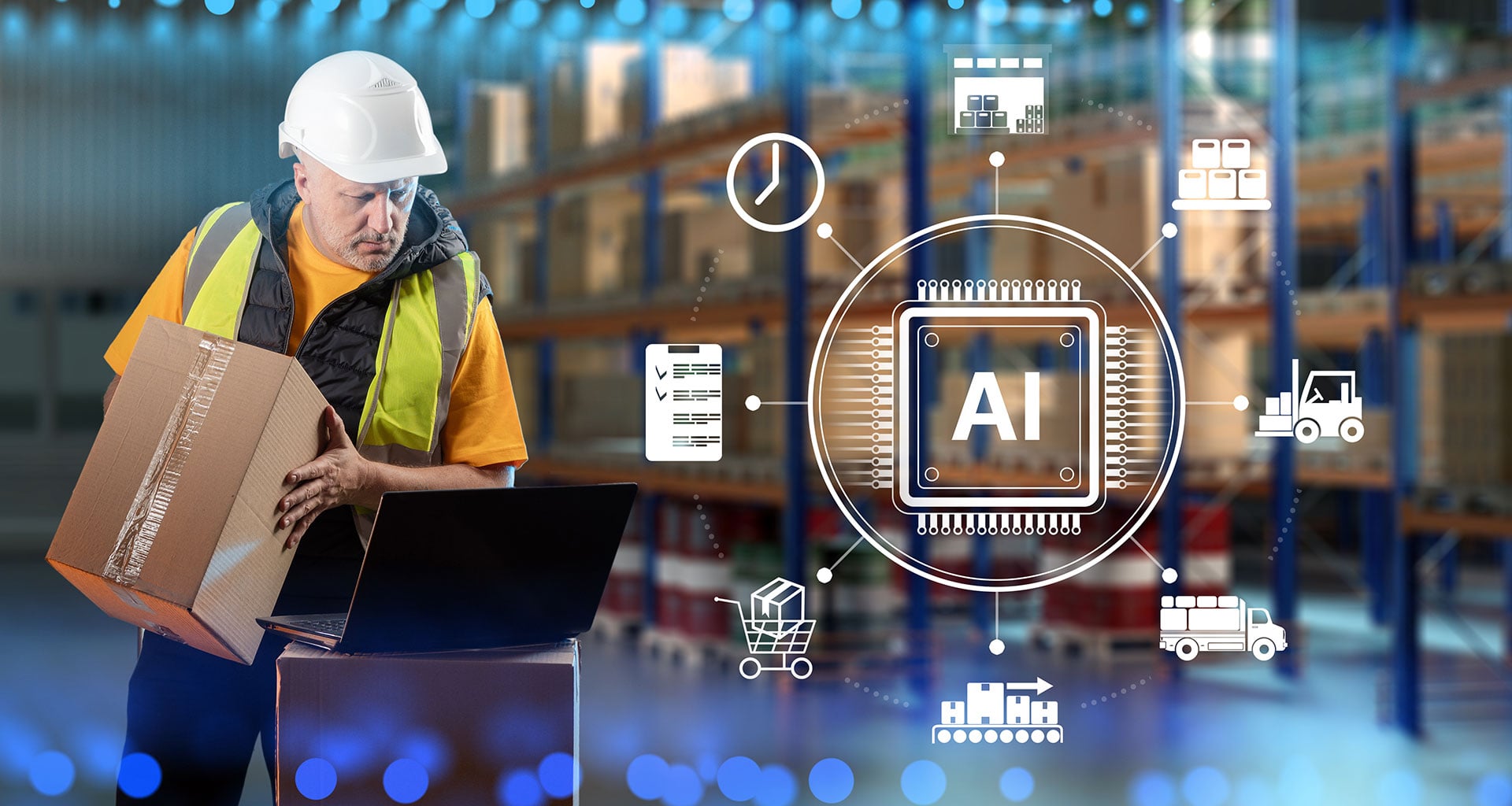
Despite the enthusiasm for AI, a noticeable execution gap persists between boardroom strategy and operational reality. Logistics leaders are ambitious for AI across their supply networks, with many executives targeting the technology to enhance their operations and customer experience.
Yet most leaders see a need for change on the ground and openly acknowledge current shortcomings. Six in 10 (62%) logistics leaders admit that improvements are needed in delivery and field operations, according to Zebra’s Impact of Intelligent Operations study with Oxford Economics.
This challenge is compounded by daily pressure on decision-makers, a majority of whom feel the need to modernise their warehouse operations. Inaction carries business risks, and without technology investments, companies risk missing targets and limiting future capabilities. Almost nine in 10 decision-makers worry that without such investment, their organisation will fail to meet business objectives.
Closing this divide demands action from IT, OT, and procurement professionals. These teams must look beyond traditional unit-cost sourcing models. Their organisations need them to champion the intelligent frontline technologies that turn ambition into measurable progress on the warehouse floor.
The foundation of action: ambient intelligence and advanced sensing
Across the industry, basic tracking systems constantly evolve. Simple barcode scans now give way to sophisticated ambient intelligence environments, modern setups which digitise physical warehouse spaces entirely so they can sense, analyse, and act in real time. This new digital environment relies on the connective tissues of modern sensing technologies, including:
- Advanced sensing and locationing: using RFID and computer vision to create a real-time digital twin of the physical space
- AI-powered interaction: leveraging AI voice commands for hands-free operations and improved efficiency
- Modern data capture: employing next-generation barcodes and scanners for foundational device and item identity
As these multiplying sensors create an exponential increase in image, sound, and location data, multimodal AI models can ingest these inputs to deliver a rich, real-time picture of the entire operation.
With smaller AI models running on AI-enabled far Edge hardware, there is less need to send data to the Cloud for processing and therefore fewer occasions for latency. Reducing Cloud costs offers a compelling financial case, while giving frontline workers a ready solution.
Empowering and protecting the frontline
Intelligent automation supports the workers who power daily operations, giving teams the tools they need. Staff members appreciate these investments, with data indicating that the increased availability of automation and mobile technologies help attract and retain more warehouse associates.
This positive sentiment stems from delegating tedious or resource-hungry tasks to AI, which frees up warehouse associates to add more value, allowing them to focus on:
- Better customer service: engaging directly with customer needs and ensuring satisfaction
- Stronger quality assurance: applying expertise to maintain standards and prevent errors
- Smarter problem-solving: using on-the-ground experience to resolve operational issues
These results flow directly into increased employee satisfaction and engagement, making warehouse work less of a grind and more of a craft.
Providing modern devices also changes the entire workplace culture for the better. Employees recognise when companies invest in their personal success, and morale improves when staff receive proper digital support. According to Zebra’s Warehouse Vision Study, nine out of 10 (89%) of associates report feeling more valued by their employers when provided with technology tools and automation.
Eliminating operational friction: AI jam detection in action
The warehouse is an important node in the supply chain, but some operations, such as the conveyor belt, face the constant friction of false alarms from traditional photo-eye sensors, which misinterpret normal package flow and flag minor parcel variations as blockages. Such errors cause unnecessary line stoppages and force repeated manual inspections throughout a shift.
Procurement decisions play a role in solving this daily friction. Investing in AI-enabled machine vision offers a practical solution, as intelligent cameras can differentiate actual physical jams from empty space on a conveyor belt. These solutions understand complex visual data effortlessly, stopping the belt only when a genuine problem occurs. By upgrading to intelligent vision, facilities can experience fewer interruptions, smoother workflows, and decrease downtime and manual handling.
With such investments, procurement teams protect the bottom line. For the seven in ten decision-makers who cite mitigating errors as the top driver for warehouse automation, this represents a scalable and practical step toward modernisation.
Foresight and financial return
Technology deployments can support better financial performance. Smarter workflows drive measurable growth, and companies that prioritise these upgrades see commercial advantages. The Intelligent Operations report shows that transportation and logistics organisations that meaningfully improved their inventory management workflows reported, on average, up to 3.4-percentage-point higher revenue growth.
Yet supply chains without real-time visibility suffer accidental and deliberate losses. One notable incident underscored this operational risk when 12 tonnes of chocolate bars were stolen from a truck between Italy and Poland. However, the global food company could immediately identify every single stolen bar because each one carried a unique batch code printed on its packaging. This allows any retailer to scan a barcode on each bar and trace it back to the stolen shipment, effectively turning every point of sale into a security checkpoint.
Protecting inventory remains a core procurement concern, yet leaders find it challenging to maintain secure operations. In this context, inventory tracking acts as a robust operational shield against such vulnerabilities.
AI also moves supply chains from a state of reactive recovery to one of predictive planning, allowing forward-thinking organisations to anticipate challenges before they arise. With the right data, proactive management becomes possible. Today, nearly two-thirds of transportation and logistics organisations are already deploying or piloting AI for predictive estimated time of arrival (ETA), while others use it for demand forecasting to predict volume surges and allocate resources more effectively.
Start small to aim big
Leaders should start with a specific, high-impact problem, rather than attempting a complete operational overhaul at once. Launching a pilot project focused on an area like picking accuracy or conveyor efficiency allows organisations to demonstrate value quickly. This often begins by modernising the data capture tools that frontline workers already use, creating a solid foundation of real-time information to build upon.
This step-by-step approach allows organisations to secure budget and scale their AI solutions with confidence, supported by ROI data. It also helps foster employee acceptance through clear communication and training, ensuring the people on the frontline understand and embrace the new solutions designed to support them. Integrating these solutions with existing warehouse management systems then becomes a manageable, phased process rather than a disruptive shock.
Bridging the ambition-to-action gap is a procurement priority. Logistics leaders must turn their AI goals into practical deployments, and procurement professionals can support the task. Sourcing decisions require a long-term perspective, with executives looking beyond short term purchasing costs toward integrated, AI-driven automation. These choices will protect the frontline and drive consistent bottom-line growth for years to come.
Learn more about how business leaders can fulfil AI ambitions here.
This article originally appeared in the Sept/Oct issue of Procurement Pro